This volume addresses the shift from traditional teacher education, rooted in altruism, to a new paradigm influenced by recent public discourse on education. Classical educational objectives are being challenged by supranational entities and health care discussions, as education faces competition from the public care system. The focus of school and curriculum reform is shifting from knowledge acquisition to care, emphasizing personal health and employment over cultural communication. The book explores critical questions from a European perspective: What happens to educational knowledge when controlled by external forces? What type of knowledge is disseminated? Who holds the hegemony—social care discourse from the welfare state or technical knowledge from globalization and neoliberal ideologies? The anthology offers both theoretical analyses and empirical research findings. Contributors include Tobias Werler, Professor of Education at Bergen University College, whose research focuses on comparative education and teacher professionalism; David Lansing Cameron, Associate Professor of Special Education at the University of Agder, specializing in inclusion and multidisciplinary collaboration; and Nils Rune Birkeland, Associate Professor at the University of Agder, whose research intersects education and media studies.
Tobias Werler Pořadí knih


- 2012
- 2011
Modern teaching faces the challenge of heterogeneous students, a reality that has always existed. The discourse on “heterogeneity” in education highlights the need for inclusion within the welfare state, but it is essential to first address the mechanisms of exclusion to understand heterogeneity fully. Central to this discussion is the debate on the implications of differences among students and their impact on school-based learning. Didaktik must navigate the dilemma of balancing individual and collective teaching modes. However, traditional Didaktik theory often overlooks the diversity of students, focusing instead on generalized, homogenized constructs. This raises the question of how teachers can justifiably engage with this inherent heterogeneity. The core idea presented is to investigate whether the concept of the “strangeness” of others can illuminate this Didaktik challenge. The volume analyzes pedagogical constructions of heterogeneity through the lens of the stranger, positioning the stranger as a crucial didactic element. It emphasizes the importance of understanding the filter of strangeness and otherness and elaborates on criteria for establishing this filter, along with the didactically relevant mechanisms it entails.
- 2006
Hidden dimensions of education
- 213 stránek
- 8 hodin čtení
Research in the epistemology of educational science has shown the following: given the complexity of education, educational science can only focus on a limited number of research areas. This book suggests a few new research topics, all of which have not received adequate attention. In the first part of the book, these topics are related to the rhetoric of education, in the second to rituals in education. As a result of the lack of information regarding these topics, further research in educational anthropology is needed. However, it is a necessity that anthropology of education is not limited to ethnography of education. Educational anthropology embraces five major paradigms and thus contributes to the complexity of educational science and its epistemology.
- 2004
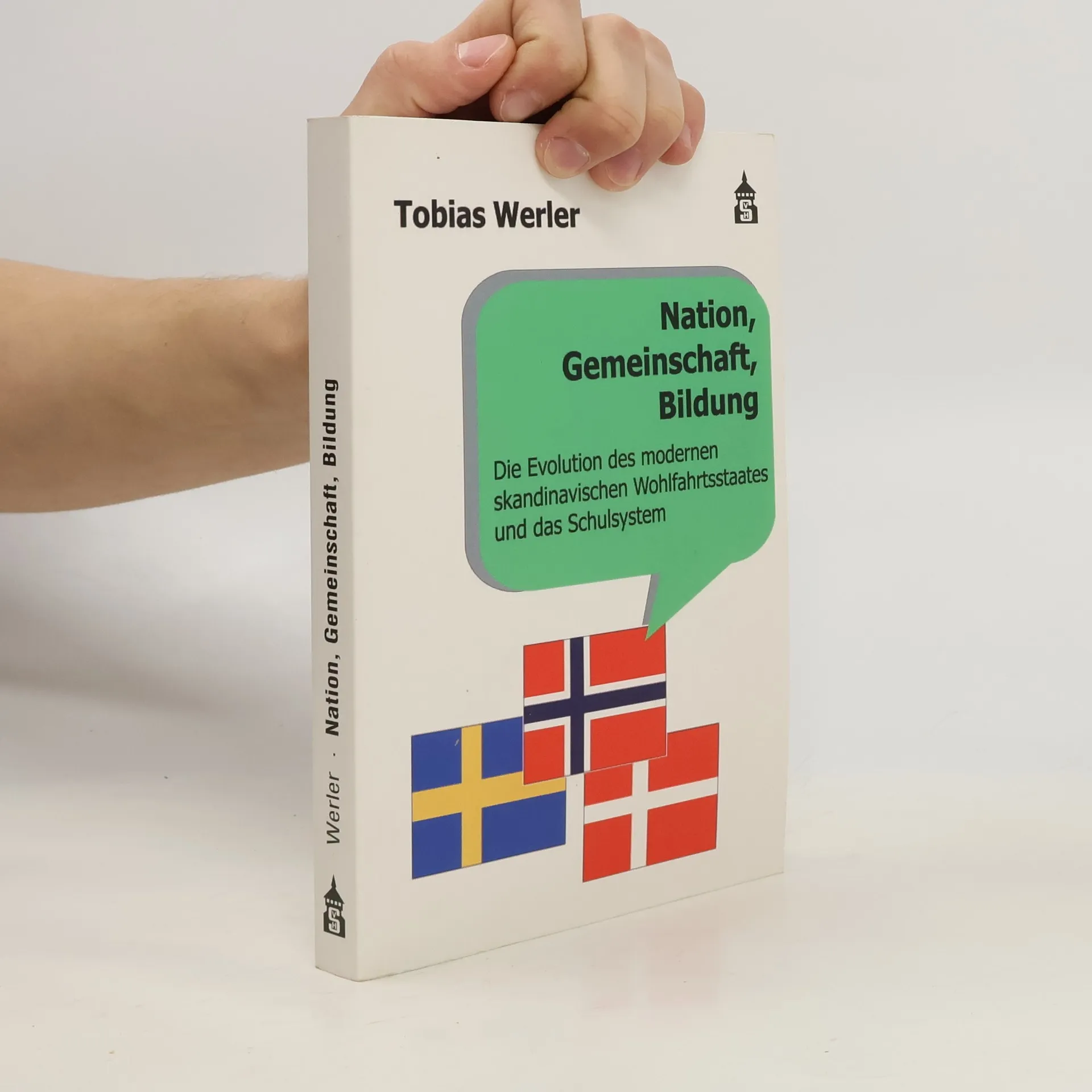
Nation, Gemeinschaft, Bildung
- 324 stránek
- 12 hodin čtení
Bereits Ende des 19. Jahrhunderts war das Parallelschulsystem im Prozess des nation building in Skandinavien aufgelöst worden und Schule wurde zu einem Zentrum von Gesellschaft. Nation, Gemeinschaft, Bildung analysiert - vertiefend am Beispiel Norwegens - die Entstehungsbedingungen der skandinavischen Schulsysteme aus ihrem sozialen und kulturellen Umfeld heraus. Im Vergleich zu anderen europäischen Ländern verfolgten die skandinavischen Länder einen anderen Weg des nation building: Konsens im Wohlfahrtsstaat. Der Text zeigt Selbstbilder, Plots und Phänomene der Beziehung zwischen Nation und Bildung. Anhand von vier sich herauskristallisierenden Phasen der Schulevolution (Institutionalisierung, Konsolidierung, Ergänzung, Perfektion) weist der Autor nach, dass traditionelle Ansätze über Ursprünge, Entstehung und Entwicklung von Schule (für den skandinavischen Fall) nicht ausreichen. Es gelingt der Nachweis, dass Schule keine Konsequenz der Industrialisierung ist. Schule ist offenbar nicht zwingend Ergebnis sozialer Konflikte sondern Ergebnis von Konsens. Es beantwortet die Frage: Warum sind skandinavische Bildungssysteme auffallend leistungsfähig?