



A look at capitalism compares America's ambitions, ideals, and strategies with those of France, Germany, Japan, Great Britain, Sweden, and the Netherlands, arguing that feelings about money are as influential as balance sheets.
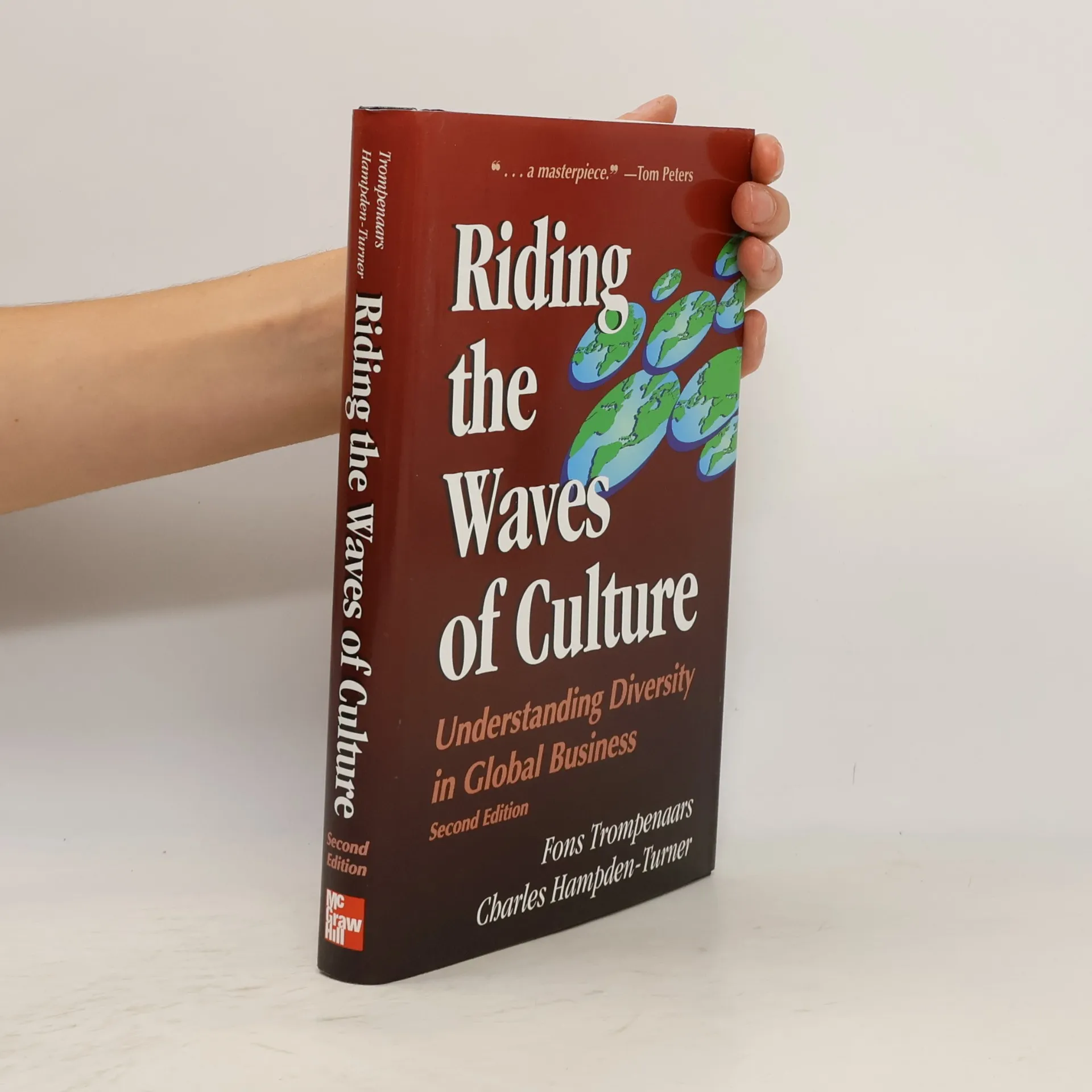
The whole is harmony, not discord. Based on fourteen years of research involving nearly 50,000 managerial respondents and on the authors' extensive experience in international business, this book compares the cultural values of more than forty nations. With humour, cartoons, and an array of business examples, the authors demonstrate how cross-cultural competence and the reconciliation of cultural differences can cause whole organizations to grow healthier, wealthier and wiser.
International management guru, Fons Trompenaar's best-selling Riding the Waves of Culture has become an essential guide for managers and trainers in multinational organizations, as well as anyone who conducts business overseas. This thoroughly revised, second edition, updated to include new case histories and fresh research findings, uses country-by-country graphs, examples, and other comparisons to clearly illustrate how different cultures respond to different management approaches; provides case histories to show how managers have successfully anticipated and mediated difficult and potentially costly dilemmas; and shows how managers can prepare their organizations for the process of internationalization through specific points of intervention.
At the core of a company's ability to learn, improve, and compete is the process by which it resolves dilemmas that appear and reappear in constantly changing forms, e.g. whether to pursue economies of scale or flexibility; whether to target broad or niche markets. In this book, Charles Hampden-Turner describes how managers at Shell International Petroleum Company, Apple Computer, Hanover Insurance, and six other major corporations resolve these recurring dilemmas by employing his renowned mapping scheme. By delineating on a chart, or a series of charts, a manager's inchoate, often metaphorical, forms of cognitive expression, Hampden-Turner shows how solutions, previously unrealized in the recesses of the manager's mind, become readily apparent.
Lessons From The World Leading Experts In Cross-Cultural Management
416 stránek
15 hodin čtení
This practical course-book synthesizes contemporary cross-cultural communication and management knowledge for students and professionals. Authored by twelve respected authorities from diverse countries and cultures, it prepares students to understand the influence of culture in management and communication, equipping them with the necessary skills to adapt in an increasingly multicultural world. Each contributor is a published expert in cross-cultural management, and the textbook is supported by several European universities. Comprising 12 comprehensive chapters, it features up-to-date theories, real-life examples, case studies, and workshops, all presented in an easy-to-use format. The contributions from international practitioners and professors bridge the gap between academic writings and the practical realities faced by those dealing with intercultural situations. With insights from various nations and cultures, the book encourages readers to expand their perspectives. It is primarily aimed at students and instructors, particularly those seeking a structured outline for management courses. Additionally, professionals, consultants, managers, and trainers engaged in international and cross-cultural challenges will find it beneficial. The textbook is available in multiple formats, including Black and White Student edition, Color Deluxe edition, and Kindle edition.
Managing People Across Cultures maps out the value of people issues in the organizations of today. It challenges us to ask key questions such as ?How did Human Resource Management (HRM) come to be and what genuine need is there for it?? and ?What should the future direction of HRM be?? Fons Trompenaars and Charles Hampden-Turner spell out their vision for what HRM must do to stay relevant to businesses today. Their view is that people management must embrace the values of entrepreneurship i.e. agility, flexibility and innovation to ensure its continued effectiveness. The authors also argue that workplaces have to become customized to grow and learn as its employees push the boundaries of learning and discovery. Functional barriers also need to be torn down. You will discover that the rightful place for HRM is at the fountainhead of any business; the place where ideas are first generated and mobilized for action.