
"Selfie Democracy exposes the unintended consequences of wireless technologies on political leadership and shows how seemingly benign mobile devices that hold out the promise of direct democracy ultimately undermine representative forms of government and deepen partisan divides. As the smart phone and mobile applications are reshaping civic participation, attitudes about freedom, civic rights, and national security are also changing. Losh shows how the crisis management styles of US leaders over the past decade are closely related to their technological choices and digital literacies"-- Provided by publisher
Elizabeth Losh Pořadí knih
Elizabeth Losh se zaměřuje na ekologii nového médií a zkoumá, jak digitální technologie ovlivňují univerzitní prostředí a politiku. Její práce se hluboce zabývá propojením mezi komunikací, kulturou a mocenskými strukturami v digitálním věku. Losh analyzuje, jak se formují a šíří významy prostřednictvím online platforem a jak tyto procesy utvářejí naše chápání světa.


- 2022
- 2014
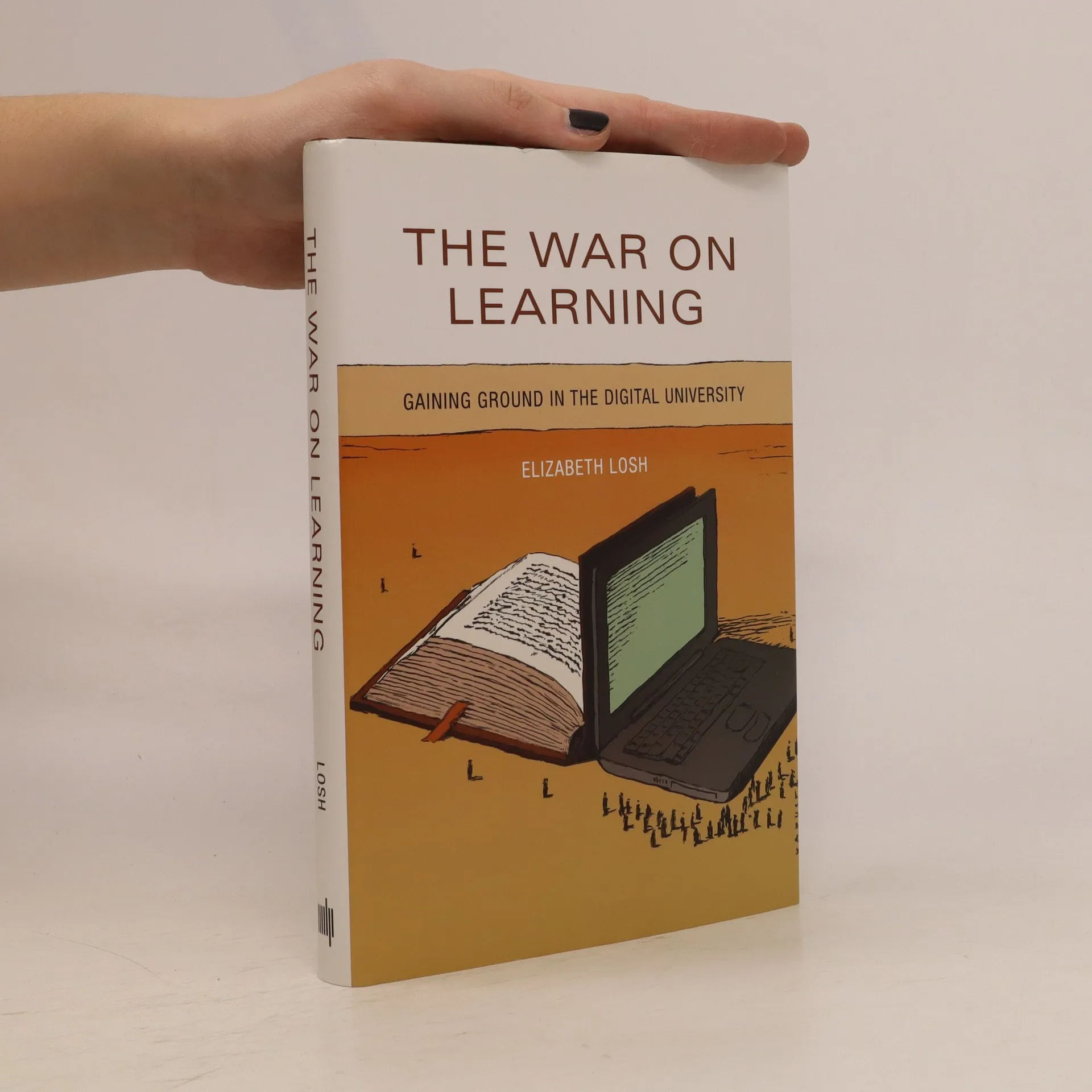
The War on Learning
- 302 stránek
- 11 hodin čtení
"Behind the lectern stands the professor, deploying course management systems, online quizzes, wireless clickers, PowerPoint slides, podcasts, and plagiarism-detection software. In the seats are the students, armed with smartphones, laptops, tablets, music players, and social networking. Although these two forces seem poised to do battle with each other, they are really both taking part in a war on learning itself. In this book, Elizabeth Losh examines current efforts to 'reform' higher education by applying technological solutions to problems in teaching and learning. She finds that many of these initiatives fail because they treat education as a product rather than a process. Highly touted schemes--video games for the classroom, for example, or the distribution of iPads--let students down because they promote consumption rather than intellectual development. Losh analyzes recent trends in postsecondary education and the rhetoric around them, often drawing on first-person accounts. In an effort to identify educational technologies that might actually work, she looks at strategies including MOOCs (massive open online courses), the gamification of subject matter, remix pedagogy, video lectures (from Randy Pausch to 'the Baked Professor'), and educational virtual worlds. Finally, Losh outlines six basic principles of digital learning and describes several successful university-based initiatives. Her book will be essential reading for campus decision makers--and for anyone who cares about education and technology"--Jacket