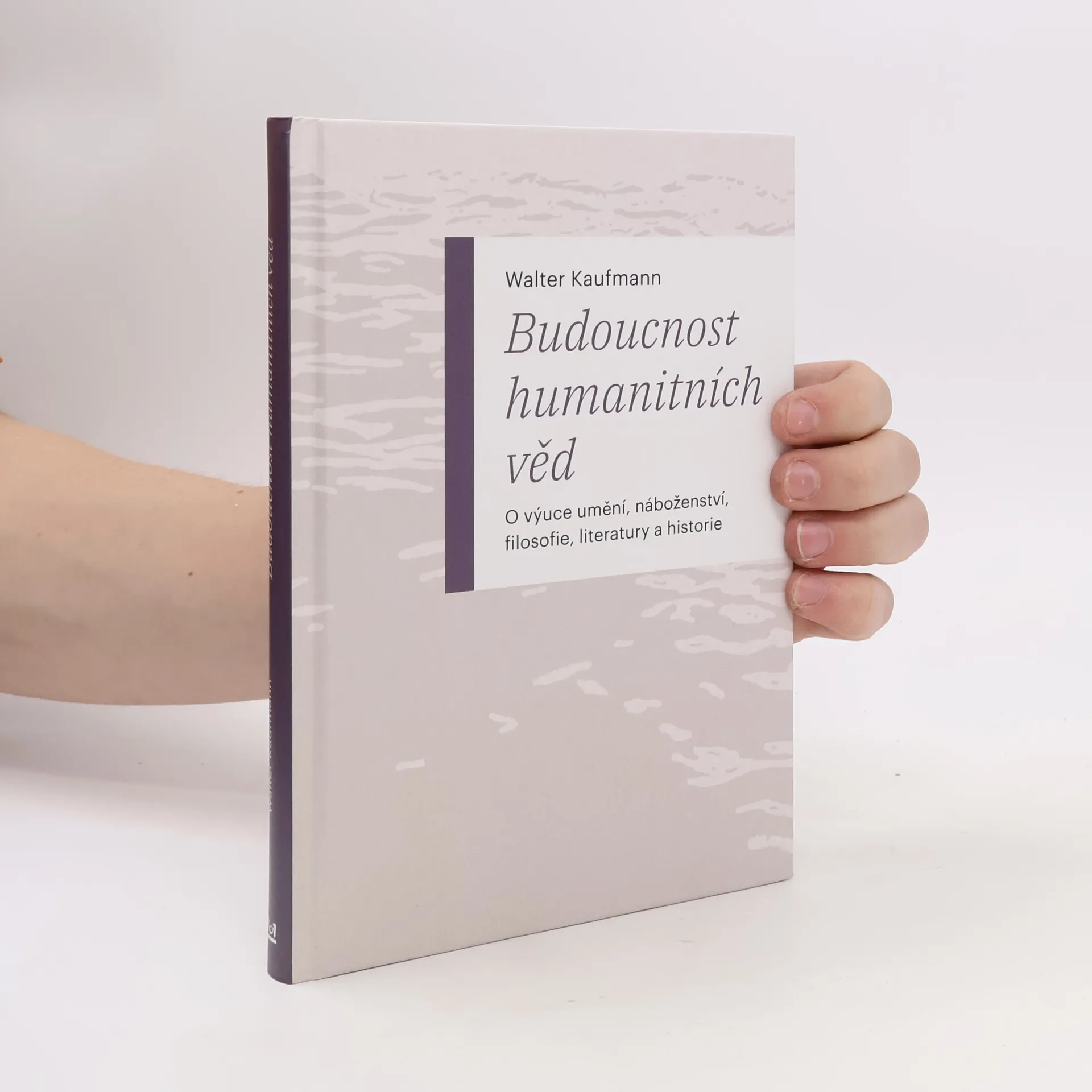
Walter A. Kaufmann (1921–1980) byl německo-americký filosof, básník a uznávaný překladatel filosofických, teologických a básnických děl. Kniha Budoucnost humanitních věd, jež je Kaufmannovou poslední knihou, vyšla poprvé v New Yorku v roce 1977 a zabývá se krizí humanitních věd. Původem n...
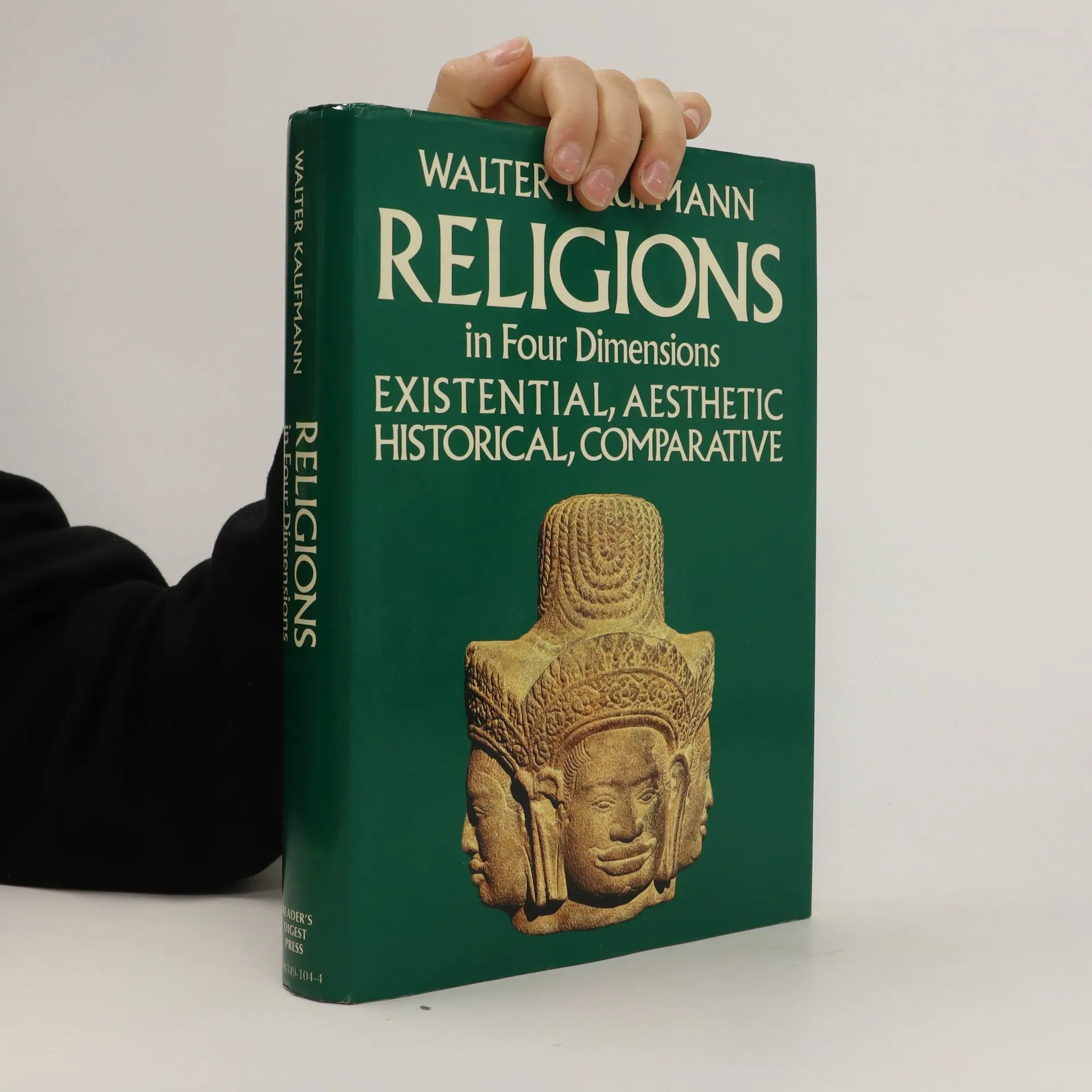
Well produced, copiously illustrated scholarly tome covering all major world religions. Well over 200 illustrations including 183 in color, photos by the author. Includes a bibliography. Prologue Ancient Israel Ancient Iran The Jews since Jeremiah: exile & return The New Testament Post-Biblical Christianity Muhammad & the Koran Islam after Muhammad Ancient India Hinduism: caste, the Gita & Gandhi The third face of India Jainism, Sikhism, Buddhism From Ceylon to Japan Judaism, Christianity, Islam & the arts Hinduism, Jainism, Buddhism & the arts Epilogue: Landscape & religion Acknowledgment Note on the Translations Note on Transliteration Bibliography Index Notes on the Pictures Chronology
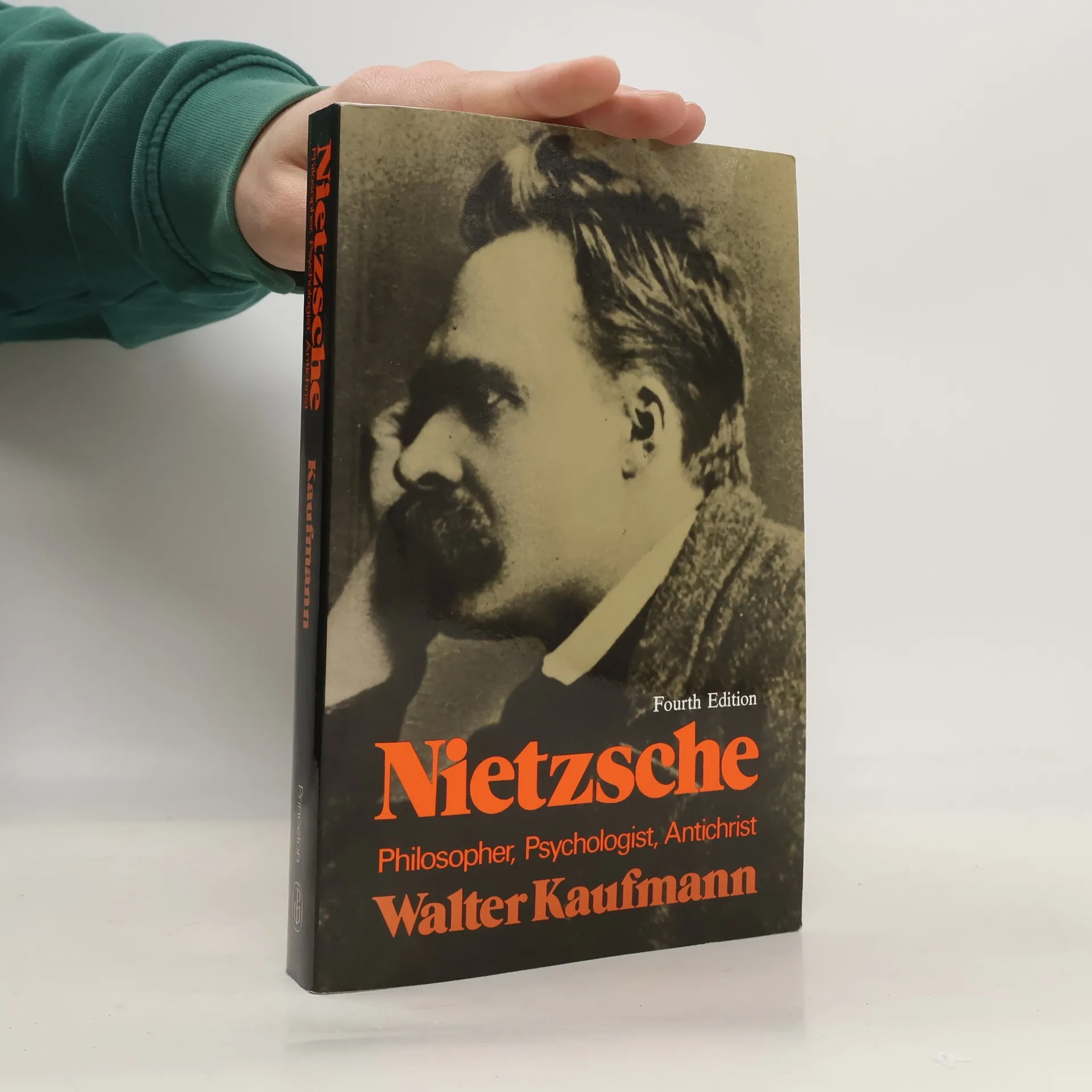
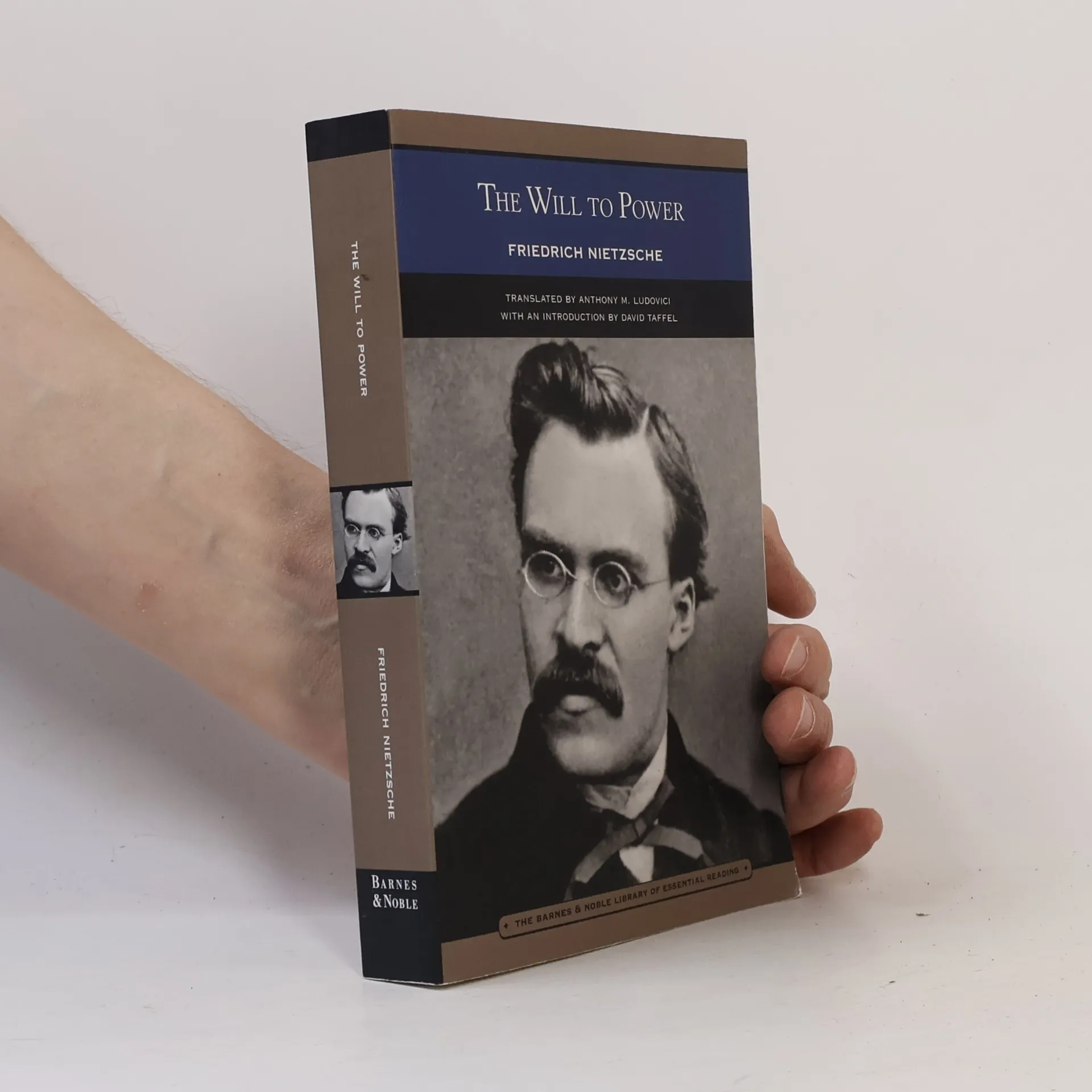
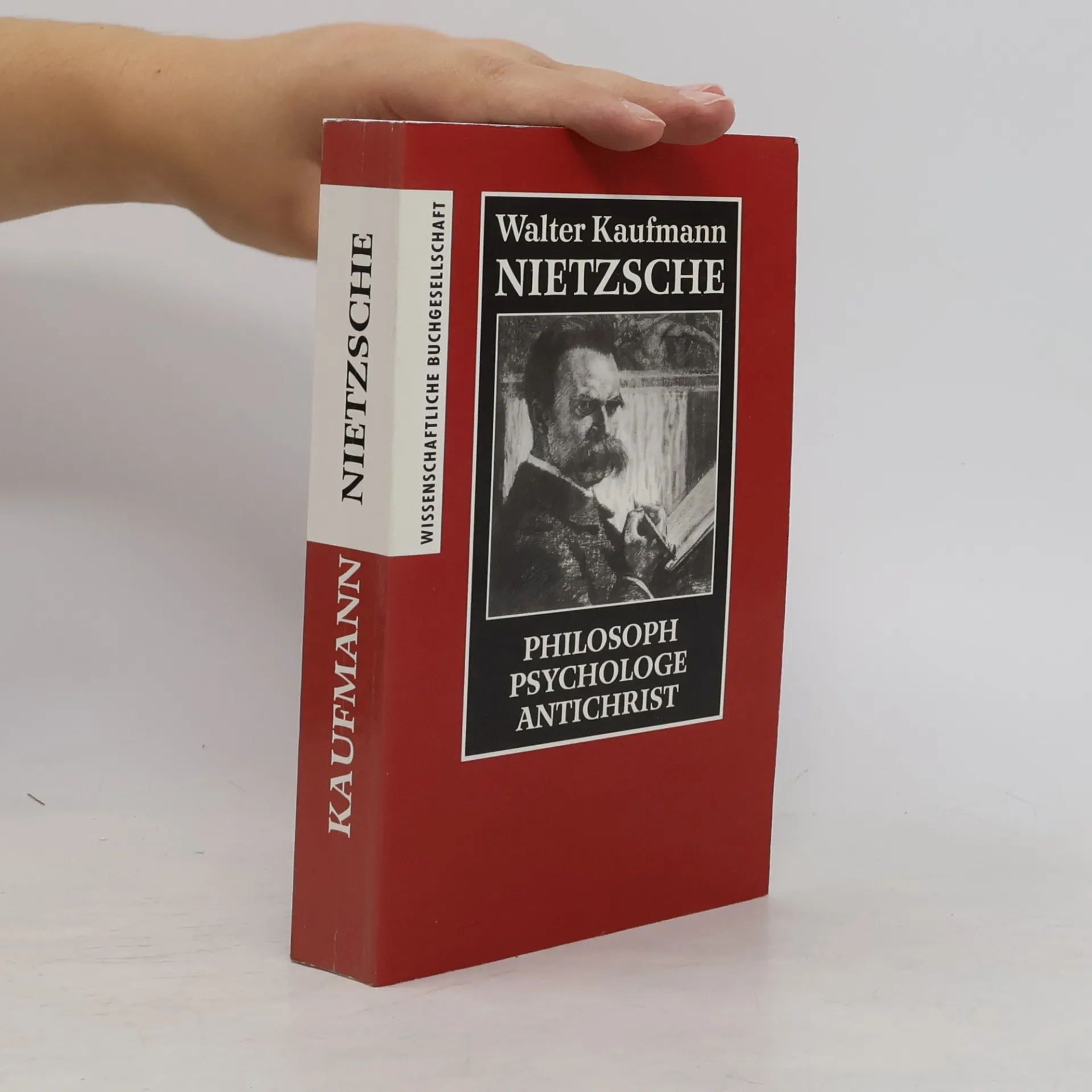
This classic work is the benchmark for modern interpretations of Nietzsche. Written by Walter Kaufmann in the aftermath of World War II, it countered the perception of Nietzsche as part madman and proto-Nazi, instead presenting him as a significant philosopher. Kaufmann provided a balanced account of Nietzsche's life and works, addressing the myths and counter-myths that had emerged around him. He acknowledged the troubling aspects of Nietzsche's proclamations while contextualizing them within his broader philosophical contributions and highlighting counterexamples from a responsible reading of his texts. Kaufmann argued that Nietzsche's ideas about power represent a major achievement in modern philosophy, emphasizing that the "will to power" should not be viewed as mere self-assertion but linked to his concepts of sublimation. He also positioned Nietzsche as a forerunner of modern psychology, suggesting that understanding his philosophy requires recognizing it as a reaction against Christianity. Despite some scholars challenging Kaufmann's interpretations over the past fifty years, this work remains one of the most influential analyses of a major Western thinker.
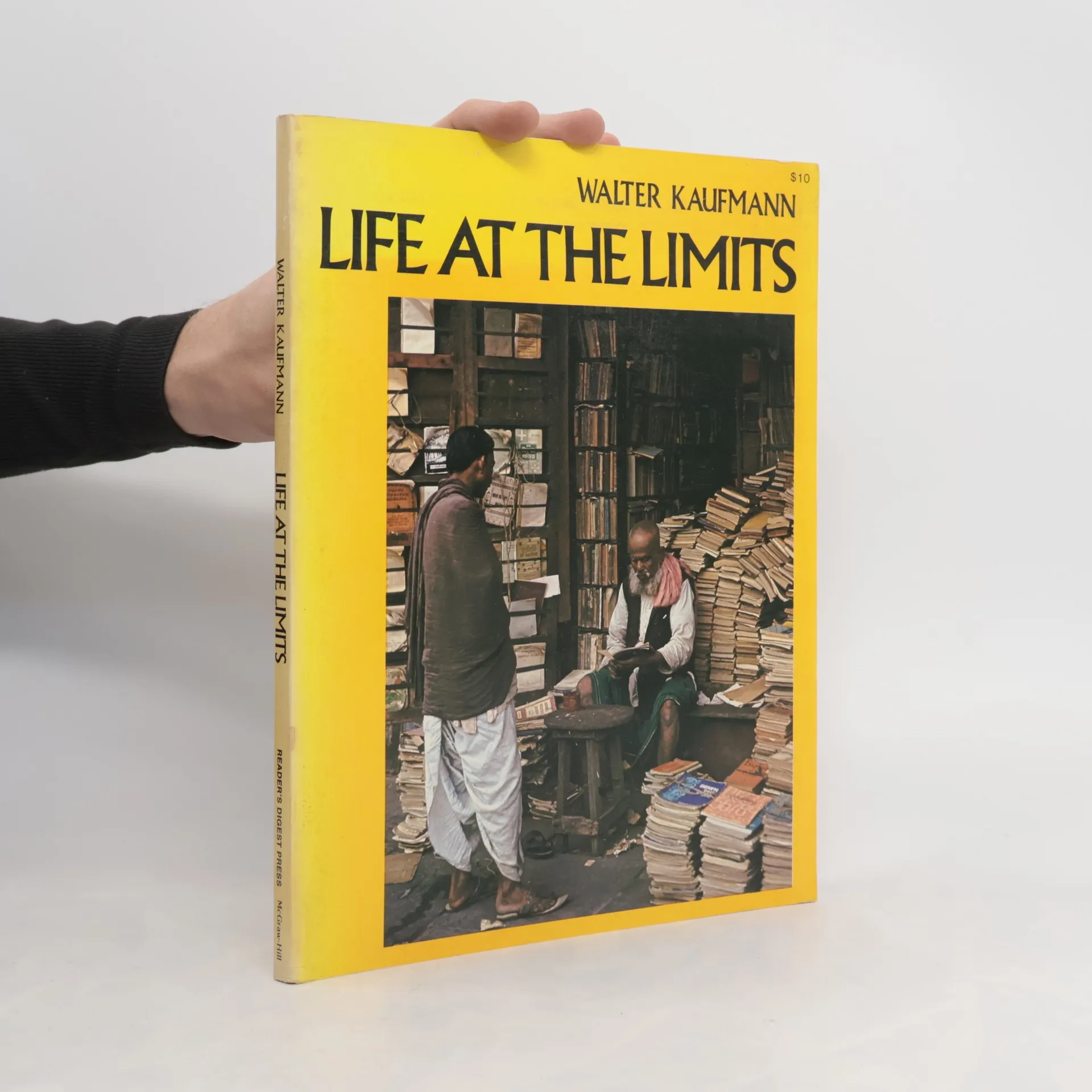
"Life at the Limits" fuses photography and poetry, scholarship and philosophy to present a vision of the human condition. The color photographs depict people in India while the text largely addresses the West. The final chapters compare attitudes toward extreme situations in India and the West. The second part, "Time Is an Artist," explores time's artistry in nature and its effects on human art, including patina, torsos, and ruins. It critically examines multimillion-dollar restoration projects and connects different attitudes toward time with our views on ourselves, the past, old age, and death, as well as widows and witches. The social implications are developed, and the epilogue is titled "Old is Beautiful." The last part, "What Is Man?," represents the culmination of the Trilogy. The text and pictures are meant to be lived with, and the whole book is intended for continued meditation and reflection.
The works of Friedrich Nietzsche have fascinated readers around the world ever since the publication of his first book more than a hundred years ago. As Walter Kaufmann, one of the world's leading authorities on Nietzsche, notes in his introduction, "Few writers in any age were so full of ideas," and few writers have been so consistently misinterpreted. The Portable Nietzsche includes Kaufmann's definitive translations of the complete and unabridged texts of Nietzsche's four major works: Twilight of the Idols, The Antichrist, Nietzsche Contra Wagner and Thus Spoke Zarathustra. In addition, Kaufmann brings together selections from his other books, notes, and letters, to give a full picture of Nietzsche's development, versatility, and inexhaustibly. "In this volume, one may very conveniently have a rich review of one of the most sensitive, passionate, and misunderstood writers in Western, or any, literature." -Newsweek
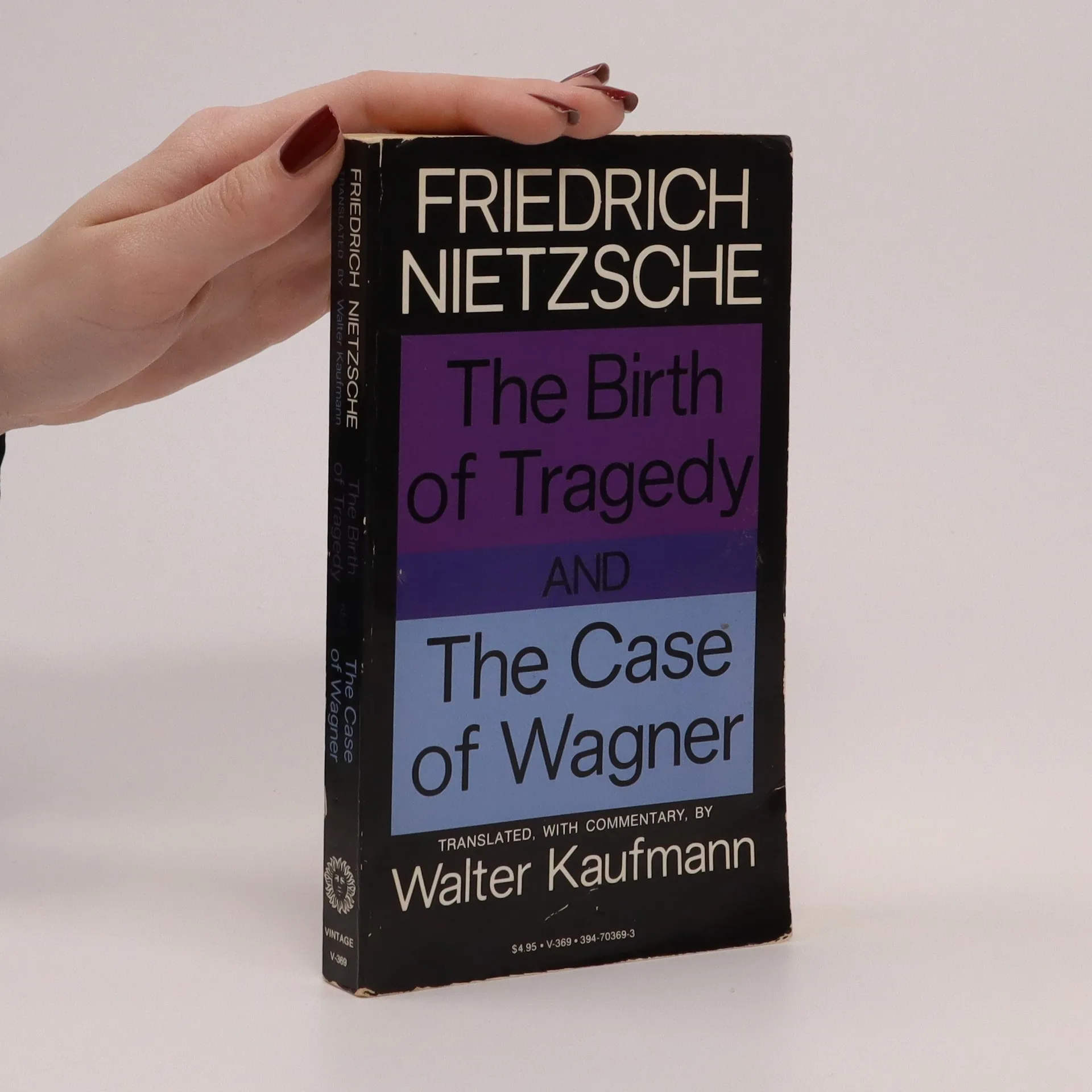
The Birth of Tragedy (1872) was Nietzsche's 1st book. Its youthful faults were exposed by him in the brilliant 'Attempt at a Self-Criticism' which he added to the new edition of 1886. But the book, whatever its excesses, remains one of the most relevant statements on tragedy ever penned. It exploded the conception of Greek culture that was prevalent down thru the Victorian era. It sounded themes developed in the 20th century by classicists, existentialists, psychoanalysts & others. The Case of Wagner (1888) was one his last books & his wittiest. In attitude & style it's diametrically opposed to The Birth of Tragedy. Both works transcend their ostensible subjects & deal with art & culture, as well as the problems of the modern age generally. Each book in itself gives us an inadequate idea of its author; together, they furnish a striking image of Nietzsche's thought. The distinguished new translations by Walter Kaufmann superbly reflect in English Nietzsche's idiom & the vitality of his style. Kaufmann has also furnished running footnote commentaries, relevant passages from Nietzsche's correspondence, a bibliography, &, for the 1st time in any edition, an extensive index to each book.
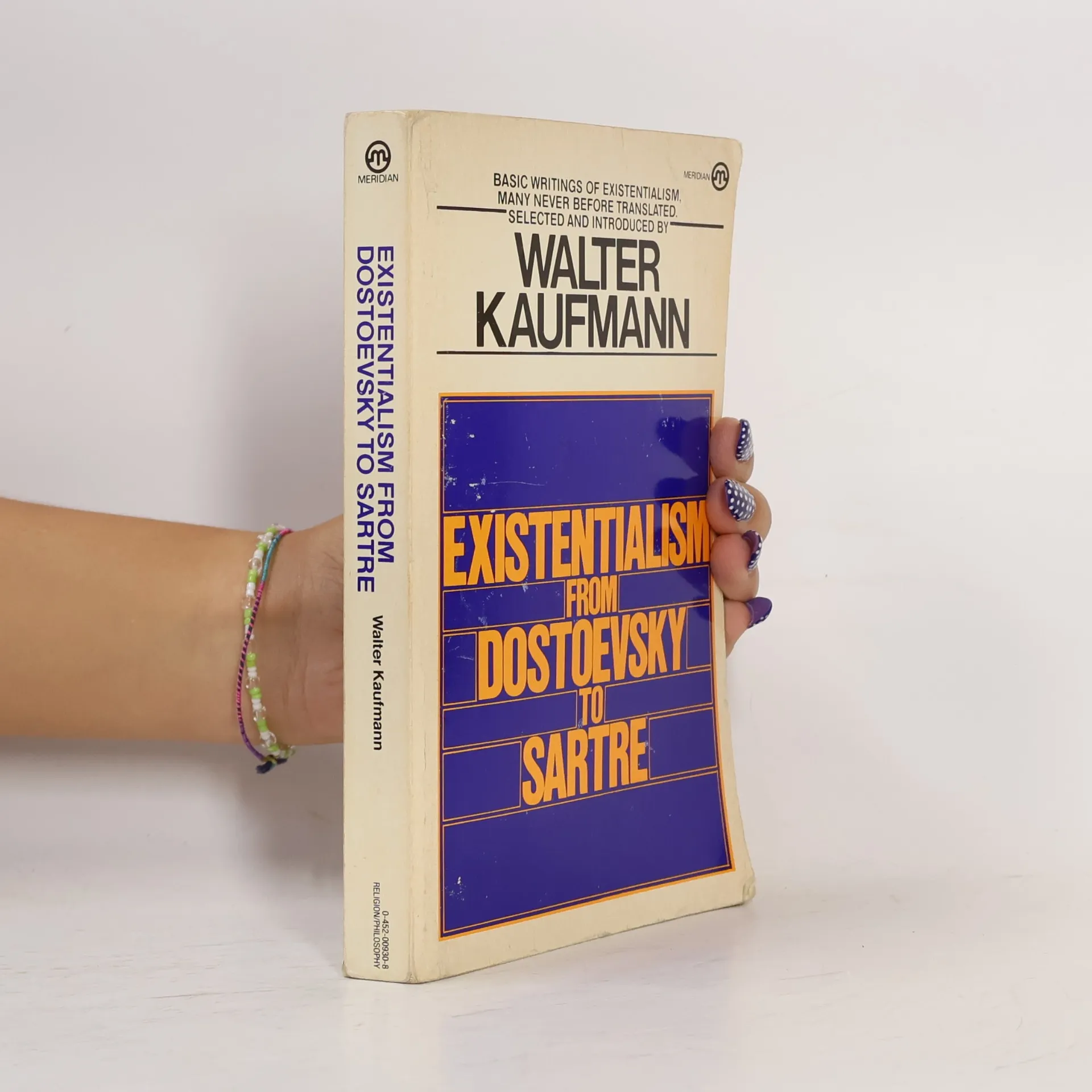
One of the foremost resources on existentialism from renowned philosopher, poet, and Nietzsche translator Walter Kaufmann—a must-read for philosophers, both armchair and professional. Existentialism from Dostoevsky to Sartre provides basic writings of Dostoevsky, Kierkegaard, Nietzsche, Rilke, Kafka, Ortega, Jaspers, Heidegger, Sartre, and Camus, including some not previously translated, along with an invaluable introductory essay by Walter Kaufmann.
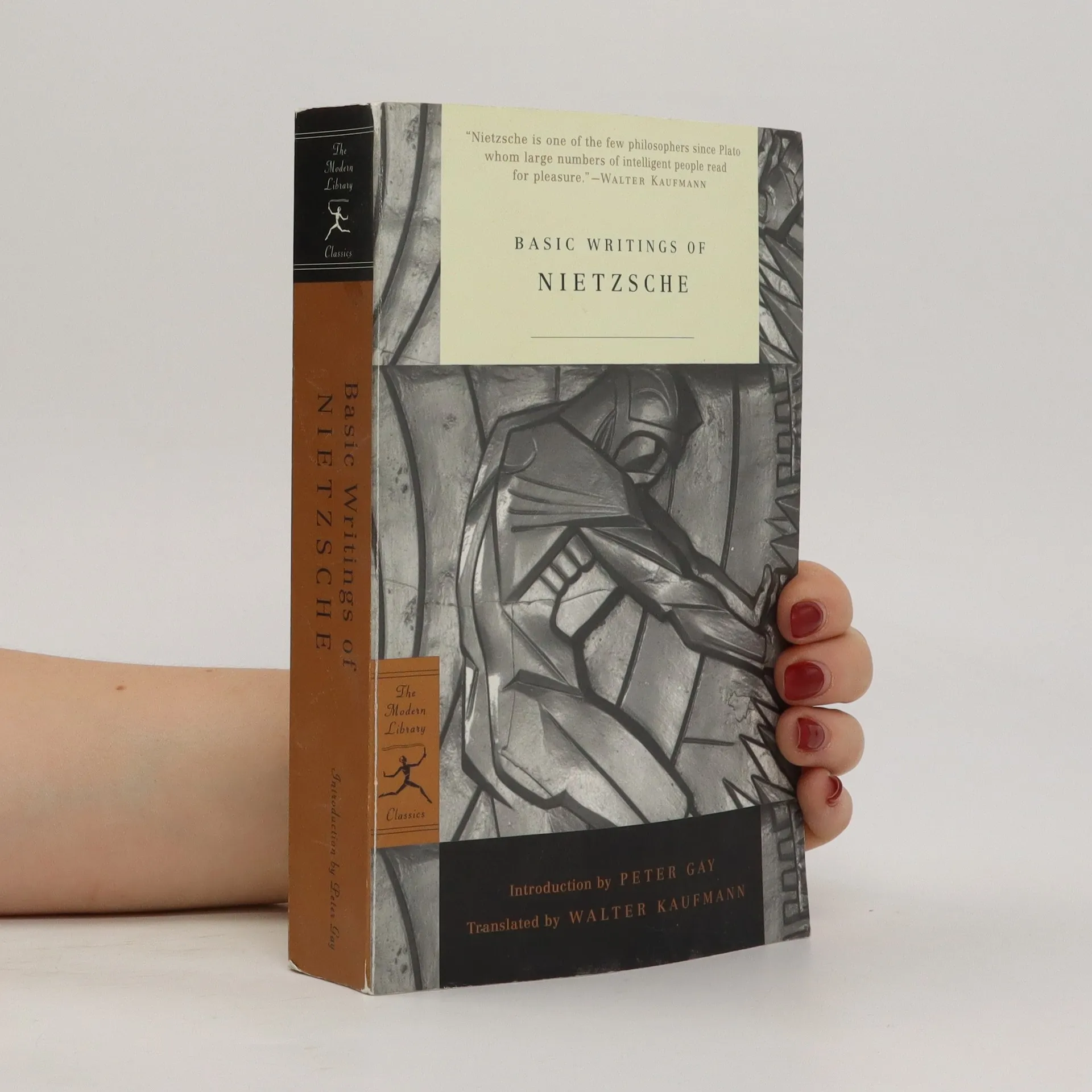
Introduction by Peter Gay Translated and edited by Walter Kaufmann Commentary by Martin Heidegger, Albert Camus, and Gilles Deleuze One hundred years after his death, Friedrich Nietzsche remains the most influential philosopher of the modern era. Basic Writings of Nietzsche gathers the complete texts of five of Nietzsche’s most important works, from his first book to his last: The Birth of Tragedy, Beyond Good and Evil, On the Genealogy of Morals, The Case of Wagner, and Ecce Homo. Edited and translated by the great Nietzsche scholar Walter Kaufmann, this volume also features seventy-five aphorisms, selections from Nietzsche’s correspondence, and variants from drafts for Ecce Homo. It is a definitive guide to the full range of Nietzsche’s thought. Includes a Modern Library Reading Group Guide
Heralds the decline of modern Western civilization. In this book, nihilism - the uncanny and pervasive feeling that life is devoid of all meaning, purpose, and value - is subjected to a thoroughgoing and multifaceted examination.
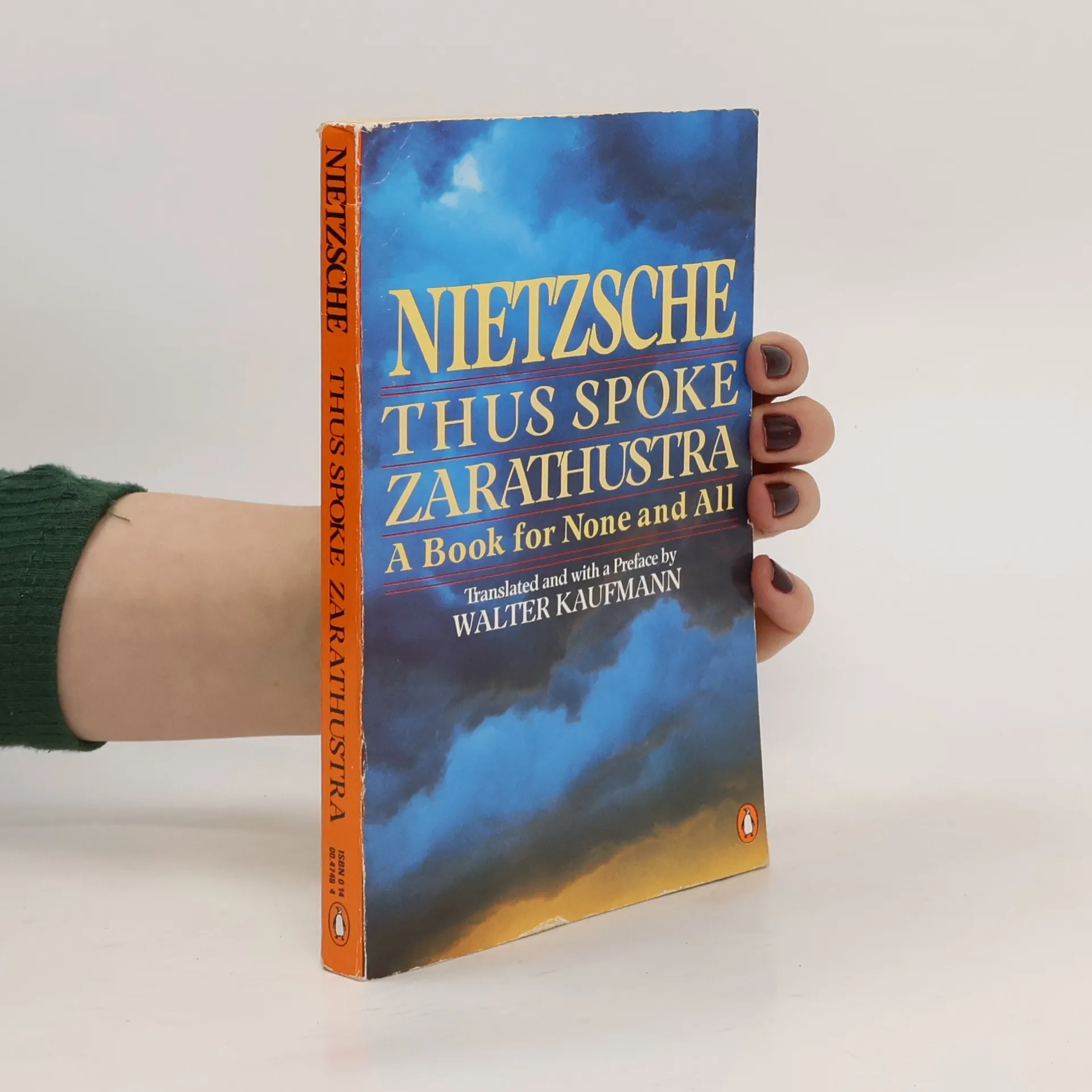
Friedrich Nietzsche's most accessible and influential philosophical work, misquoted, misrepresented, brilliantly original and enormously influential Nietzsche was one of the most revolutionary and subversive thinkers in Western philosophy, and Thus Spoke Zarathustra remains his most famous and influential work. It describes how the ancient Persian prophet Zarathustra descends from his solitude in the mountains to tell the world that God is dead and that the Superman, the human embodiment of divinity, is his successor. Nietzsche's utterance 'God is dead', his insistence that the meaning of life is to be found in purely human terms, and his doctrine of the Superman and the will to power were all later seized upon and unrecognisably twisted by, among others, Nazi intellectuals. With blazing intensity and poetic brilliance, Nietzsche argues that the meaning of existence is not to be found in religious pieties or meek submission to authority, but in an all-powerful life force: passionate, chaotic and free.
Dieses Buch entwickelt eine kühne Poetik, die auf der kritischen Neubewertung der Ansichten von Platon, Aristoteles, Hegel und Nietzsche zur Tragödie basiert. Die antike griechische Tragödie wird als überraschend modern und experimentell enthüllt, während Konzepte wie Mimesis, Katharsis, Hybris und der tragische Konflikt aus verschiedenen Perspektiven diskutiert werden. Kaufmann hat eine tiefgehende Analyse des Wesens der Tragödie versucht. Er bietet eine neue Definition und seine Version der Poetik im Gegensatz zu der von Aristoteles an.
Am 19. Januar 1939 erreicht Walter Kaufmann mit einem der letzten jüdischen Kindertransporte aus Nazi-Deutschland London. An seinem 15. Geburtstag fühlt er sich kurz sicher in der Internatsschule Bunce Court, doch im Mai 1940 internieren ihn die britischen Behörden als 'Ausländer' in Liverpool. Zusammen mit zweitausend anderen Flüchtlingen wird er auf dem Gefangenenschiff Dunera nach Australien deportiert und verbringt 18 Monate in Wüstencamps zwischen Stacheldraht und Wachtürmen. Sein Leben gleicht einem Abenteuerroman: Er wird Obstpflücker, Soldat, Hafenarbeiter, Hochzeitsfotograf, Seemann und Schriftsteller. In Australien schließt er sich der Gewerkschaftsbewegung und der KP an, liest in Fabriken aus seinen Erzählungen. 1955 kehrt er nach Europa zurück und lebt als Schriftsteller in der DDR. Seine Werke stoßen oft an die Grenzen der Zensur, und die Stasi hat ihn im Visier. Trotz der Herausforderungen sind seine Auslandsreportagen präzise Zeitzeugnisse. Er erlebt bedeutende Momente, wie die Freisprechung von Angela Davis 1972. 1983 ist er im Libanon und erkundet Israel, während ihn der Konflikt zwischen Arabern und Juden erschüttert. In Nordirland entgeht er knapp einem Bombenattentat. Als erfolgreicher Autor bleibt er neugierig und erforscht mit der Entdeckerlust eines Jack London fremde Ufer, während er über seine Erlebnisse voller Leuchtkraft und Lebendigkeit schreibt. Walter Kaufmanns Lebensreise spannt sich über acht Ja
















![40 [Vierzig] Begegnungen mit Ausserirdischen in Brasilien](https://rezised-images.knhbt.cz/1920x1920/75873267.webp)