

"Articles and Lectures" compiles F. M. Alexander’s writings on the Alexander Technique, divided into six sections. It includes early articles tracing the technique's origins, letters addressing misconceptions, lectures showcasing his spontaneity, aphorisms summarizing teaching principles, draft material for an unfinished book, and an autobiographical sketch revealing his character and early life.
F. Matthias Alexander Pořadí knih
Frederick Matthias Alexander byl australský herec, který vyvinul vzdělávací metodu známou jako Alexanderova technika. Tato metoda se zaměřuje na rozpoznávání a překonávání reaktivních, habituálních omezení v pohybu a myšlení. Alexanderova technika pomáhá jednotlivcům dosáhnout větší svobody a efektivity v jejich jednání a vnímání. Její principy nacházejí uplatnění v široké škále činností, od uměleckých po každodenní.


- 2023
- 2023
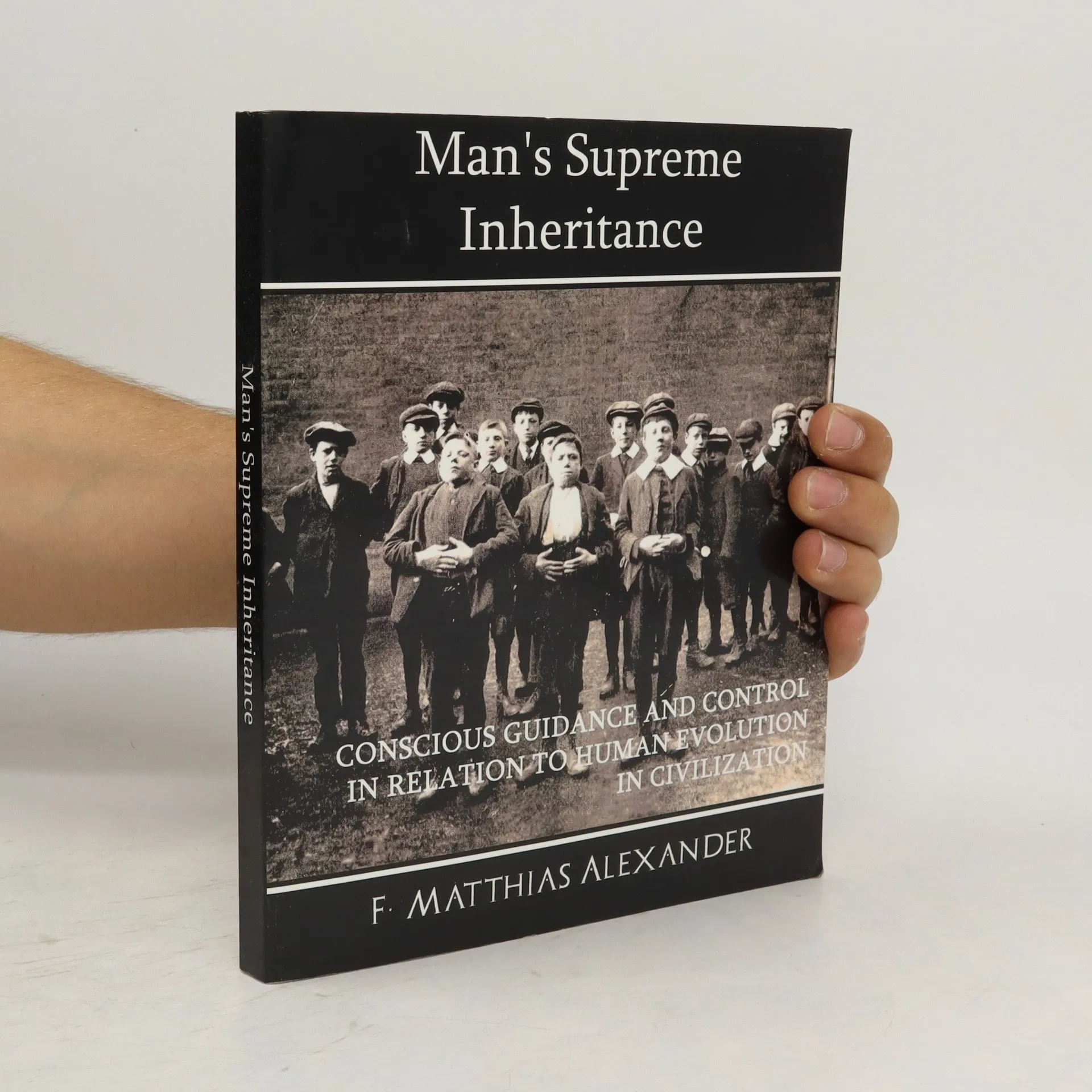
"Man’s Supreme Inheritance," Alexander's first book published in 1910, explores our potential for conscious self-use in daily life. He critiques subconscious remedies and highlights issues like tension and poor coordination affecting health. His technique unifies mind and body, promoting prevention and a new way of living beyond mere treatment.
- 2023
The Universal Constant in Living, Alexander's final book, encapsulates his extensive teaching experience and mature thoughts on his technique. Written during the 1930s and early WWII, it emphasizes the importance of wholeness in living and presents fundamental principles like prevention and primary control. Testimonies and support from Professor George Coghill highlight its practical impact.
- 2023
"Constructive Conscious Control of the Individual," F. M. Alexander's second book, expands on his first work, arguing that our actions are often driven by feelings rather than reason. It offers practical methods for regaining conscious control over movements and thoughts, emphasizing sensory appreciation in various contexts like education and happiness.
- 2007
Man's Supreme Inheritance
- 280 stránek
- 10 hodin čtení
Whoever hesitates to utter that which he thinks the highest truth, lest it should be too much m advance of the time, may reassure himself by looking at his act DEGREES from an impersonal point of view. . . . It is not for nothing that he has in him these sympathies with some principles and repugnance to others. He, with all his capacities, and aspirations, and beliefs, is not an accident, but a product of the time. He must remember that while he is a descendant of the past he is a parent of the future; and that his thoughts are as children born to him, which he may not carelessly let die. Herbert S