Knihobot

Robert Wuthnow

    1. leden 1946
    What Happens When We Practice Religion?
    American Misfits and the Making of Middle-Class Respectability
    The Left Behind
    Why Religion Is Good for American Democracy
    In the Blood
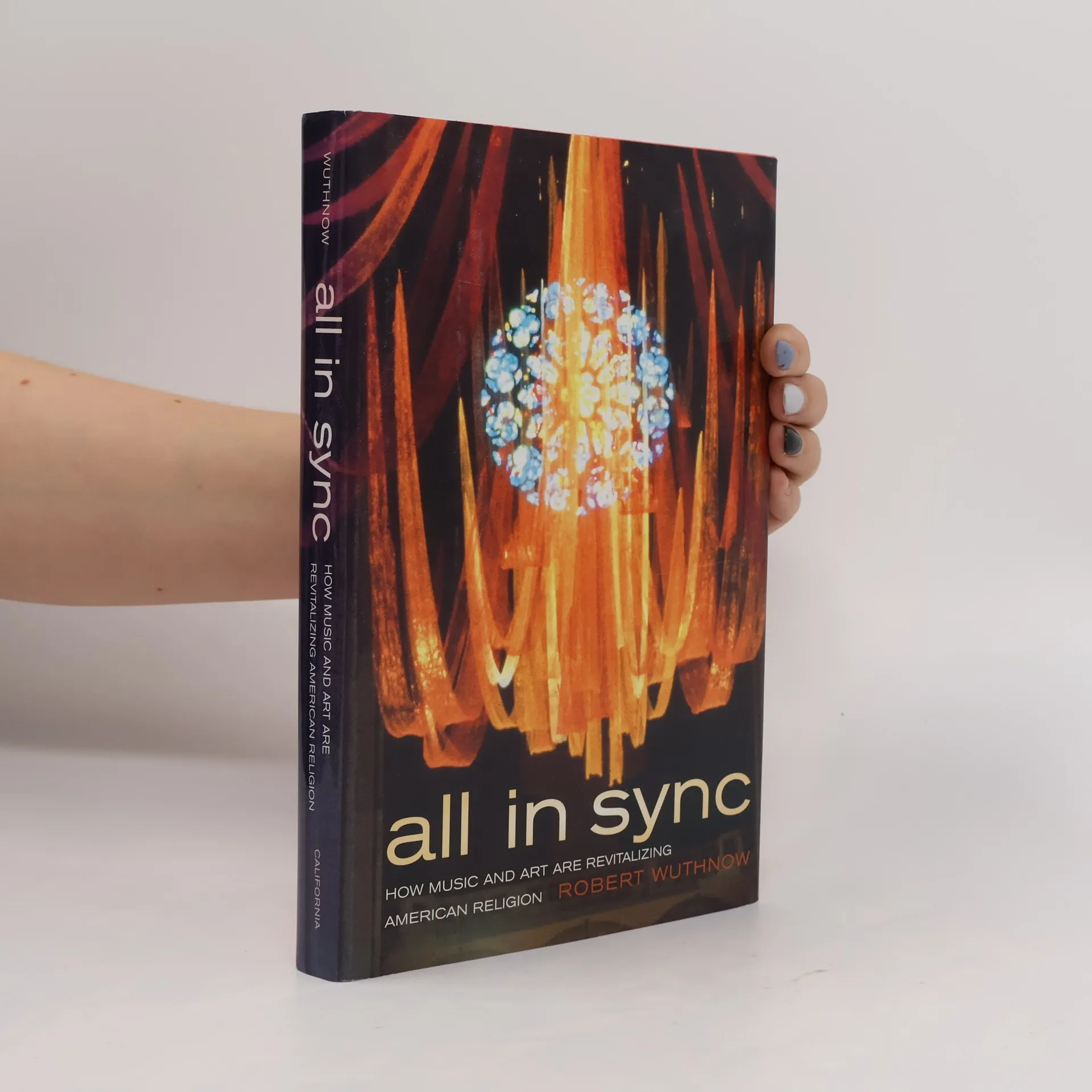
    All in Sync
    • All in Sync

      • 300 stránek
      • 11 hodin čtení
      5,0(1)Ohodnotit

      Annotation Nationally-known sociologist Robert Wuthnow studies the relationship between art and American religion, documenting the strong, positive relationship between participation in the arts and the burgeoning interest in spiritual growth.

      All in Sync
    • In the Blood

      • 240 stránek
      • 9 hodin čtení
      3,0(2)Ohodnotit

      A vivid and moving portrait of America's farm families Farming is essential to the American economy and our daily lives, yet few of us have much contact with farmers except through the food we eat. Who are America's farmers? Why is farming important to them? How are they coping with dramatic changes to their way of life? In the Blood paints a vivid and moving portrait of America’s farm families, shedding new light on their beliefs, values, and complicated relationship with the land. Drawing on more than two hundred in-depth interviews, Robert Wuthnow presents farmers in their own voices as they speak candidly about their family traditions, aspirations for their children, business arrangements, and conflicts with family members. They describe their changing relationships with neighbors, their shifting views about religion, and the subtle ways they defend their personal independence. Wuthnow shares the stories of farmers who operate dairies, raise livestock, and grow our fruit and vegetables. We hear from corn and soybean farmers, wheat-belt farmers, and cotton growers. We gain new insights into how farmers assign meaning to the land, and how they grapple with the increasingly difficult challenges of biotechnology and global markets. In the Blood reveals how, despite profound changes in modern agriculture, farming remains an enduring commitment that runs deeply in the veins of today’s farm families.

      In the Blood
    • 3,5(10)Ohodnotit

      This book explores the role of religion in American democracy, highlighting the divided scholarly and public opinions on its impact. Some argue that religion benefits democracy, while others see it as harmful, with a middle ground suggesting that the type of religion matters. Robert Wuthnow contends that these perspectives oversimplify a complex issue. The diversity of religion in the U.S. is crucial, as it fosters engagement among faith communities on pressing societal issues, often involving competition among different groups. Wuthnow asserts that this deep diversity has generally led to positive political outcomes. People of faith actively participate in shaping the nation's policies, advocating for their beliefs. The variety of religious groups helps prevent any single ideology from dominating and introduces innovative ideas into public discourse. The book presents empirical evidence of how diverse religious organizations have influenced democratic values over the past century. Each chapter serves as a case study, examining instances where religious groups have fought against tyranny, supported freedom of assembly, championed human dignity, advocated for immigrant rights, and addressed wealth disparities. Unlike many works that criticize religious involvement in politics, this book offers a nuanced perspective on the contributions of diverse religious groups to democracy.

      Why Religion Is Good for American Democracy
    • The Left Behind

      • 208 stránek
      • 8 hodin čtení
      3,5(481)Ohodnotit

      Why did rural Americans vote overwhelmingly for Donald Trump? Beyond economic and demographic decline, is there a more nuanced explanation for the growing rural-urban divide? Wuthnow brings us into America's small towns, farms, and rural communities so we can hear from farmers who want government out of their business, factory workers who believe in working hard to support their families, town managers who find the federal government unresponsive to their communities' needs, and clergy who say the moral climate is being undermined. Wuthnow shows how this important population will influence the nation's political future. -- adapted from jacket.

      The Left Behind
    • The construction of American respectability has often involved disparaging those who fail to conform to societal norms. The journey toward middle-class respectability in nineteenth-century America is frequently framed as a process of instilling positive values like honesty, hard work, and cultural refinement. However, it also involved a negative aspect, where clergy, educators, and community leaders defined respectability by targeting "misfits" who deviated from accepted standards. Robert Wuthnow explores this dynamic, arguing that respectability is shaped by "othering" individuals and groups that do not fit into socially approved categories. Through a detailed examination of various marginalized figures, he highlights the stories of a disabled Civil War veteran, a woman raising her family while her husband was institutionalized, an immigrant community accused of sedition, and a wealthy individual charged with profiteering. These misfits, often overlooked in narratives of national success, played a crucial role in the cultural fabric of America. Their experiences shed light on the ongoing practice of "othering" that continues to influence American culture and politics today.

      American Misfits and the Making of Middle-Class Respectability
    • What Happens When We Practice Religion?

      • 232 stránek
      • 9 hodin čtení

      He favors the use of a broad range of analytic tools drawn from multiple disciplines and approaches to the study of religion.) The five chapters of this book describe the central concepts and arguments now advancing the study of religious practice. Chapter 1, entitled "Theories", discusses the theoretical contributions associated with the aforementioned shift in religious studies to the investigation of religious practice. Chapter 2, "Situations", discusses how religious activities and experiences are shaped by the physical and temporal spaces in which social action occurs. Chapter 3, "Intentions", takes on an important topic that has proven difficult to study from a social science perspective. "Feelings" are the focus of Chapter 4, and the role of "Bodies" is addressed in Chapter 5. .

      What Happens When We Practice Religion?
    • The work for racial justice in the U.S. following the Civil Rights movement is a crucial yet often overlooked aspect of American religious history, overshadowed by the Religious Right. For decades, lesser-known faith leaders across the country have fought for fair housing, community development, affirmative action, voter registration, and against racial profiling. These leaders came from diverse backgrounds, including mainstream White Protestant denominations, Black denominations, Roman Catholic groups, and Jewish organizations. Many were affiliated with African Methodist Episcopal, Baptist, Lutheran, Methodist, Presbyterian, or United Church of Christ, as well as Brethren, Disciples of Christ, Mennonites, Moravians, and Quakers. They often formed coalitions of faith-based and nonsectarian organizations to address local issues through unsung struggles for racial justice. These efforts, often unnoticed by national media, yielded small but significant achievements. The book explores thematic chapters on community actions for fair housing, affirmative action, policy reform, and the fight against racial profiling. It highlights the systemic racism these advocates faced, which is deeply embedded in institutional structures and resistant to personal sensitization efforts. The historical record offers valuable lessons for today's racial justice advocates, emphasizing the effectiveness of progressive religious groups when they focus o

      Faith Communities and the Fight for Racial Justice