

The book offers a fresh translation of Megasthenes' detailed account of India, written around 310 BCE. It serves as the most comprehensive source of information on Indian geography, history, and customs from the classical era, providing valuable insights into the culture and society of ancient India.
Richard Stoneman Knihy
Tento autor se hluboce ponořil do tradice a kontinuity řeckého světa, přičemž jeho zájem se táhne až do současnosti. Jeho literární cesta zahrnuje tvorbu antologií a cestovních průvodců, které odrážejí tuto fascinaci. Své výzkumné úsilí soustředil zejména na Alexandra Velikého, se zvláštním zaměřením na jeho pozdější legendy a vliv napříč kulturami. Jeho práce zkoumá, jak starověké příběhy a tradice přetrvávají a formují dnešní svět, a nabízí jedinečný pohled na trvalé dědictví klasické minulosti.


The Legendary Adventures of Alexander the Great
- 112 stránek
- 4 hodiny čtení
A prince is born under a star of good fortune, and it is prophesied that he will become the greatest king of all time. Alexander grows up to fulfill this destiny, conquering all who stand in his way. But this is not enough for the young warrior. Alexander will not rest until he has defeated his mortal enemy, the King of Persia.
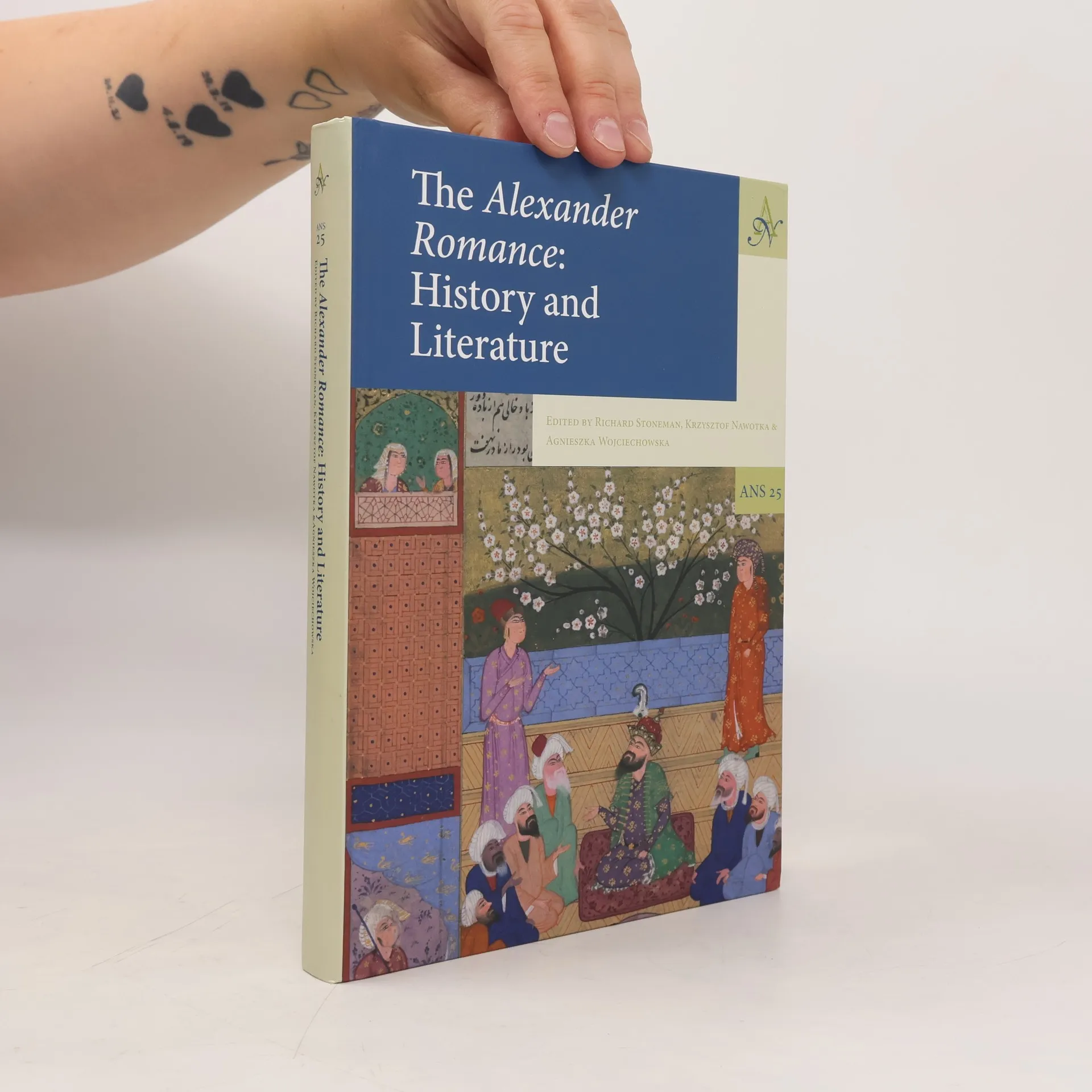
The Alexander Romance is a difficult text to define and to assess justly. From its earliest days it was an open text, which was adapted into a variety of cultures with meanings that themselves vary, and yet seem to carry a strong undercurrent of Alexander is the hero who cannot become a god, and who encapsulates the desires and strivings of the host cultures.The papers assembled in this volume, which were originally presented at a conference at the University of Wrocław, Poland, in October 2015, all face the challenge of defining the Alexander Romance. Some focus on quite specific topics while others address more overarching themes. They form a cohesive set of approaches to the delicate positioning of the text between history and literature. From its earliest elements in Hellenistic Egypt, to its latest reworkings in the Byzantine and Islamic Middle East, the Alexander Romance shows itself to be a work that steadily engages with such questions as kingship, the limits of human (and Greek) nature, and the purpose of history. The Romance began as a history, but only by becoming literature could it achieve such a deep penetration of east and west.
Dangerous Animals
- 32 stránek
- 2 hodiny čtení
Looks at a great variety of dangerous creatures and the many different ways in which they kill their prey, or defend themselves, from the great white shark to the honey bee. Suggested level: primary, intermediate, junior secondary.