Knihobot

Krzysztof Dabrowski

    Defending Rodinu
    Tsar Bomba
    Doomsday Torpedoes
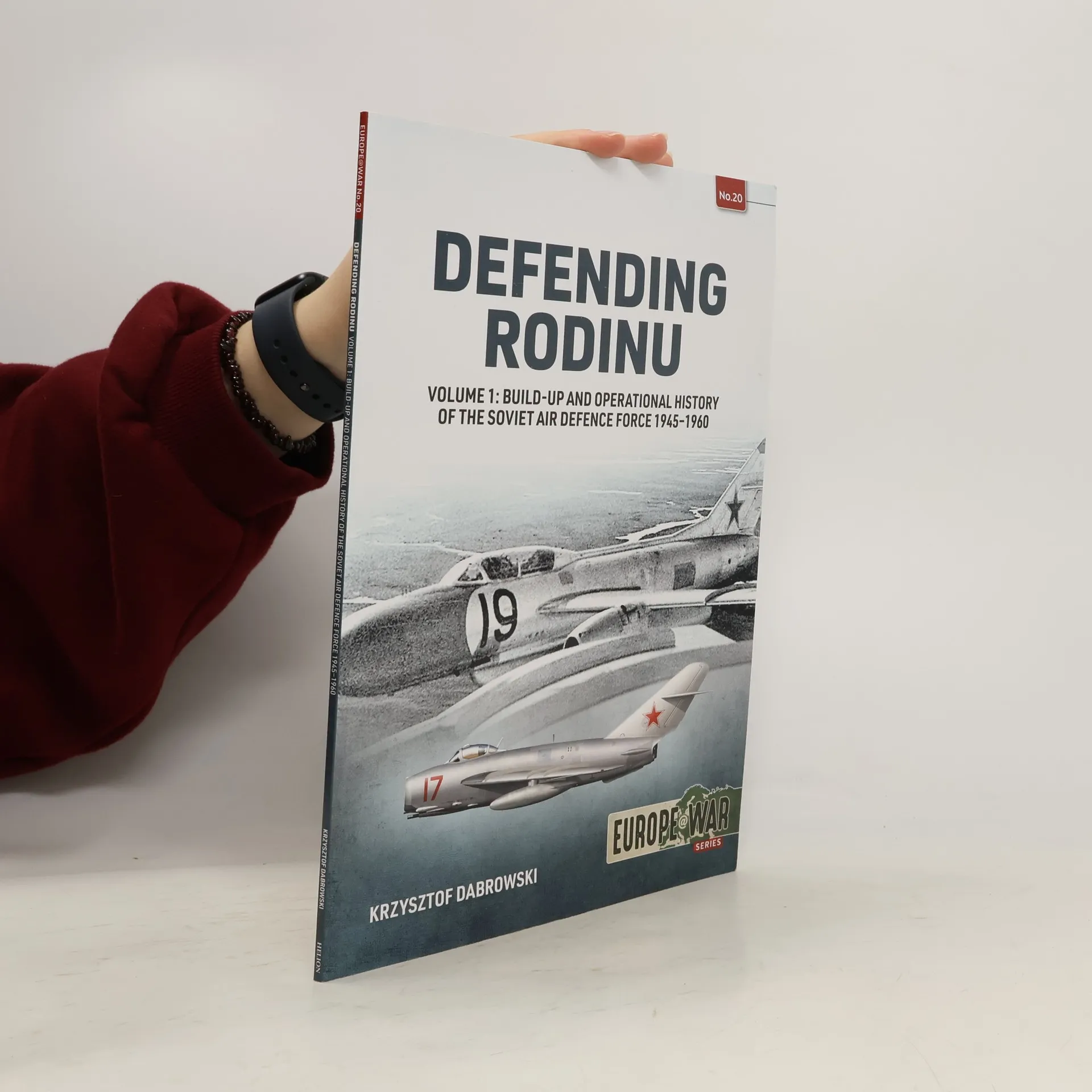
    Defending Rodinu Volume 1
    Hunt for the U-2
    • 'The Hunt for the U-2' is a succinct operational history of the confrontations between that reconnaissance aircraft and those trying to catch it and the impact these operations had in not so distant history. Richly illustrated with photographs and full colour aircraft profiles.

      Hunt for the U-2
    • Defending Rodinu Volume 1

      • 80 stránek
      • 3 hodiny čtení
      4,7(3)Ohodnotit

      Within a period of just 15 years Soviet air defenses progressed from AA guns and piston engine fighters to SAMs and missile-armed Mach 2 interceptors. This is the story of how this remarkable progress was achieved and how these assets performed in actual combat against foreign aircraft violating Soviet air space.

      Defending Rodinu Volume 1
    • Doomsday Torpedoes

      Live Testing of Soviet Naval Nuclear Weapons, 1954-1962

      • 64 stránek
      • 3 hodiny čtení

      The book delves into the strategic military developments of the Soviet Union following World War II, focusing on their efforts to enhance naval power through the integration of nuclear weapons on warships. It explores the historical context of the Cold War, detailing the live testing of these doomsday torpedoes and their implications for global security. Through this examination, the narrative sheds light on the technological advancements and the geopolitical tensions that characterized this pivotal era in history.

      Doomsday Torpedoes
    • On 30 October 1961, the Soviet Union conducted a live test of the most powerful nuclear weapon ever created, codenamed 'Ivan' or 'Tsar Bomba'. Detonated at Sukhoy Nos cape in the Novaya Zemla archipelago, this RDS-202 hydrogen bomb unleashed approximately 58 megatons of TNT, producing an 8-kilometer fireball and a mushroom cloud that reached 95 kilometers in altitude. The shockwave devastated a village 55 kilometers away and caused extensive environmental damage over a wide radius, with a heat wave felt as far as 270 kilometers. This test was just one of 45 nuclear detonations conducted by the USSR in October 1961 alone. Between 1949 and 1962, the Soviets detonated 214 nuclear bombs in the open air, many released from aircraft operated by specialized test units. These units, staffed by individuals known as the 'deaf-and-dumb', operated under strict secrecy, living in isolation while managing aircraft like the Tupolev Tu-4, Tu-16, and Tu-95. Frequently pushing the limits of their modified planes while testing weapons of immense destructive power, many narrowly escaped disaster. Richly illustrated with authentic photographs and custom color profiles, this narrative delves into the experiences of the aircrews and their aircraft, hidden behind the Iron Curtain and a shroud of secrecy for over fifty years.

      Tsar Bomba
    • Within just 15 years the Soviet air defenses progressed from conventional AA guns and piston engine fighters to SAMs and Mach 2 capable missile armed interceptors.

      Defending Rodinu