

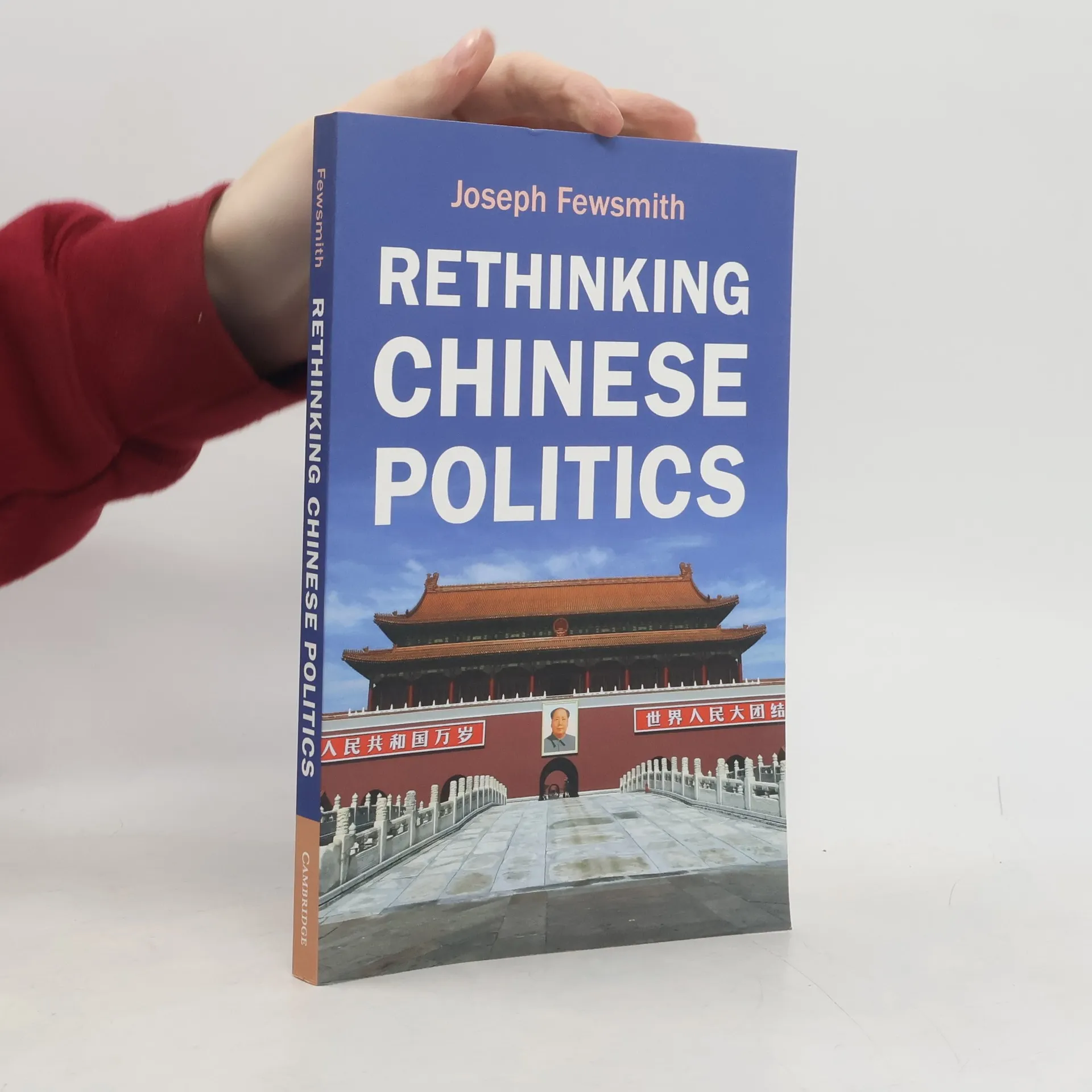
Understanding Chinese politics has become more important than ever. Some argue that China's political system is 'institutionalized' or that 'win all/lose all' struggles are a thing of the past, but, Joseph Fewsmith argues, as in all Leninist systems, political power is difficult to pass on from one leader to the next. Indeed, each new leader must deploy whatever resources he has to gain control over critical positions and thus consolidate power. Fewsmith traces four decades of elite politics from Deng to Xi, showing how each leader has built power (or not). He shows how the structure of politics in China has set the stage for intense and sometimes violent intra-elite struggles, shaping a hierarchy in which one person tends to dominate, and, ironically, providing for periods of stability between intervals of contention.
Joseph Fewsmith Knihy

China Since Tiananmen
- 344 stránek
- 13 hodin čtení
In this insightful analysis, Joseph Fewsmith examines China's political and social transformations since the Tiananmen Square crackdown in 1989, focusing on developments post-2001. He explores reforms under Jiang Zemin and Hu Jintao, highlighting the growing influence of citizens on government policies and China's emergence as a global power.