
Knihobot

Antti Laaksonen

    1. leden 1987
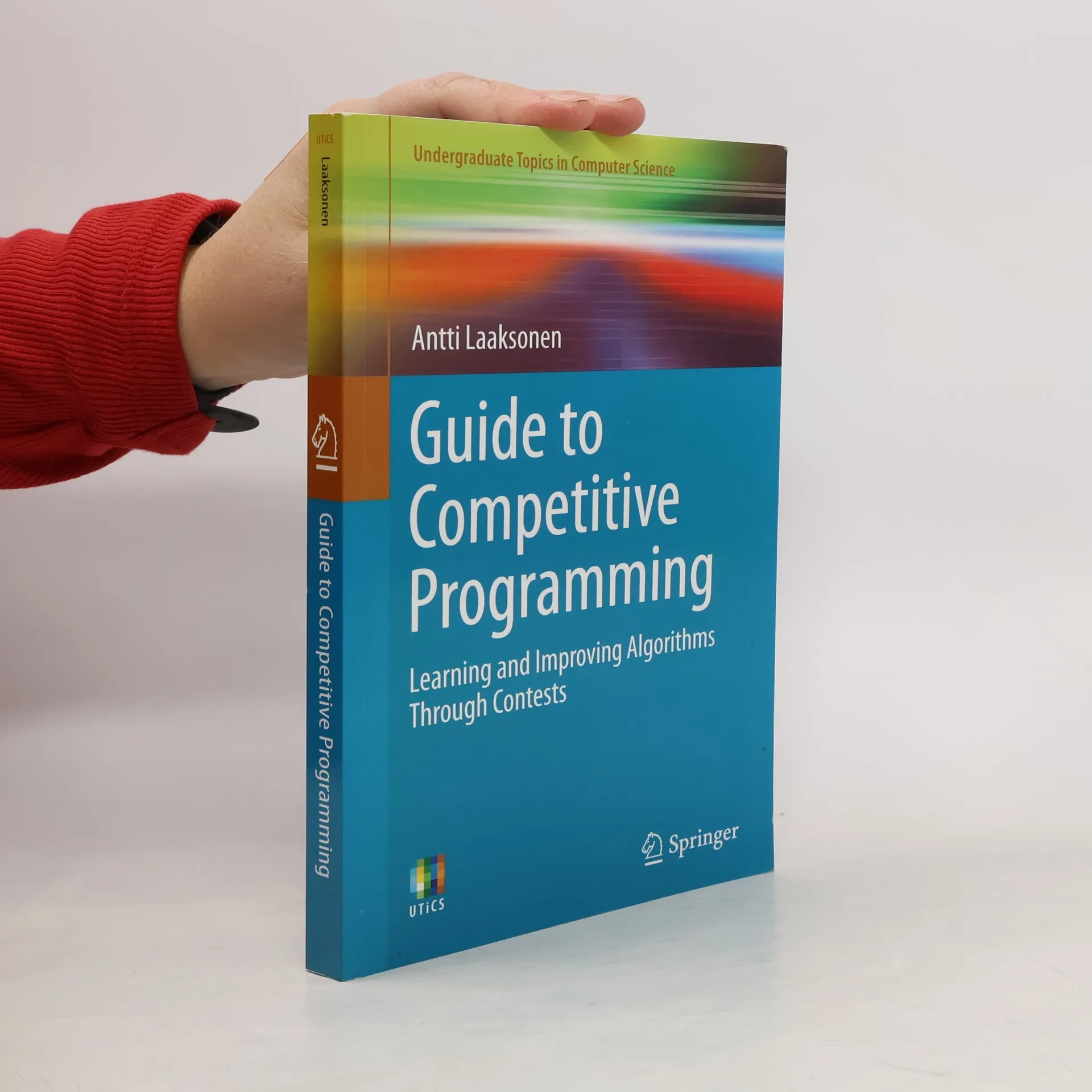
    Undergraduate Topics in Computer Science: Guide to Competitive Programming
    Guide to Competitive Programming
    • Guide to Competitive Programming

      Learning and Improving Algorithms Through Contests

      • 324 stránek
      • 12 hodin čtení
      4,3(55)Ohodnotit

      This enhanced textbook builds on a comprehensive introduction to competitive programming, featuring new material on advanced topics like Fourier transforms, minimum cost flows in graphs, and automata in string problems. It effectively demonstrates how competitive programming serves as a method for implementing and testing algorithms while fostering computational thinking and enhancing programming and debugging skills. The text introduces dynamic programming and fundamental algorithm design techniques, exploring a wide range of graph algorithms. It aligns with the IOI Syllabus while also delving into advanced topics such as maximum flows, Nim theory, and suffix structures. Specialized algorithms for trees are surveyed, alongside relevant mathematical concepts. The book reviews C++ features and guides readers in creating efficient algorithms for large data sets. It discusses sorting algorithms, binary search, and various data structures from the C++ standard library. Advanced topics like bit-parallelism and amortized analysis are covered, with a focus on efficiently processing array range queries. Fully updated and easy to follow, this core textbook is an ideal reference for students learning algorithms and preparing for programming contests. While a basic understanding of programming is assumed, prior experience in algorithm design or contests is not necessary, making it suitable for both beginners and experienced readers

      Guide to Competitive Programming
    • Undergraduate Topics in Computer Science: Guide to Competitive Programming

      Learning and Improving Algorithms Through Contests

      • 296 stránek
      • 11 hodin čtení

      This invaluable textbook presents a comprehensive introduction to modern competitive programming. The text highlights how competitive programming has proven to be an excellent way to learn algorithms, by encouraging the design of algorithms that actually work, stimulating the improvement of programming and debugging skills, and reinforcing the type of thinking required to solve problems in a competitive setting. The book contains many "folklore" algorithm design tricks that are known by experienced competitive programmers, yet which have previously only been formally discussed in online forums and blog posts. Topics and features: reviews the features of the C++ programming language, and describes how to create efficient algorithms that can quickly process large data sets; discusses sorting algorithms and binary search, and examines a selection of data structures of the C++ standard library; introduces the algorithm design technique of dynamic programming, and investigates elementary graph algorithms; covers such advanced algorithm design topics as bit-parallelism and amortized analysis, and presents a focus on efficiently processing array range queries; surveys specialized algorithms for trees, and discusses the mathematical topics that are relevant in competitive programming; examines advanced graph techniques, geometric algorithms, and string techniques; describes a selection of more advanced topics, including square root algorithms and dynamic programming optimization. This easy-to-follow guide is an ideal reference for all students wishing to learn algorithms, and practice for programming contests. Knowledge of the basics of programming is assumed, but previous background in algorithm design or programming contests is not necessary. Due to the broad range of topics covered at various levels of difficulty, this book is suitable for both beginners and more experienced readers.

      Undergraduate Topics in Computer Science: Guide to Competitive Programming