Pro Python Best Practices
- 264 stránek
- 10 hodin čtení
Learn software engineering and coding best practices to write Python code right and error free.



Learn software engineering and coding best practices to write Python code right and error free.
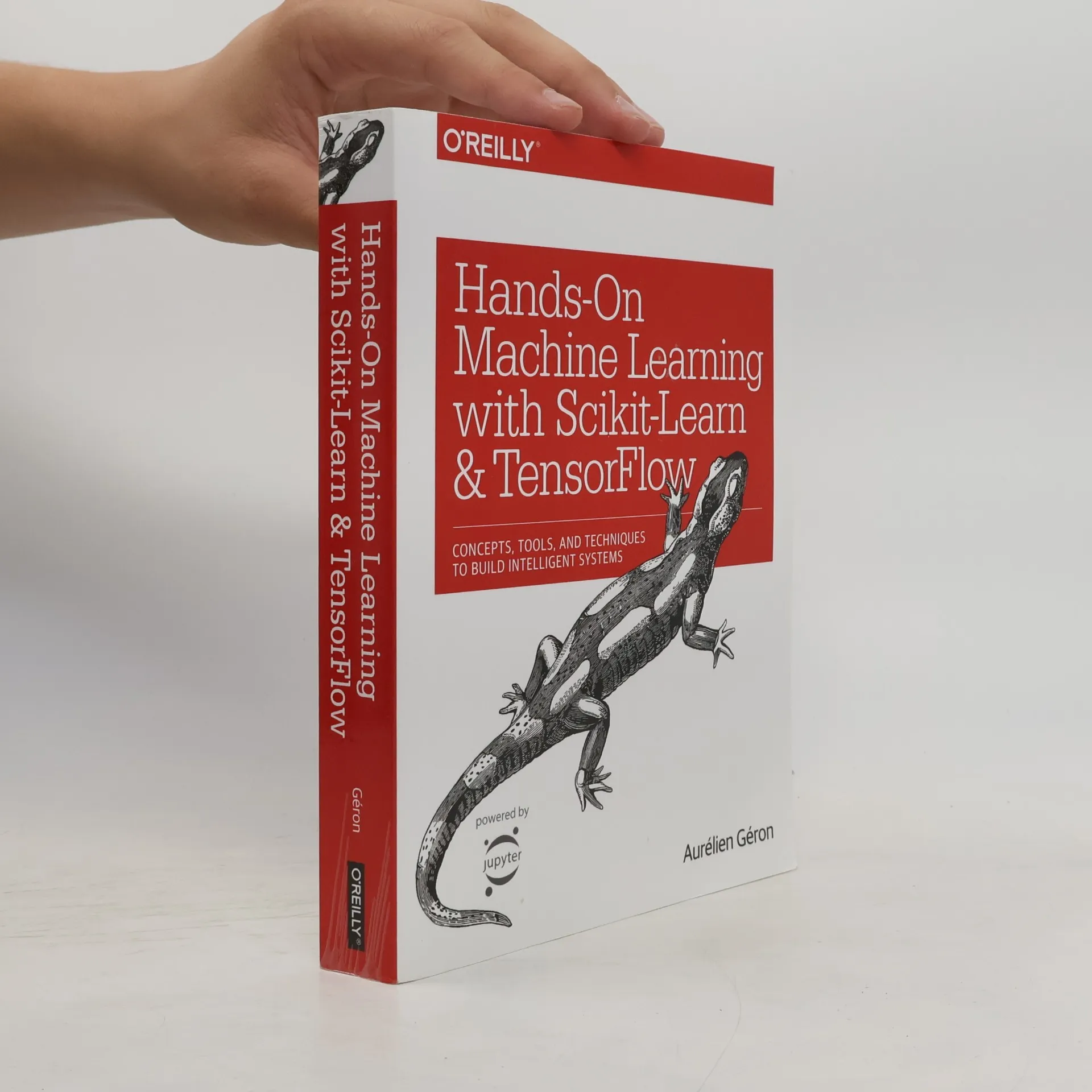
Through a series of recent breakthroughs, deep learning has boosted the entire field of machine learning. Now, even programmers who know close to nothing about this technology can use simple, efficient tools to implement programs capable of learning from data. This practical book shows you how. By using concrete examples, minimal theory, and two production-ready Python frameworks—scikit-learn and TensorFlow—author Aur�lien G�ron helps you gain an intuitive understanding of the concepts and tools for building intelligent systems. You’ll learn a range of techniques, starting with simple linear regression and progressing to deep neural networks. With exercises in each chapter to help you apply what you’ve learned, all you need is programming experience to get started. Explore the machine learning landscape, particularly neural nets Use scikit-learn to track an example machine-learning project end-to-end Explore several training models, including support vector machines, decision trees, random forests, and ensemble methods Use the TensorFlow library to build and train neural nets Dive into neural net architectures, including convolutional nets, recurrent nets, and deep reinforcement learning Learn techniques for training and scaling deep neural nets Apply practical code examples without acquiring excessive machine learning theory or algorithm details
Written by Wes McKinney, the creator of the Python pandas project, this book is a practical, modern introduction to data science tools in Python. It’s ideal for analysts new to Python and for Python programmers new to data science and scientific computing. Data files and related material are available on GitHub.
Deep-Learning-Systeme programmieren, trainieren, skalieren und deployen
Deep-Learning-Netze, die mit großen Datenmengen trainiert werden, lösen komplexe Aufgaben mit erstaunlicher Genauigkeit. Dieses Buch bietet eine praktische Einführung in TensorFlow, die führende Open-Source-Softwarebibliothek zum Erstellen und Anlernen von Deep-Learning-Netzen für Sprach- und Bilderkennung, natürliche Sprachverarbeitung (NLP) und prädiktive Datenanalyse. Es richtet sich an technisch orientierte Leser, darunter Datenanalytiker, Ingenieure, Studenten und Wissenschaftler. Sie beginnen mit einfachen Beispielaufgaben und vertiefen sich in Themen wie die Architektur neuronaler Netze, Visualisierung mit TensorBoard, Abstraktionsbibliotheken für TensorFlow und Multithread-Pipelines zur Dateneingabe. Nach Abschluss des Buches sind Sie in der Lage, Deep-Learning-Systeme in TensorFlow zu erstellen und produktiv einzusetzen. Der Inhalt umfasst: einen schnellen Einstieg in TensorFlow, das Modellieren von Deep-Learning-Systemen, das Trainieren verbreiteter Modelle für Computer Vision und Sprachverarbeitung, die Nutzung von Abstraktionsbibliotheken zur Vereinfachung der Entwicklung, das Skalieren von TensorFlow und das Verteilte Anlernen von Modellen auf Clustern.