

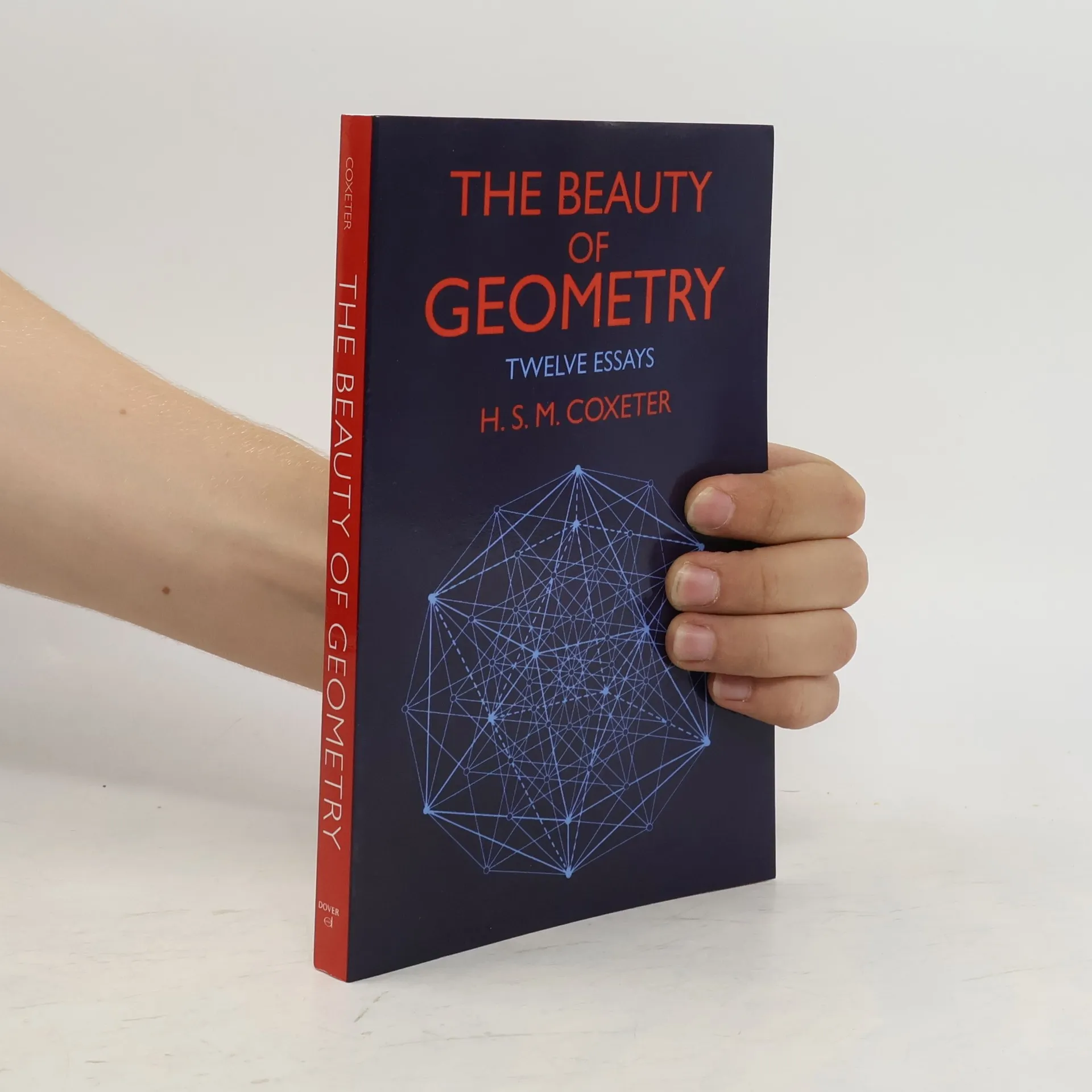
These absorbing essays by a distinguished mathematician provide a compelling demonstration of the charms of mathematics. Stimulating and thought-provoking, this collection is sure to interest students, mathematicians, and any math buff with its lucid treatment of geometry and the crucial role geometry plays in a wide range of mathematical applications.
H. S. M. Coxeter Knihy
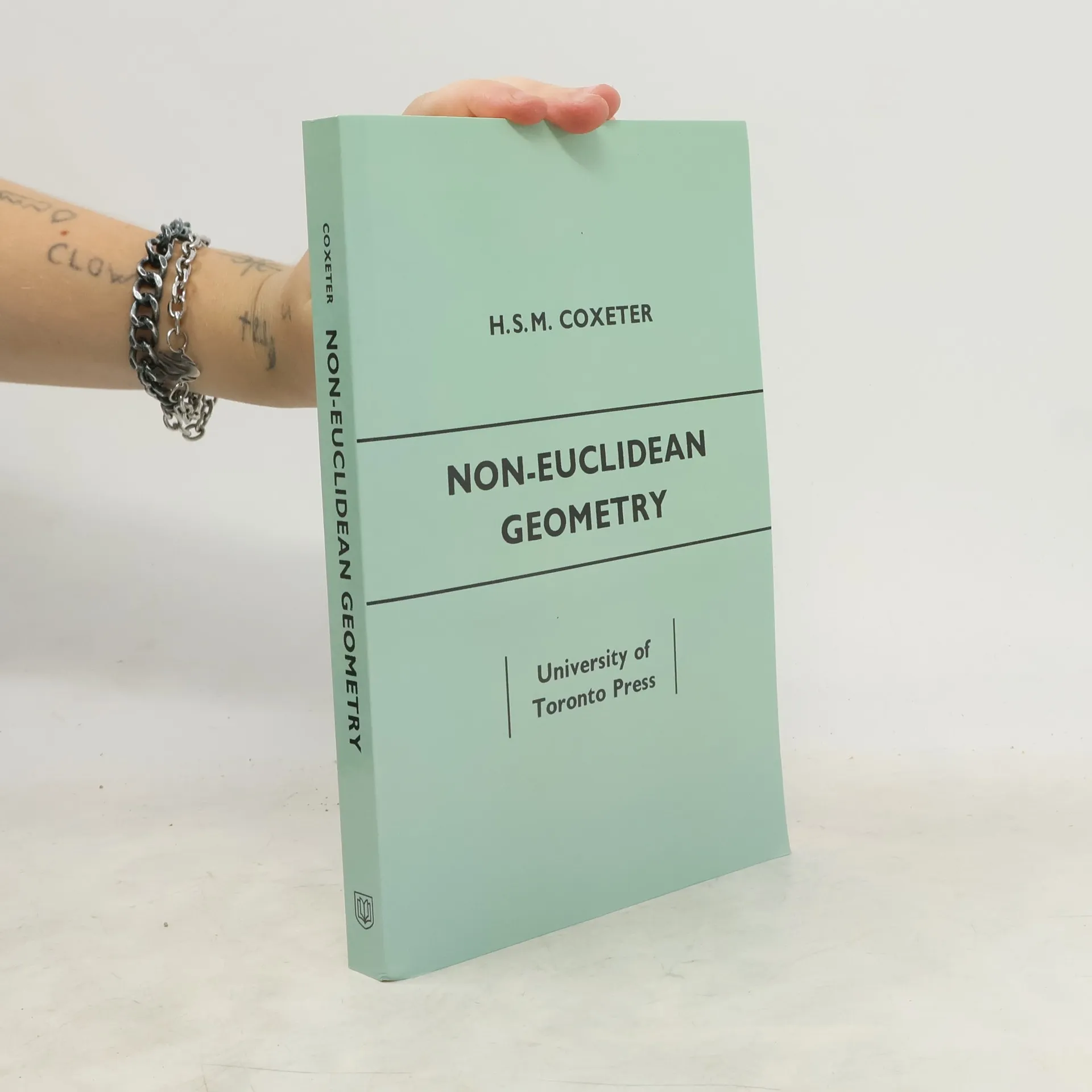
The name non-Euclidean was used by Gauss to describe a system of geometry which differs from Euclid's in its properties of parallelism. Such a system was developed independently by Bolyai in Hungary and Lobatschewsky in Russia, about 120 years ago. Another system, differing more radically from Euclid's, was suggested later by Riemann in Germany and Cayley in England. The subject was unified in 1871 by Klein, who gave the names of parabolic, hyperbolic, and elliptic to the respective systems of Euclid-Bolyai-Lobatschewsky, and Riemann-Cayley. Since then, a vast literature has accumulated. The Fifth edition adds a new chapter, which includes a description of the two families of 'mid-lines' between two given lines, an elementary derivation of the basic formulae of spherical trigonometry and hyperbolic trigonometry, a computation of the Gaussian curvature of the elliptic and hyperbolic planes, and a proof of Schlafli's remarkable formula for the differential of the volume of a tetrahedron.
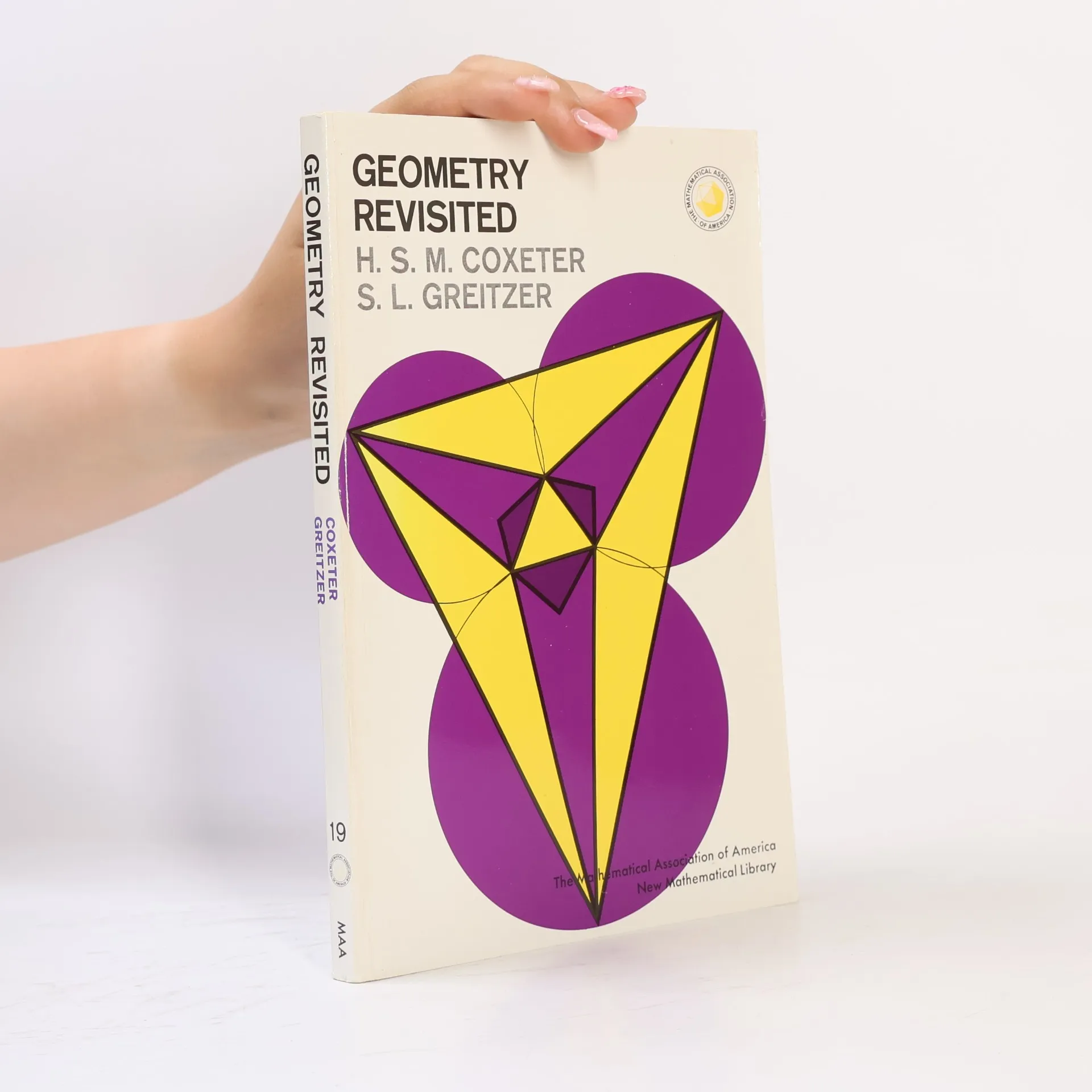
New Mathematical Library - 19: Geometry Revisited
- 193 stránek
- 7 hodin čtení
Among the many beautiful and nontrivial theorems in geometry found in Geometry Revisited are the theorems of Ceva, Menelaus, Pappus, Desargues, Pascal, and Brianchon. A nice proof is given of Morley's remarkable theorem on angle trisectors. The transformational point of view is emphasized: reflections, rotations, translations, similarities, inversions, and affine and projective transformations. Many fascinating properties of circles, triangles, quadrilaterals, and conics are developed.
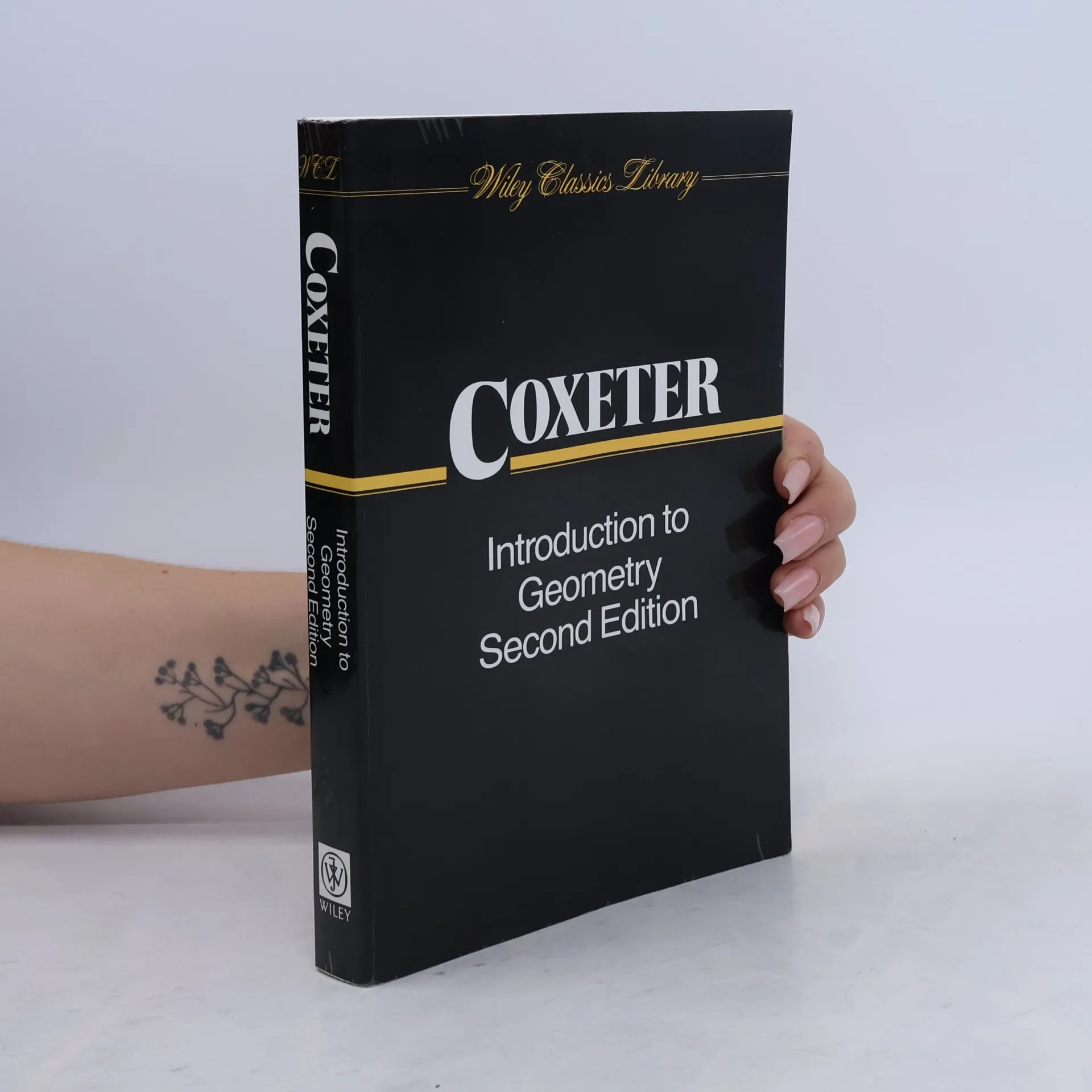
This classic work is now available in an unabridged paperback edition. The Second Edition retains all the characterisitcs that made the first edition so brilliant exposition, the flexibility permitted by relatively self-contained chapters, and broad coverage ranging from topics in the Euclidean plane, to affine geometry, projective geometry, differential geometry, and topology. The Second Edition incorporates improvements in the text and in some proofs, takes note of the solution of the 4-color map problem, and provides answers to most of the exercises.