


Knihobot

Gordon Tullock

    The Selected Works of Gordon Tullock - 1: Virginia Political Economy
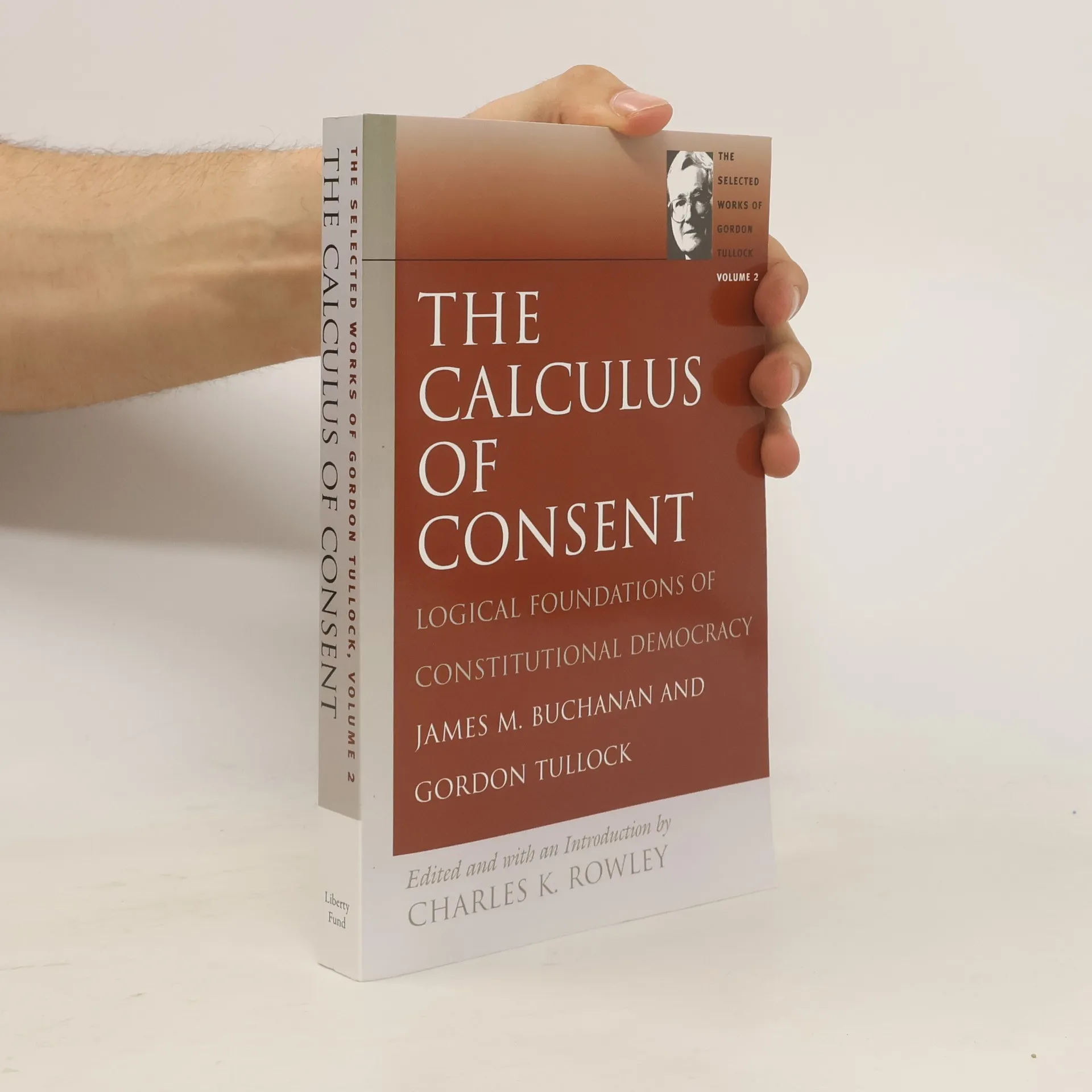
    Calculus of Consent
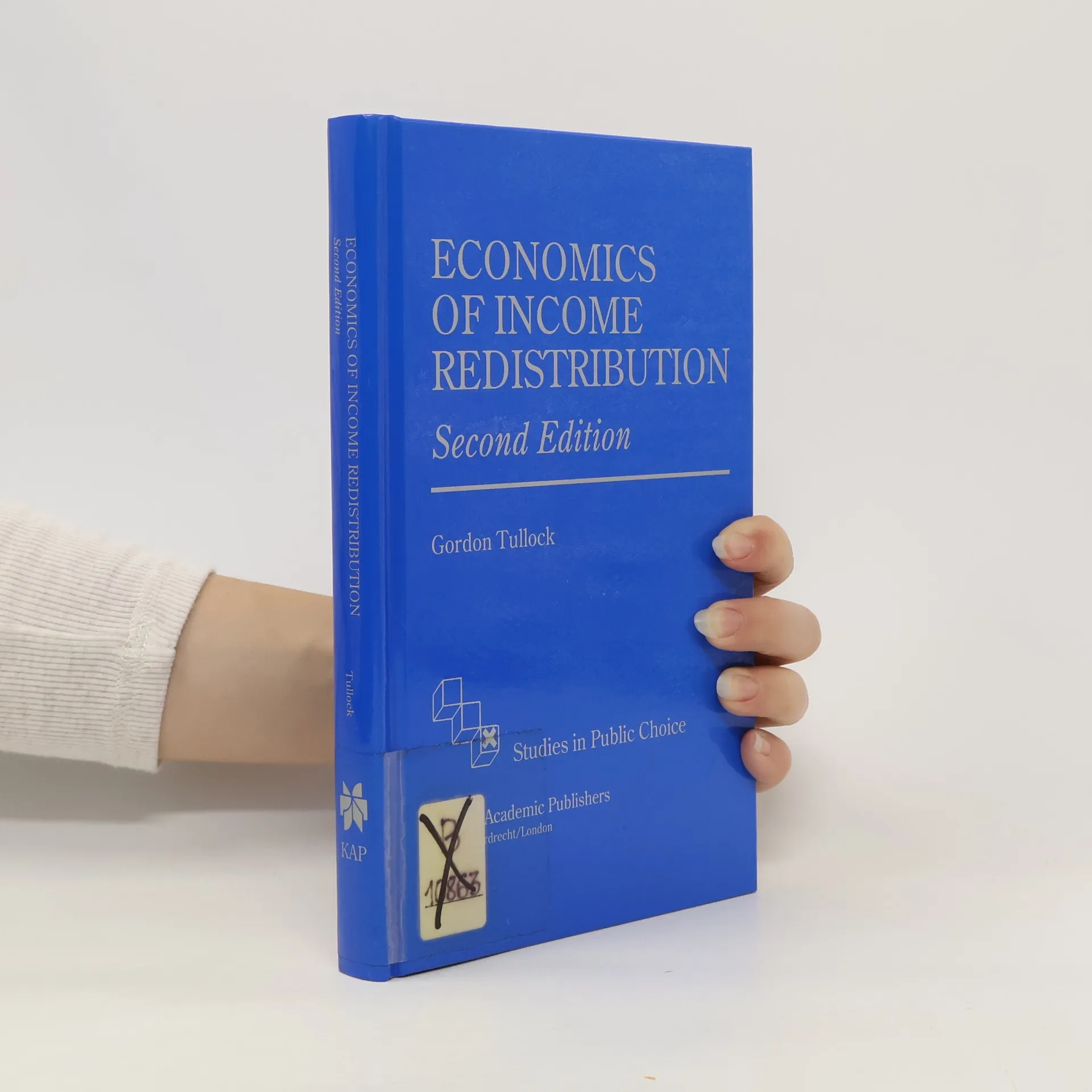
    Economics of Income Redistribution
    • While income redistribution is one of the most important functions of modern governments, the world has changed greatly since this first edition of Economics of Income Redistribution was published in 1983. Pension systems and medical programs are in a state of crisis in many parts of the world and the general political mood is shifting away from income redistribution. Economics of Income Redistribution (2nd edition) brings this work up to date by discussing the economic and political aspects of income redistribution. It examines the classical moral objective of redistribution to assist the poor, as well as income transfer for pensions, education and intra-family gift giving.

      Economics of Income Redistribution
    • Calculus of Consent

      • 337 stránek
      • 12 hodin čtení
      4,0(164)Ohodnotit

      The Calculus of Consent was co-authored by Buchanan with Gordon Tullock, with whom Buchanan collaborated on many books and academic enterprises throughout their careers. As Robert D. Tollison states in the foreword, “[this book] is a radical departure from the way democracies conduct their business. The Calculus is already a book for the ages.” This classic work analyzes the political organization of a free society through the lens of the economic organization of society. The authors acknowledge their unease as economists in analyzing the political organization, but they take the risk of forging into unfamiliar territory because they believe the benefits of their perspective will bear much fruit. As the authors state, their objective in this book is “to analyze the calculus of the rational individual when he is faced with questions of constitutional choice . . . .We examine the [choice] process extensively only with reference to the problem of decision-making rules.” The authors describe their approach as “economic individualism.” They believe that economists have explored individual choice extensively in the market sector while social scientists have largely ignored the dynamics of individual decision-making in the dynamics of forming group action in the public sector. Written in the early 1960s, The Calculus of Consent has become a bulwark of the public choice movement for which James M. Buchanan is so justly famous. James M. Buchanan is an eminent economist who won the Alfred Nobel Memorial Prize in Economic Sciences in 1986 and is considered one of the greatest scholars of liberty in the twentieth century. The entire series includes: Volume 1: The Logical Foundations of Constitutional Liberty Volume 2: Public Principles of Public Debt Volume 3: The Calculus of Consent Volume 4: Public Finance in Democratic Process Volume 5: The Demand and Supply of Public Goods Volume 6: Cost and Choice Volume 7: The Limits of Liberty Volume 8: Democracy in Deficit Volume 9: The Power to Tax Volume 10: The Reason of Rules Volume 11: Politics by Principle, Not Interest Volume 12: Economic Inquiry and Its Logic Volume 13: Politics as Public Choice Volume 14: Debt and Taxes Volume 15: Externalities and Public Expenditure Theory Volume 16: Choice, Contract, and Constitutions Volume 17: Moral Science and Moral Order Volume 18: Federalism, Liberty, and the Law Volume 19: Ideas, Persons, and Events Volume 20: Indexes

      Calculus of Consent
    • Editor Charles Rowley calls Gordon Tullock “an economist by nature rather than by training.” Tullock attended a one-semester course in economics for law students at the University of Chicago but is otherwise self-taught. Tullock’s background has enabled him to analyze economic problems with an open mind and to deploy his formidable intellect in a truly entrepreneurial manner. Virginia Political Economy is the inaugural volume in Liberty Fund’s The Selected Works of Gordon Tullock. The series consists of ten volumes of selections from the major monographs and scholarly papers published by Tullock between 1954 and 2002. The first volume contains a selection from Tullock’s published academic papers and essays designed to introduce the series and to offer a representative picture of his work to allow scholars to evaluate in depth the relevance and intellectual impact of his contributions. The volume begins with the only two pieces in the Selected Works that were not written by Tullock himself. The first is the brief assessment of Tullock’s contributions made by Mark Blaug in 1985 when explaining why he had included Tullock in his list of the one hundred great economists since John Maynard Keynes. The second is the short statement published in American Economic Review in September 1998, recognizing Tullock as a Distinguished Fellow of the American Economic Association. Gordon Tullock is Professor Emeritus of Law at George Mason University, where he was Distinguished Research Fellow in the Center for Study of Public Choice and University Professor of Law and Economics. He also taught at the University of South Carolina, the University of Virginia, Rice University, Virginia Polytechnic Institute and State University, and the University of Arizona. In 1966 he founded the journal that became Public Choice and remained its editor until 1990. Charles K. Rowley was Duncan Black Professor of Economics at George Mason University and a Senior Fellow of the James M. Buchanan Center for Political Economy at George Mason University. He was also General Director of the Locke Institute.

      The Selected Works of Gordon Tullock - 1: Virginia Political Economy