
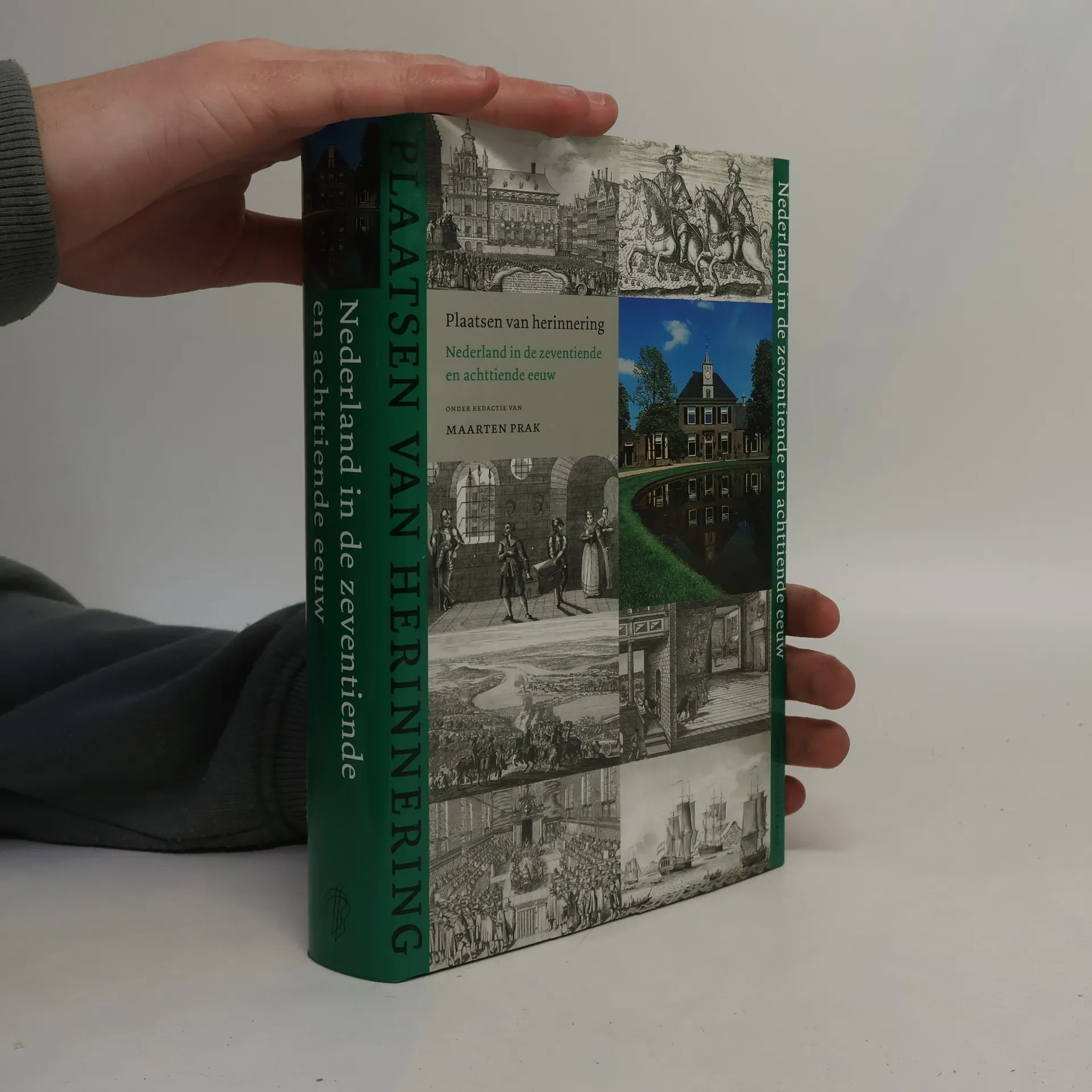

Inhalt: Contents -- Acknowledgments -- 1. Introduction: The Market as a party? -- 2. Eight hundred years of economic growth, 1000-1800 -- 3. Between feudalism and freedom, 1000-1350 -- 4. Capitalism and civil society in late Medieval Holland, 1350-1566 -- 5. A capitalist revolution? The Dutch revolt, 1566-1609 -- 6. New capitalism at home and overseas -- 7. The Republican State and "varieties of capitalism" -- 8. Capitalism and inequality in the eighteenth century -- 9. Conclusion -- Notes -- Bibliography -- Index.
Maarten Prak Pořadí knih


- 2022
- 2022
Citizens without Nations
- 444 stránek
- 16 hodin čtení
Exploring the concept of urban citizenship, this book delves into how it empowered individuals to actively participate in their communities, fostering a sense of ownership and responsibility. It highlights the historical context that allowed citizens to engage with their surroundings, laying the groundwork for modern democratic ideals long before they fully emerged. Through this lens, the work illustrates the significance of local involvement in shaping societal structures and civic identity.
- 2022
The Dutch Republic in the Seventeenth Century
- 324 stránek
- 12 hodin čtení
The Dutch Republic was at the forefront of the remarkable developments which European societies underwent in the early modern era. This substantially revised edition of the leading textbook on the Dutch Republic explores the particular set of circumstances that allowed such a small country to become a world power in the seventeenth century.
- 2010
Guilds, Innovation and the European Economy, 1400-1800
- 362 stránek
- 13 hodin čtení
For a long time guilds have been condemned as a major obstacle to economic progress in the pre-industrial era. This re-examination of the role of guilds in the early modern European economy challenges that view by taking into account fresh research on innovation, technological change and entrepreneurship. Leading economic historians argue that industry before the Industrial Revolution was much more innovative than previous studies have allowed for and explore the different products and production techniques that were launched and developed in this period. Much of this innovation was fostered by the craft guilds that formed the backbone of industrial production before the rise of the steam engine. The book traces the manifold ways in which guilds in a variety of industries in Italy, Austria, Germany, Switzerland, France, Belgium, the Netherlands, and Britain helped to create an institutional environment conducive to technological and marketing innovations.
- 2009