

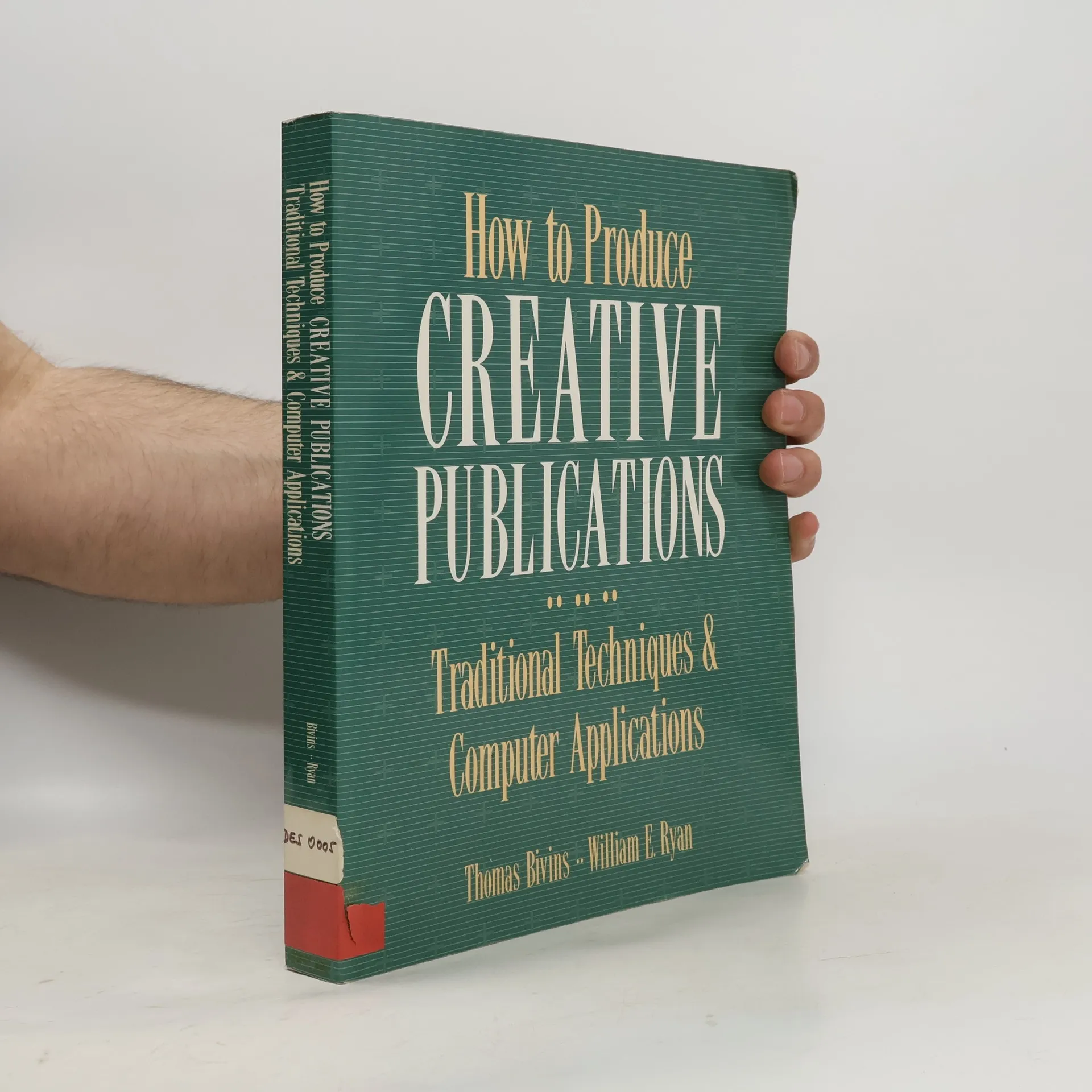
How To Produce Creative Publications
Traditional Techniques & Computer Applications
- 448 stránek
- 16 hodin čtení
"How to Produce Creative Publications" is a first-class guide for anyone who wants to acquire the skills to make in-house publishing a success. Tom Bivins and Bill Ryan show you how to research and write winning copy and how to design eyecatching layouts. You'll learn all about handling traditional typesetting and printing methods and--in parallel--you'll learn how to get the most out of your computer. Software applications have revolutionized the world of in-house publications and brought it right into your office. What was once sent out to specialist publishers and printers can now be done at your desk. This book will help you take control. It will teach you everything from choosing the right hardware and software, to editing, illustrating, and printing computer-generated copy. Part One leads you through the tricks and tools of the trade: Writing, Design, Typography, Layout, Illustration, and Printing. At each stage, the authors introduce specific computer applications that will broaden your options, cut your workload and costs, and tighten your schedule. Part Two describes in depth the four basic in-house formats: Newsletters, Magazines, Annual Reports, and Brochures. You'll find out how to select the best format for your needs and how to bring your ideas to life on the screen.