

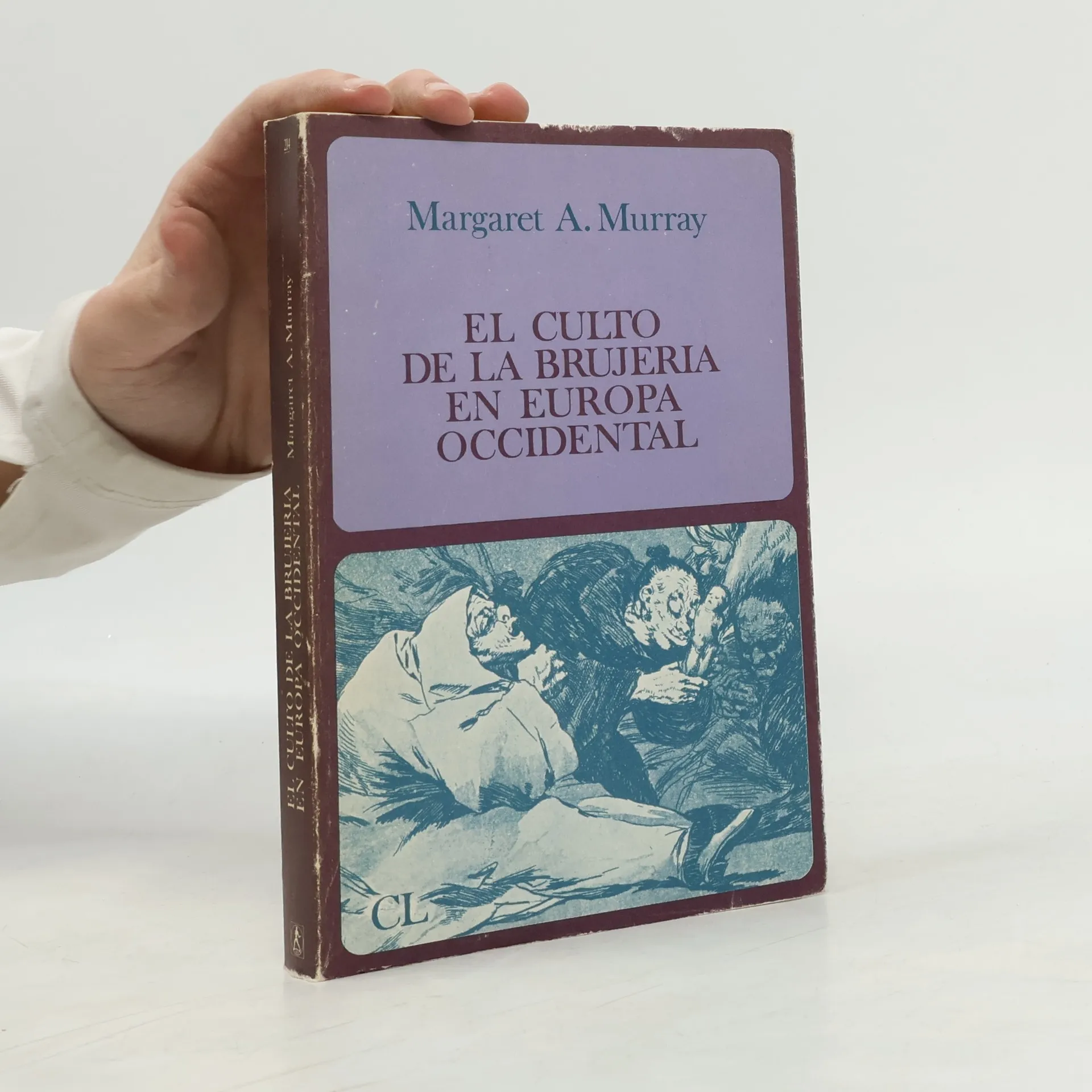
Focusing on the witch-cult hypothesis, this anthropological work posits that accusations of witchcraft in Europe stemmed from a genuine, secret pagan religion devoted to a horned deity. Published in 1921, it garnered interest following the popularity of Frazer's "Golden Bough," yet Murray's theories faced significant skepticism and were later discredited. The book explores the intersection of folklore, religion, and societal fears surrounding witchcraft during that era.
Margaret Alice Murray Pořadí knih (chronologicky)
Egyptoložka a antropoložka. Známá především pro své teorie o čarodějnickém kultu, přičemž čarodějnické procesy byly pokusem zničit přežívající předkřesťanské náboženství.

The God of the Witches
- 244 stránek
- 9 hodin čtení
A ground breaking work of Anthropology, Margaret Murray tackles the taboo subject of Europe's Pagan roots. Contrary to popular history, Murray contends that our European ancestors did not completely convert to Christianity at an early date- rather, remnants of "The Old Religion" lingered long into the 17th century. She backs up her theories with competant, scholarly research into both archeological and historical records. With the eye of a scientist and scholar, Murray examines the truth behind the Witch Trials, the legend ofRobin Hood, the deaths of Thomas Beckett and Joan of Arc, and the real origins of the elusive Fairy Folk. This book is a truly fascinating, and sometimes shocking, look at our European roots, traced through the lineage of our Pagan roots.
The God of the Witches (Aziloth Books)
- 136 stránek
- 5 hodin čtení
Challenging the notion of mass conversion to Christianity in Western Europe, Margaret Murray presents evidence that the majority of the population clung to ancient beliefs centered on Cernunnos, a horned god. This resistance led to centuries of conflict as Christianity sought dominance, often depicting pagan deities as evil. Murray explores the historical figures associated with the Old Religion, revealing their connections to witchcraft and pagan practices. This work is essential for those interested in the origins of Wicca and neo-paganism.
El culto de la brujería en Europa occidental
- 344 stránek
- 13 hodin čtení