

This comprehensive, topically organized collection of classical and contemporary philosophy is ideal for introductory courses. It covers a wide range of topics, including God and evil, knowledge and reality, the philosophy of science, the mind/body problem, freedom of will, consciousness, ethics, political philosophy, existential issues, and philosophical puzzles. Each section includes insightful introductions, study questions, and an extensive glossary of philosophical terms to enhance accessibility for students. The fifth edition has been revised to improve its pedagogical approach, featuring boldfaced key terms, a guide to writing philosophy papers, and a "Logical Toolkit" that explains common terminology in philosophical reasoning. Additionally, it includes five new readings and a dedicated section on existential issues. Supplementary materials further enhance its utility, with an updated Instructor's Manual and Testbank on CD that contains sample syllabi, exam questions, and reading summaries. A Companion Website provides access to these resources and offers students multiple-choice self-quizzes, pedagogical material, and an interactive blog with recommended websites, news articles, anecdotes, and interviews.
John R. Perry Knihy
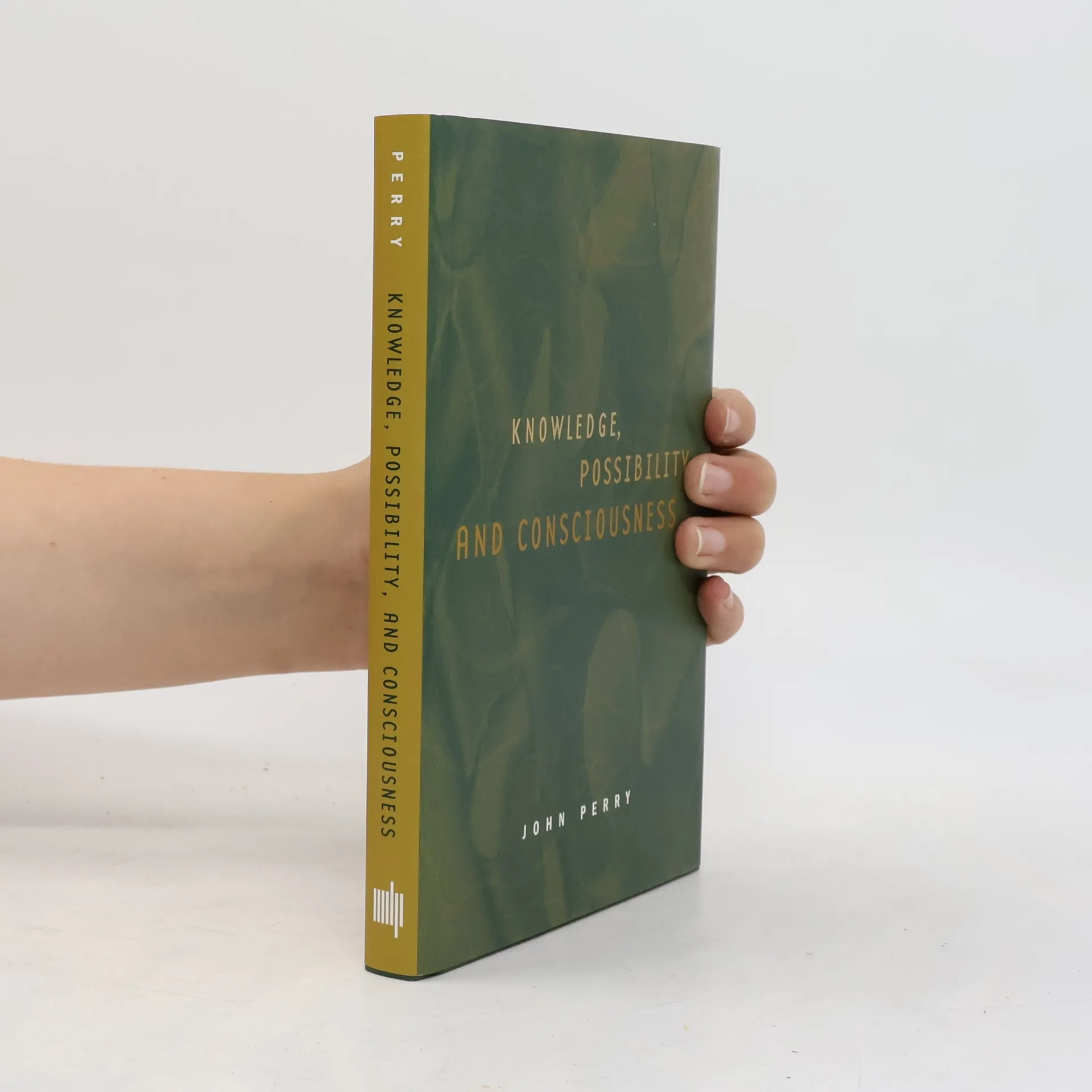
Physicalism is the idea that if everything that goes on in the universe is physical, our consciousness and feelings must also be physical. Ever since Descartes formulated the mind-body problem, a long line of philosophers has found the physicalist view to be preposterous. According to John Perry, the history of the mind-body problem is, in part, the slow victory of physical monism over various forms of dualism. Each new version of dualism claims that surely something more is going on with us than the merely physical. In this book Perry defends a view that he calls antecedent physicalism. He takes on each of three major arguments against physicalism, showing that they pose no threat to antecedent physicalism. These arguments are the zombie argument (that there is a possible world inhabited by beings that are physically indiscernible from us but not conscious), the knowledge argument (that we can know facts about our own feelings that are not just physical facts, thereby proving physicalism false), and the modal argument (that the identity of sensation and brain state is contingent, but since there is no such thing as contingent identity, sensations are not brain states).