

Examines the explosive problems of our time and shows how we can move towards peace as firmly as we have spiralled towards war. In this book, the author argues that we are becoming increasingly divided along lines of religion and culture, ignoring the many other ways in which people see themselves, from class and profession to morals and politics.
Amartya K. Sen Knihy


Ve třech podnětných přednáškách nazvaných Etika a ekonomie se prof. Sen snaží poukázat na význam dialogu mezi ekonomickou analýzou a etickým myšlením, který by byl přínosný pro obě strany. Senovy kritické úvahy v mnohém oživují komplexní přístup „otce“ ekonomie a profesora morální filosofie, Adama Smitha. Oproti liberálním koncepcím „vlastního zájmu“ zdůrazňuje Sen vnitřní hodnotu etických úvah, jež podstatným způsobem ovlivňují chování jednotlivce. Profesor Sen v roce 1998 přešel z Harvardské univerzity do Cambridge, kde se stal prvním zahraničním rektorem Trinity Colledge. Tento akademický post bývá považován za jeden z nejprestižnějších ve Velké Británii.
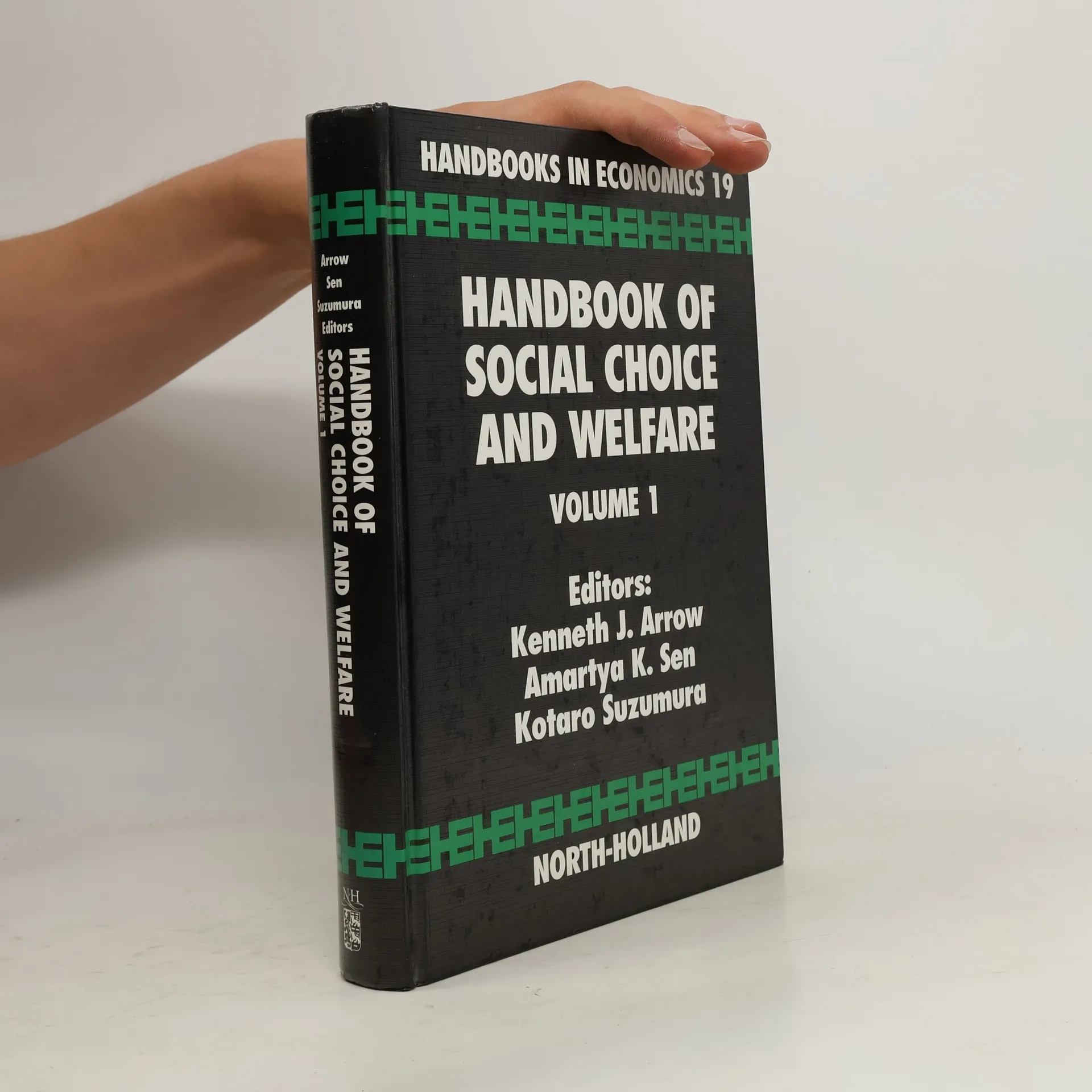
Handbooks in Economics - 19: Handbook of Social Choice and Welfare
- 680 stránek
- 24 hodin čtení
The Handbook of Social Choice and Welfare, in two volumes, features essays on social choice theory and welfare economics. The first volume is divided into four parts. Part 1 focuses on Arrovian impossibility theorems, exploring the implications of the majority cycle identified by Condorcet and surveying various escape routes from such results. Part 2 examines the operation and performance of voting schemes and cost-sharing mechanisms, alongside modern theories of incentives and mechanism design. Part 3 delves into the structure of social choice rules, discussing positional rules of collective decision-making, game-theoretic aspects of committee voting, and the implications of interpersonal comparisons of welfare. It critically assesses utilitarianism as a theory of justice and surveys the foundations of measuring inequality and poverty. An extensive introduction by Kotaro Suzumura contextualizes these topics within the historical background of social choice theory, highlighting the impact of Arrow's work and the socialist planning controversy. The Handbook aims to provide an accessible overview of contemporary social choice theory and welfare economics, offering insights into human well-being and collective decision-making, while serving as a resource for evaluating new scholarship and synthesizing existing research.