Knihobot

Melvin I. Urofsky

    MELVIN I. UROFSKY je emeritní profesor historie a profesor práva a veřejné politiky na Virgina Commonwealth University.
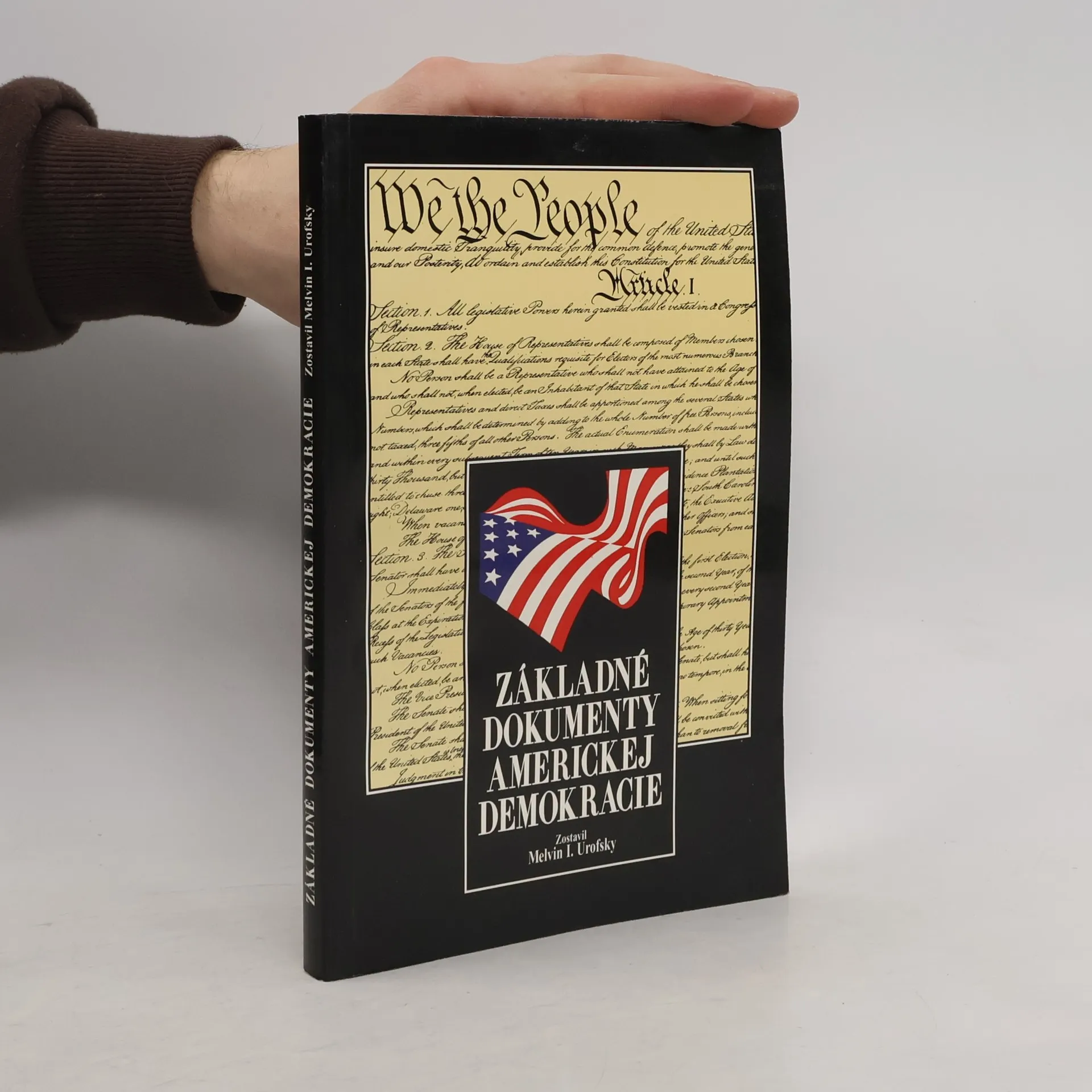
    Základné dokumenty Americkej demokracie
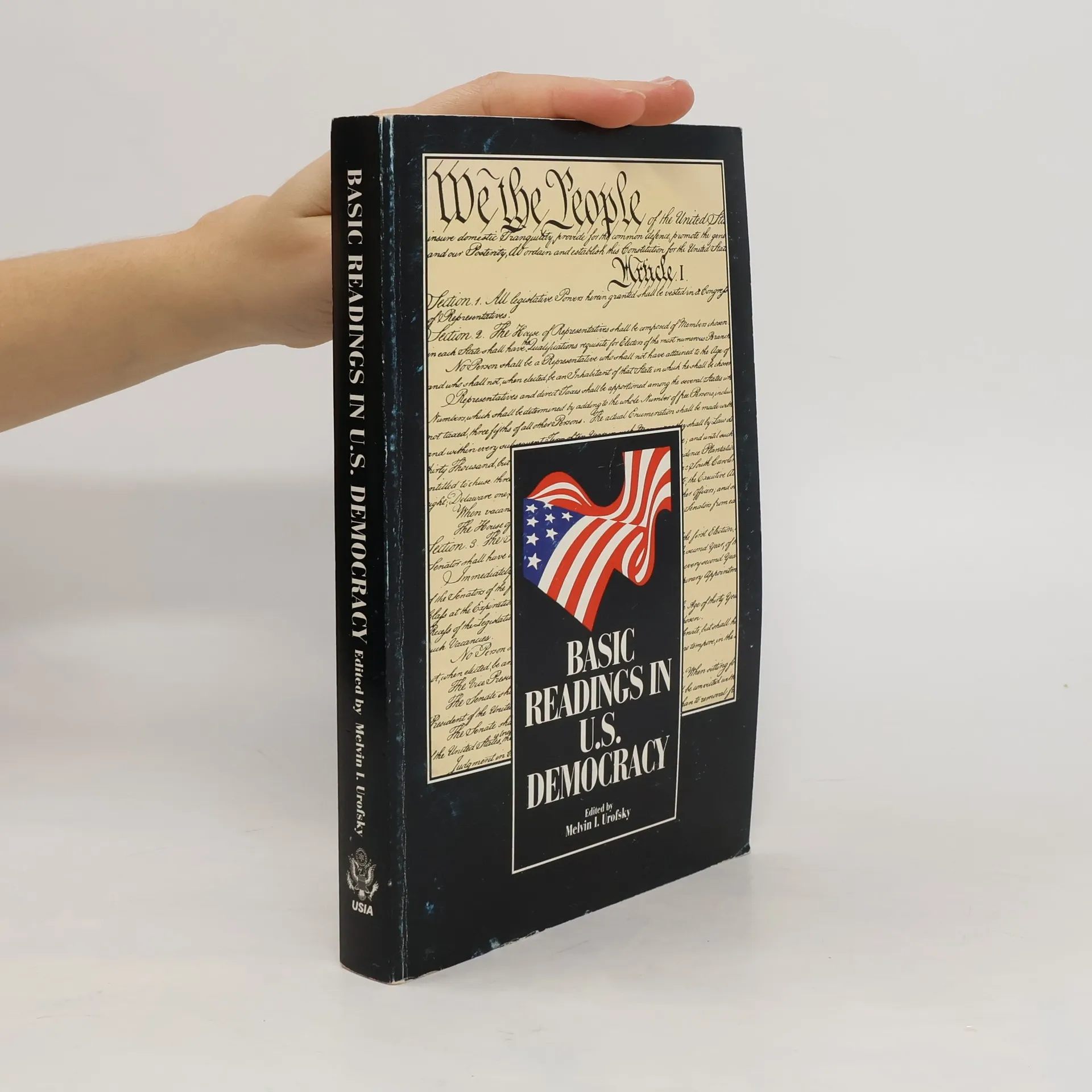
    Basic readings in U.S. democracy
    Basic Reading in U.S. Democracy
    The Affirmative Action Puzzle: A Comprehensive and Honest Exploration of One of the Most Controversial Legal and Social Issues in Us History
    The Affirmative Action Puzzle
    Lethal Judgments
    • Lethal Judgments

      Assisted Suicide and American Law

      • 190 stránek
      • 7 hodin čtení
      3,5(2)Ohodnotit

      The book explores the Supreme Court's 1997 rulings against a constitutional right to physician-assisted suicide, delving into the tension between individual liberty and the emotional weight of human suffering. It examines the implications of these decisions on personal autonomy and societal values, highlighting the complex ethical landscape surrounding end-of-life choices. Through this analysis, it engages with the broader conversation about the role of government in personal matters of life and death.

      Lethal Judgments
    • Melvin Urofsky explores affirmative action in relation to sex, gender, and education and shows that nearly every public university in the country has at one time or another instituted some form of affirmative action plan-some successful, others not. Urofsky traces the evolution of affirmative action through labor and the struggle for racial equality, writing of World War I and the exodus that began when some six mil­lion African Americans moved northward between 1910 and 1960, one of the greatest internal migrations in the country's history. He describes how Harry Truman, after becoming president in 1945, fought for Roosevelt's Fair Employment Practice Act and, surprising everyone, appointed a distinguished panel to serve as the President's Commission on Civil Rights, as well as appointing the first Black judge on a federal appeals court in 1948 and, by executive order later that year, ordering full racial integration in the armed forces. In this important, ambitious, far-reaching book, Urofsky writes about the affirmative action cases decided by the Supreme Court: cases that either upheld or struck down particular plans that affected both governmental and private entities. We come to fully understand the societal impact of affirmative action: how and why it has helped, and inflamed, people of all walks of life; how it has evolved; and how, and why, it is still needed. -- Publisher

      The Affirmative Action Puzzle
    • Melvin Urofsky explores affirmative action in relation to sex, gender, and education and shows that nearly every public university in the country has at one time or another instituted some form of affirmative action plan-some successful, others not. Urofsky traces the evolution of affirmative action through labor and the struggle for racial equality, writing of World War I and the exodus that began when some six mil­lion African Americans moved northward between 1910 and 1960, one of the greatest internal migrations in the country's history. He describes how Harry Truman, after becoming president in 1945, fought for Roosevelt's Fair Employment Practice Act and, surprising everyone, appointed a distinguished panel to serve as the President's Commission on Civil Rights, as well as appointing the first Black judge on a federal appeals court in 1948 and, by executive order later that year, ordering full racial integration in the armed forces. In this important, ambitious, far-reaching book, Urofsky writes about the affirmative action cases decided by the Supreme Court: cases that either upheld or struck down particular plans that affected both governmental and private entities. We come to fully understand the societal impact of affirmative action: how and why it has helped, and inflamed, people of all walks of life; how it has evolved; and how, and why, it is still needed. -- Publisher

      The Affirmative Action Puzzle: A Comprehensive and Honest Exploration of One of the Most Controversial Legal and Social Issues in Us History
