


Knihobot

David P. Forsythe

    1. leden 1941
    Themes in International Relations: Human Rights in International Relations
    Human Rights and Peace : International and National Dimensions
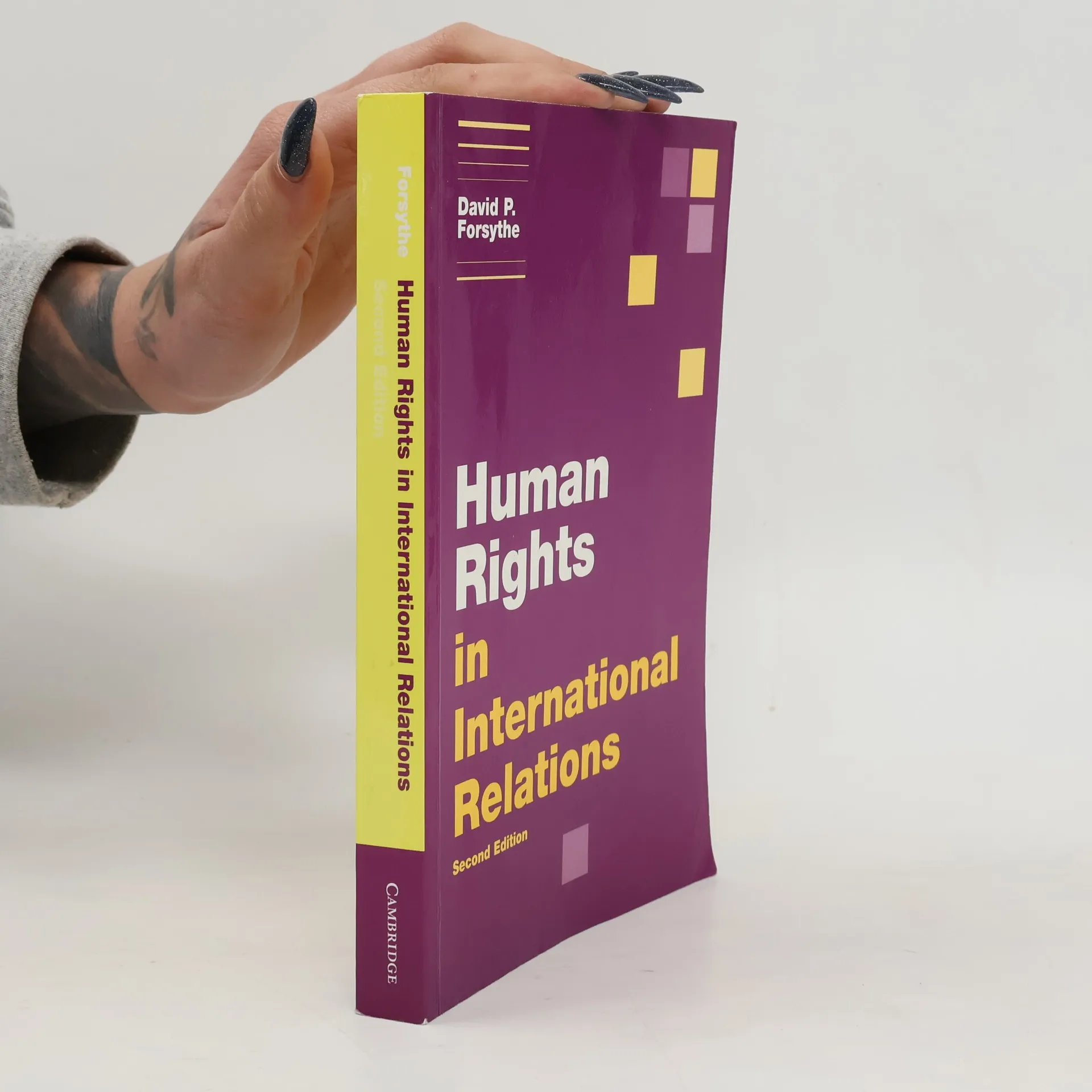
    Human Rights in International Relations
    • Human Rights in International Relations

      • 432 stránek
      • 16 hodin čtení

      Part I. The Foundations: 1. Introduction: human rights in international relations; 2. Establishing human rights standards; Part II. Implementing Human Rights Standards: 3. Global application of human rights norms; 4. Transitional justice; 5. Regional application of human rights norms; 6. Human rights and foreign policy in comparative perspective; 7. Non-governmental organizations and human rights; 8. Transnational corporations and human rights; 9. The communications media and human rights: traditional and social domains; Part III. Conclusion: 10. The politics of liberalism in a realist world.

      Human Rights in International Relations
      2,5
    • As our world becomes a truly global village through instantaneous media transmission of events, the relationship between human rights and peaceful international relations receives more and more attention. David P. Forsythe's book analyzes and discusses the dimensions of cover and overt human rights violations and how they militate against the establishment of democracies in the Third World.øPart One describes the paradox of internationally recognized human rights standards and international violence. Forsythe draws a crucial comparison between the lack of overt force between industrialized democracies and the use of covert force by certain democracies against some elected Third World governments.øPart Two deals with human rights and intrastate violence. A creative framework of analysis, centering on the concept of political legitimacy, is illustrated by case studies of Sri Lanka, Liberia, and Romania. Forsythe shows that, in different ways and in different situations, the violation of human rights standards can be correlated with political revolution.øHuman Rights and Peace evaluates critically the argument that human rights in general and democracy in particular contribute to peaceful international relations.

      Human Rights and Peace : International and National Dimensions
    • This new edition of David Forsythe's successful textbook provides an authoritative overview of the place of human rights in international politics in an age of terrorism. The book focuses on four central themes: the resilience of human rights norms, the importance of 'soft' law, the key role of non-governmental organizations, and the changing nature of state sovereignty. Human rights standards are examined according to global, regional, and national levels of analysis with a separate chapter dedicated to transnational corporations. This second edition has been updated to reflect recent events, notably the creation of the ICC and events in Iraq and Guantanamo Bay, and new sections have been added on subjects such as the correlation between world conditions and the fate of universal human rights. Containing chapter-by-chapter guides to further reading and discussion questions, this book will be of interest to undergraduate and graduate students of human rights, and their teachers. David Forsythe received the Distinguished Scholar Award for 2007 from the Human Rights Section of the American Political Science Association.

      Themes in International Relations: Human Rights in International Relations