


Knihobot

Imre Lakatos

    9. listopad 1922 – 2. únor 1974

    Filozof matematiky a vědy, známý svou tezí o omylnosti matematiky a její 'metodologii důkazů a vyvracení' v jejích předaxiomatických stádiích vývoje. Je také autorem konceptu 'výzkumného programu' v jeho metodologii vědeckých výzkumných programů. Jeho práce zkoumá, jak se matematické a vědecké poznání vyvíjí skrze neustálé zpochybňování a inovace. Jeho vhledy nabízejí fascinující pohled na dynamiku myšlení a objevování.

    1663-1672
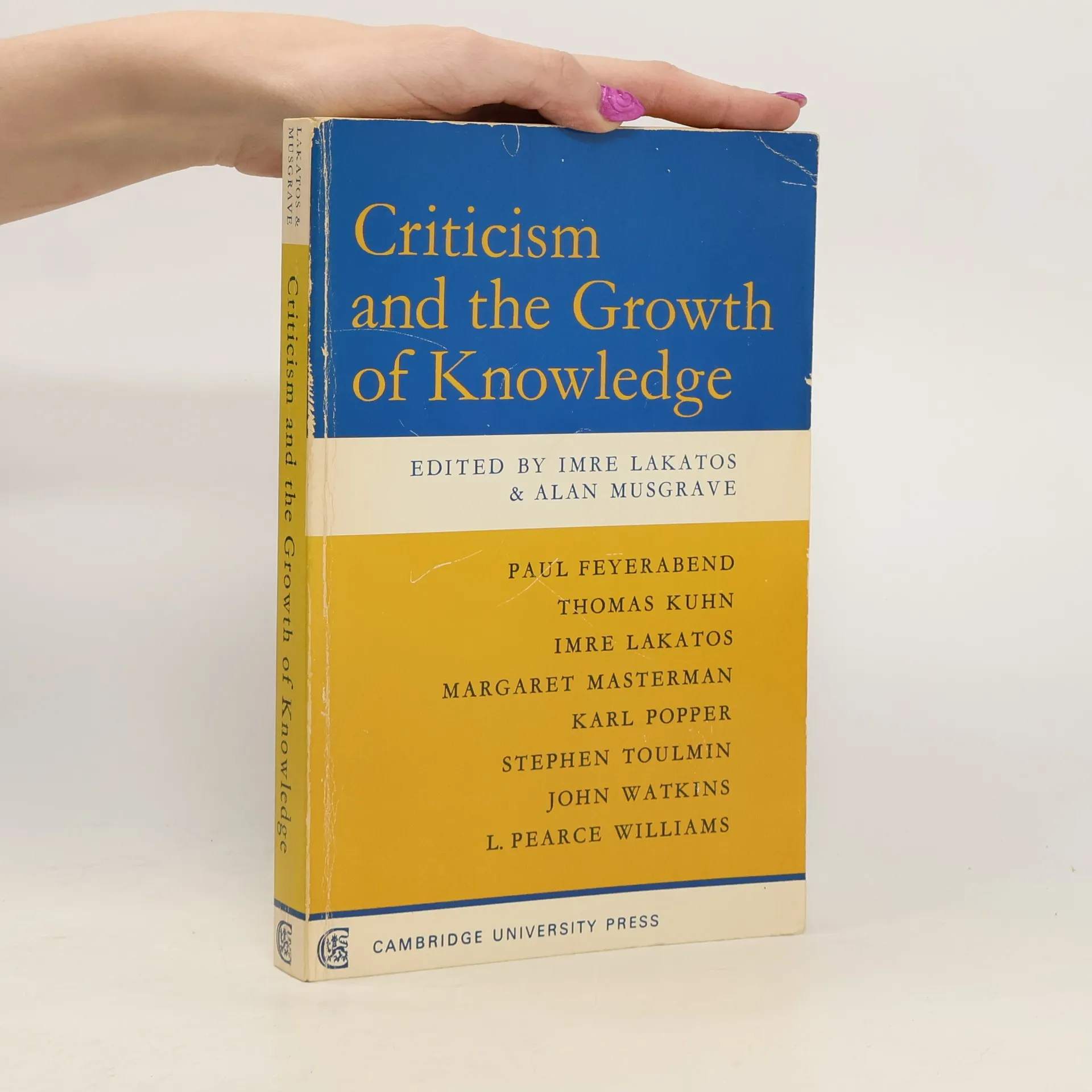
    Criticism and the Growth of Knowledge
    For and Against Method
    The Methodology of Scientific Research Programmes: Volume 1
    Mathematics, Science and Epistemology
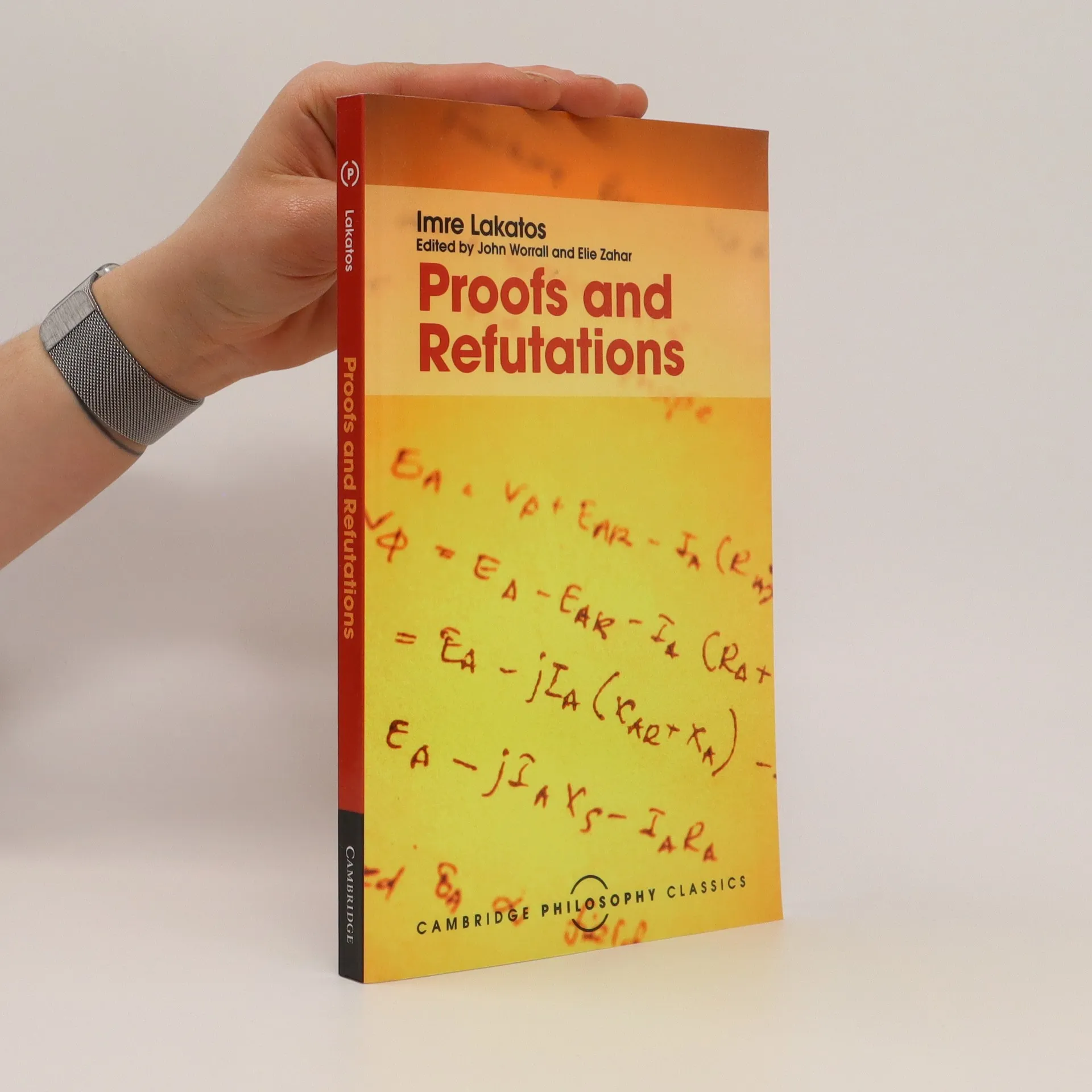
    Proofs and Refutations : The Logic of Mathematical Discovery
    • Imre Lakatos's Proofs and Refutations is an enduring classic, which has never lost its relevance. Taking the form of a dialogue between a teacher and some students, the book considers various solutions to mathematical problems and, in the process, raises important questions about the nature of mathematical discovery and methodology. Lakatos shows that mathematics grows through a process of improvement by attempts at proofs and critiques of these attempts, and his work continues to inspire mathematicians and philosophers aspiring to develop a philosophy of mathematics that accounts for both the static and the dynamic complexity of mathematical practice. With a specially commissioned Preface written by Paolo Mancosu, this book has been revived for a new generation of readers.

      Proofs and Refutations : The Logic of Mathematical Discovery
    • Mathematics, Science and Epistemology

      Volume 2, Philosophical Papers

      • 296 stránek
      • 11 hodin čtení
      4,1(25)Ohodnotit

      The book explores the philosophy of mathematics, showcasing the author's insights and arguments. It also includes critical essays that engage with contemporary philosophers of science, alongside notable polemical writings addressing political and educational topics. This collection highlights the interplay between mathematical thought and broader philosophical debates, offering a comprehensive view of the author's intellectual contributions.

      Mathematics, Science and Epistemology
    • This collection exhibits and confirms the originality, range and the essential unity of his work. It demonstrates too the force and spirit he brought to every issue with which he engaged, from his most abstract mathematical work to his passionate 'Letter to the director of the LSE'.

      The Methodology of Scientific Research Programmes: Volume 1
    • For and Against Method

      • 459 stránek
      • 17 hodin čtení
      4,1(122)Ohodnotit

      The text opens with an imaginary dialogue between Lakatos and Feyerabend, which Matteo Motterlini has constructed, based on their published works, to synthesize their positions and arguments. Part one presents the transcripts of the last lectures on method that Lakatos delivered. Part two, Feyerabend's response, consists of a previously published essay on anarchism, which began the attack on Lakatos's position that Feyerabend later continued in "Against Method." The third and longest section consists of the correspondence Lakatos and Feyerabend exchanged on method and many other issues and ideas, as well as the events of their daily lives, between 1968 and Lakatos's death in 1974.

      For and Against Method
    • Criticism and the Growth of Knowledge

      • 292 stránek
      • 11 hodin čtení
      4,1(116)Ohodnotit

      Two books have been particularly influential in contemporary philosophy of science: Karl R. Popper's Logic of Scientific Discovery, and Thomas S. Kuhn's Structure of Scientific Revolutions. Both agree upon the importance of revolutions in science, but differ about the role of criticism in science's revolutionary growth. This volume arose out of a symposium on Kuhn's work, with Popper in the chair, at an international colloquium held in London in 1965. The book begins with Kuhn's statement of his position followed by seven essays offering criticism and analysis, and finally by Kuhn's reply. The book will interest senior undergraduates and graduate students of the philosophy and history of science, as well as professional philosophers, philosophically inclined scientists, and some psychologists and sociologists.

      Criticism and the Growth of Knowledge
    • 1663-1672

      • 581 stránek
      • 21 hodin čtení

      Die philosophischen Schriften von Leibniz, die in dieser Ausgabe zusammengefasst sind, stammen aus seinen frühen Universitätsjahren und umfassen seine Gedanken aus Leipzig und Altdorf sowie aus Frankfurt und Mainz. Die Sammlung ist in vier Abteilungen gegliedert und bietet einen tiefen Einblick in die Entwicklung seiner Ideen zwischen 1663 und 1672. Die Texte reflektieren Leibniz' philosophische Überlegungen und legen den Grundstein für sein späteres Denken.

      1663-1672
    • Dieser Band präsentiert die dialogische Auseinandersetzung von Leibniz mit John Lockes "An Essay Concerning Human Understanding" in einer kritischen Edition. Neben dem ersten Entwurf werden auch Handexemplare und Leibniz' Stellungnahmen zu Lockes Kritik an Malebranche berücksichtigt.

      Nouveaux Essais
    • Die Betrachtung der Hexentheorie als Beispiel empirischen Denkens führt zu einer kritischen Analyse der wissenschaftlichen Methodik im 17. Jahrhundert. Insbesondere wird die Rolle von Isaac Newton und seine Behauptung, Theorien basierend auf Tatsachen zu entwickeln, hinterfragt. Während Newton stolz auf seine abgeleiteten Gesetze war, zeigt die Argumentation, dass seine Ansätze und die Annahmen über die Planetenbewegungen nicht den empirischen Anforderungen genügten. Diese Diskussion wirft grundlegende Fragen zur Logik und zur Wahrnehmung von Wissenschaft auf, die im Kontext von Glaubenssystemen wie Gott und Teufel stehen.

      Die Methodologie der wissenschaftlichen Forschungsprogramme