
Knihobot

Stanley Corngold

    11. červen 1934

    Stanley Corngold je emeritním profesorem německé a srovnávací literatury na Princetonské univerzitě. Jeho překlady, včetně děl Franze Kafky, jsou vysoce ceněny pro svou literární kvalitu a hloubku porozumění originálu. Corngoldův přístup k literatuře zdůrazňuje interpretaci a analýzu, čímž čtenářům nabízí nové pohledy na klasická díla. Jeho práce přispívá k hlubšímu pochopení německé literární tradice.

    Walter Kaufmann
    Proměna a jiné povídky
    The Mind in Exile
    • The Mind in Exile

      • 280 stránek
      • 10 hodin čtení
      3,6(7)Ohodnotit

      "In the years 1938-1941, Princeton was home to an extraordinary constellation of émigré intellectuals-including a particular quartet of thinkers: the novelists Thomas Mann and Hermann Broch, Albert Einstein, and perhaps the least well known of the group, a professor and polymath at the Institute for Advanced Study, Eric Kahler. This book aims to tell the story of their intimate artistic, political, and intellectual activity during the years of Mann's residence in Princeton as a Professor of Humanities at Princeton. The group, who met one another often, mainly at the house of Kahler or Mann, was termed by Charles Greenleaf Bell, a young poet and ardent disciple of Kahler, the "Kahler-Circle." They were fiercely productive scholars. During Mann's residence, he finished his "Goethe-novel" Lotte in Weimar; composed a surrealistic Indian novella The Transposed Heads; and resumed work on the last novel in his epic tetralogy Joseph and His Brothers. He read aloud from these works, while they were in progress, to Kahler and Broch. Kahler in turn discussed his political essays with Mann and was a deeply engaged critic of Mann's fiction; and Mann relied on Kahler, a polymathic intellectual historian and his closest friend, for his political sagacity. Broch, too, read sections of his epic novel The Death of Vergil aloud to Mann and Kahler, his host. Einstein, for all the likeness of his political views with Mann's, preferred the company of Kahler and Broch to that of Mann, whom he termed "an oppressive schoolmaster." To his friends, Einstein was an inspiration, both for his thought and his material support: he also lent Kahler the money to buy the celebrated house at One Evelyn Place and accommodated the impoverished Broch as a house sitter. Kahler at the time was writing what likely be his most widely known book, Man the Measure, which was published two years late in 1943 and for which Einstein wrote the foreword. Corngold aims to tell the story of the story of the intertwined lives and minds of these four great thinkers during their overlapping residence in Princeton during a time of both political and cultural crisis. and culturally pivotal period. He will draw on rich sources for their interactions: Mann's diaries from 1938-1941, foremost, as well as edited volumes of the correspondence of Mann and Kahler, Mann and Broch, and Kahler and Broch. Until now there is no single book that encompasses the precarious but perfervid intellectual life of them all. Corngold will be measuring the extent to which their personal exchanges affected their writings and their political activity"-- Provided by publisher

      The Mind in Exile
    • Proměna a jiné povídky

      • 232 stránek
      • 9 hodin čtení
      3,9(22548)Ohodnotit

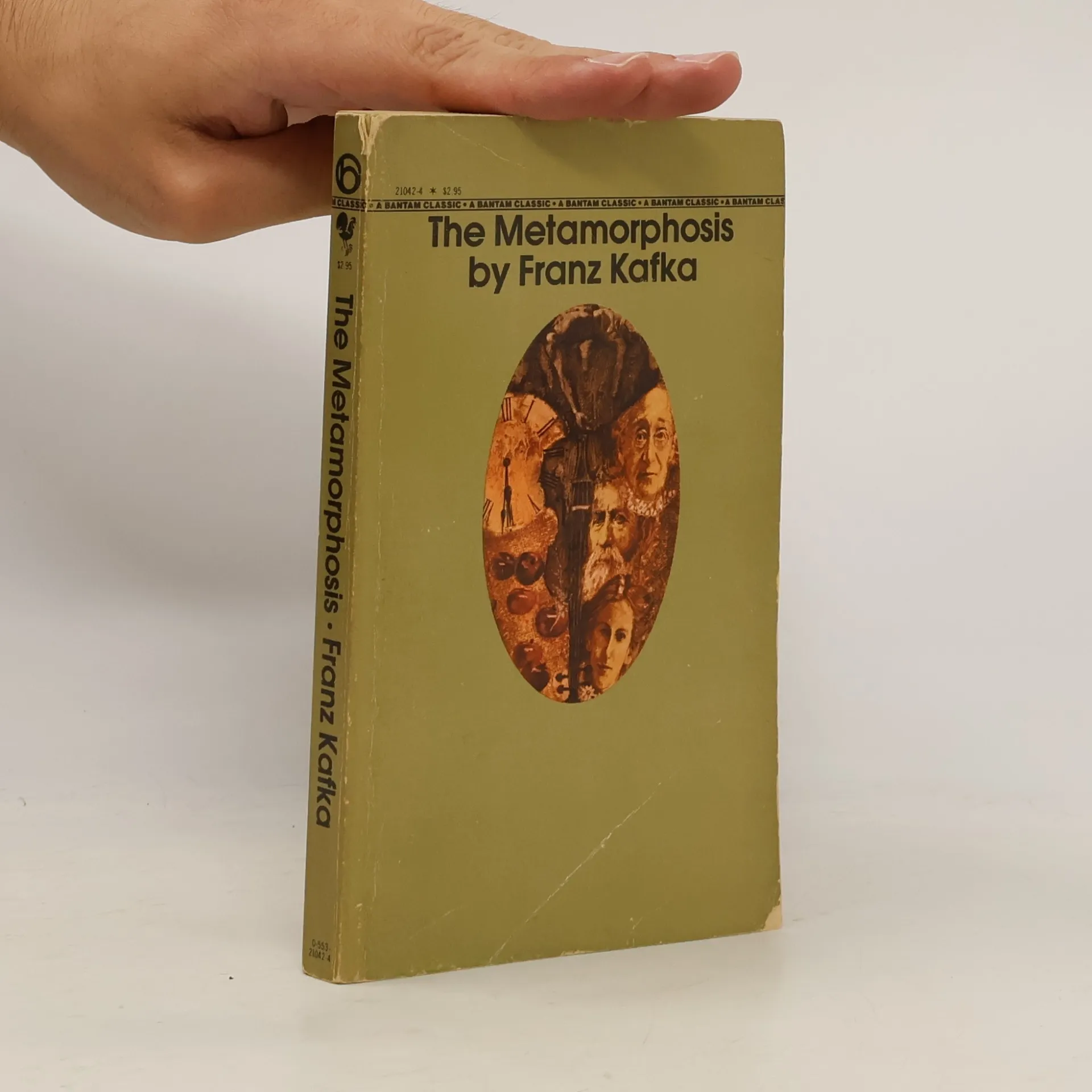
      Další vydání slavné Kafkovy existenciální povídky, ve které se hlavní hrdina, odcizený sám sobě a smyslu svého života, proměnil v odporného brouka. Kniha obsahuje také povídkové soubory: Rozjímání, Venkovský lékař, Umělec v hladovění aj.

      Proměna a jiné povídky
    • Walter Kaufmann

      • 760 stránek
      • 27 hodin čtení

      "The first complete account of the ideas and writings of a major figure in twentieth-century intellectual life. Walter Kaufmann (1921-1980) was a charismatic philosopher, critic, translator, and poet who fled Nazi Germany at the age of eighteen, emigrating alone to the United States. He was astonishingly prolific until his untimely death at age fifty-nine, writing some dozen major books, all marked by breathtaking erudition and a provocative essayistic style. He single-handedly rehabilitated Nietzsche's reputation after World War II and was enormously influential in introducing postwar American readers to existentialism. Until now, no book has examined his intellectual legacy. Stanley Corngold provides the first in-depth study of Kaufmann's thought, covering all his major works. He shows how Kaufmann speaks to many issues that concern us today, such as the good of philosophy, the effects of religion, the persistence of tragedy, and the crisis of the humanities in an age of technology. Few scholars in modern times can match Kaufmann's range of interests, from philosophy and literature to intellectual history and comparative religion, from psychology and photography to art and architecture. Corngold provides a heartfelt portrait of a man who, to an extraordinary extent, transfigured his personal experience in the pages of his books. This original study, both appreciative and critical, is the definitive intellectual life of one of the twentieth century's most engaging yet neglected thinkers. It will introduce Kaufmann to a new generation of readers and serves as a fitting tribute to a scholar's incomparable libido sciendi, or lust for knowledge."-- Provided by publisher

      Walter Kaufmann