Contemporary Human Resource Management
- 544 stránek
- 20 hodin čtení
Providing critical and pragmatic coverage of contemporary ideas in human resource management, this text looks at some of the key issues and topics in the field.


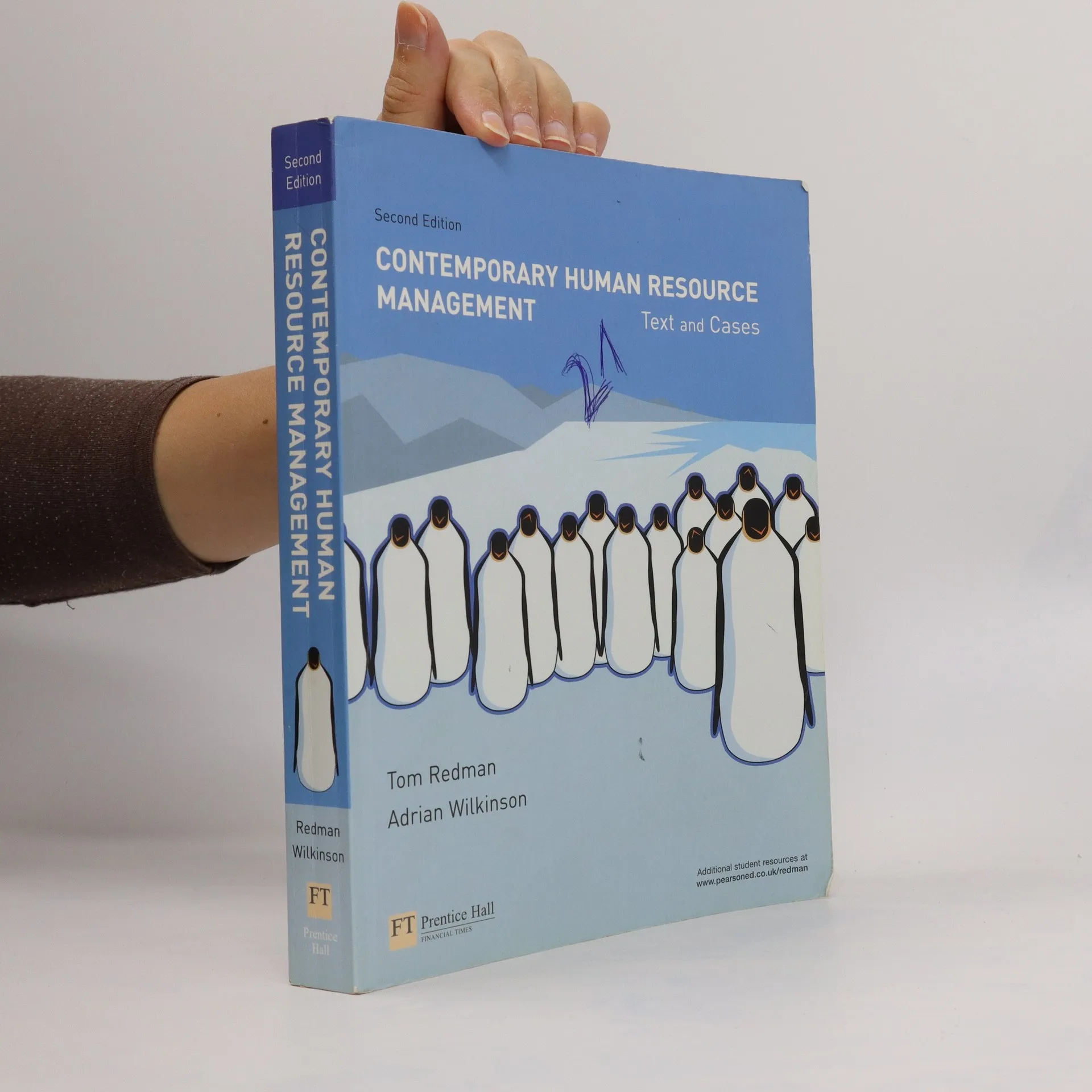
Providing critical and pragmatic coverage of contemporary ideas in human resource management, this text looks at some of the key issues and topics in the field.
This new 3rd edition of the best-selling text People Management & Development: Human Resource Management at Work is the complete text for anyone studying Human Resource Management. Combining the latest academic research with practical approaches to managing HR in the workplace, the text is thoroughly revised with increased signposting to enhance accessibility, a revised structure designed to be more flexible for use on CIPD and non-CIPD courses, as well as the addition of more international cases. Ideal for students studying for the CIPD professional qualification as well as general human resource management modules at undergraduate and postgraduate level. A 'route map' at the front of the book will indicate how the text can be used on both CIPD and non-CIPD courses to assist lecture preparation. TARGETED AT - Students studying CIPD Professional Qualifications and undergraduate and post graduate students taking HRM modules on business and HRM courses
This book aims to analyze, advertise and criticize the contribution of industrial relations to social science understanding. It brings together leading scholars to reconsider the theoretical foundations of industrial relations and its potential contribution to the wider understanding of work and economic life, to learn what it can gain from a stronger engagement with these surrounding disciplines and national traditions.The introduction provides a critical, though broadly sympathetic outline of the development of the main stream industrial relations tradition. Part One recognizes the interdisciplinary character of industrial relations by concentrating on 'border encounters' with the cognate academic disciplines of sociology, economics, management, history, psychology, law, politics and geography. Of particular interest is how far industrial relations has contributed to social science understanding beyond its own narrow borders. Part Two combines a major critical analysis of the American school, with three shorter discussions of Australia, Europe and Japan. Part Three looks forward to the potential contribution of industrial relations to our understanding of work, employment and society by identifying a variety of key dilemmas and debates which call for new interdisciplinary thinking. Finally, the book ends with a critical reassessment of the industrial relations tradition.
Human Resource Management at Work
Suitable for students taking the CIPD professional qualification.
All students of core personnel and development need to appreciate the legal, institutional, national and international contexts within which organisations operate today. This book offers a definitive overview of this whole field