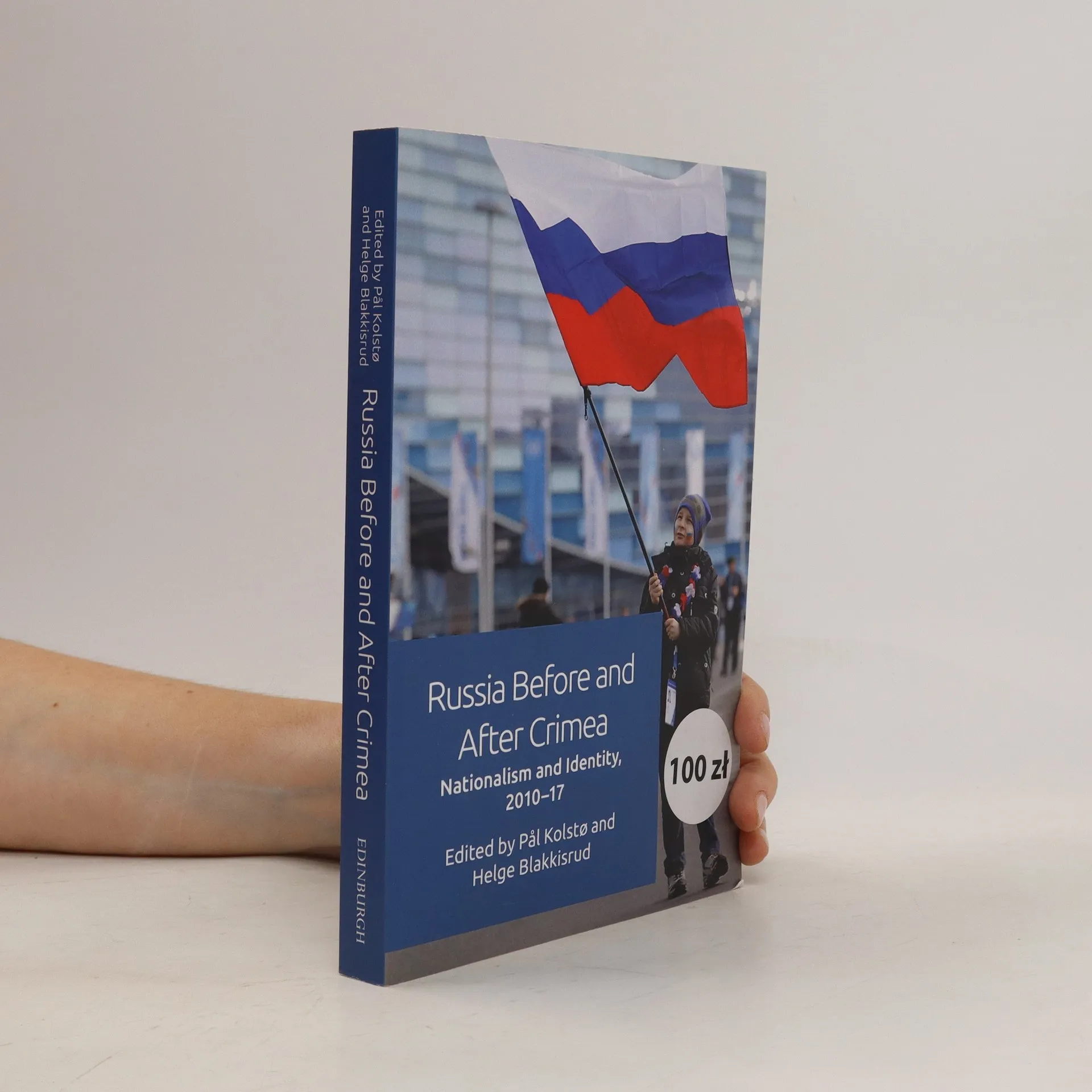
"Our research project organised a capstone conference at Tallinn University 28-29 April 2016, and most of the chapters in the current volume were first presented as papers at that conference."--Page xvii.
Russia's annexation of Crimea in 2014 marked a watershed in post-Cold War European history and brought East-West relations to a low. At the same time, by selling this fateful action in starkly nationalist language, the Putin regime achieved record-high popularity.This book shows how, after the large-scale 2011-13 anti-Putin demonstrations in major Russian cities and the parallel rise in xenophobia related to the Kremlin's perceived inability to deal with the influx of Central Asian labour migrants, the annexation of Crimea generated strong 'rallying around the nation' and 'rallying around the leader' effects.The contributors to this collection go beyond the news headlines to focus on overlooked aspects of Russian society such as intellectual racism and growing xenophobia. These developments are contextualised with an overview of Russian nationalism: state-led, grassroots and the tensions between the two.
Several bipolar states, such as Rwanda, Burundi, and Sri Lanka, have faced brutal violence and state collapse. In contrast, Latvia and Kazakhstan have largely avoided such communal conflict, prompting an in-depth analysis of their ethnopolitical landscapes. Notably, these countries have the lowest proportions of titular populations among former Soviet states, with approximately 57% in Latvia and 50% in Kazakhstan as of 1997. This demographic reality raises questions about the effectiveness of ethnic-based nation-building in fostering unity, as one might expect it to exacerbate tensions between titular groups and outsiders. Nevertheless, both Latvia and Kazakhstan have pursued nation-building efforts that emphasize the traditions and symbols of their titular cultures while treating other ethnic groups as minorities. The processes differ slightly, with Latvia focusing on "latvification" and Kazakhstan on "kazakification." This raises critical questions about the feasibility of integrating such disparate populations. The answers may vary due to the distinct contexts of each country: Latvia, a small European nation, and Kazakhstan, a vast territory spanning Europe and Asia. The interplay of similarities and differences between these cases offers valuable insights into the complexities of post-Soviet nation-building.