

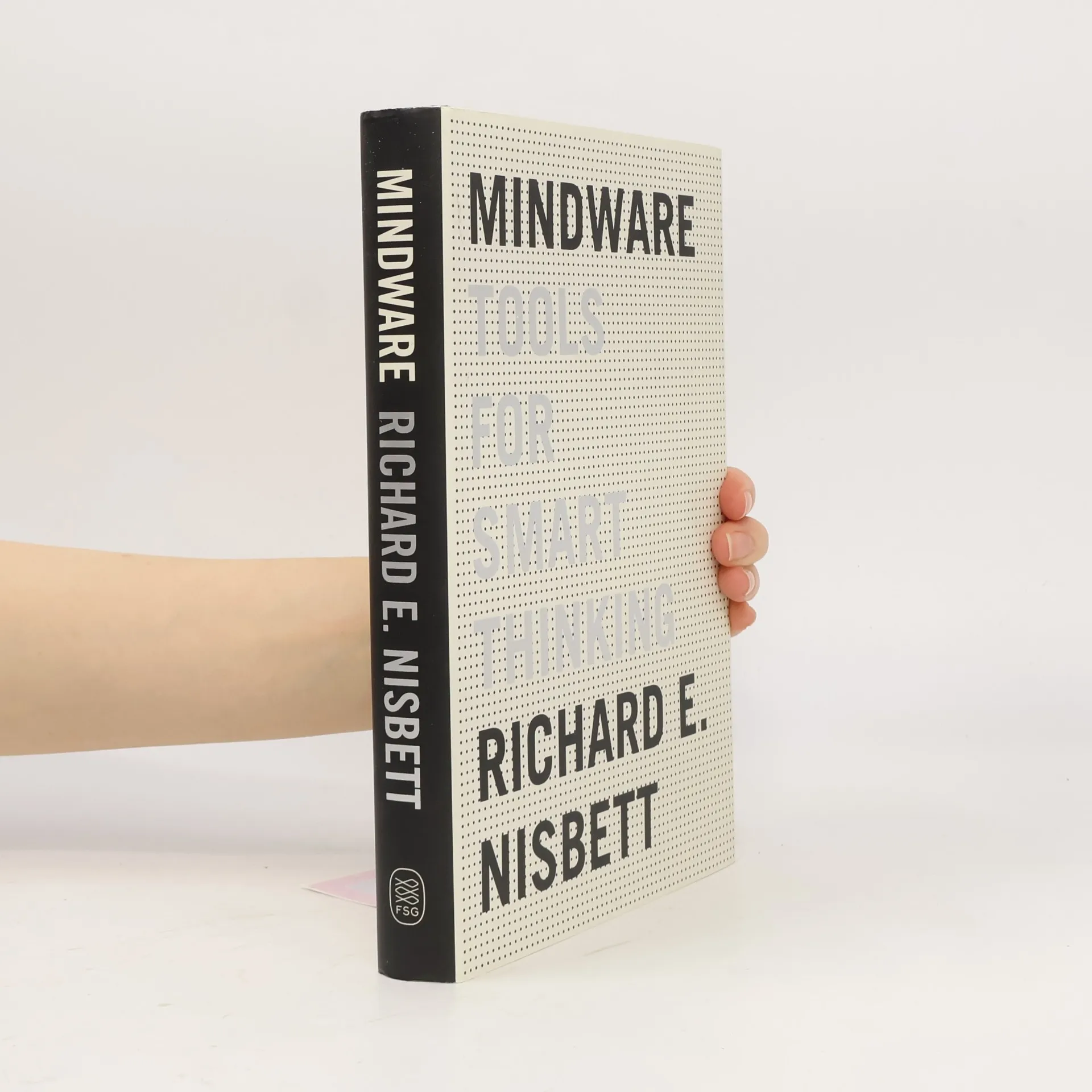
"The most influential thinker, in my life, has been the psychologist Richard Nisbett. He basically gave me my view of the world." -Malcolm Gladwell, New York Times Book Review Scientific and philosophical concepts can change the way we solve problems by helping us to think more effectively about our behavior and our world. Surprisingly, despite their utility, many of these tools remain unknown to most of us. In Mindware , the world-renowned psychologist Richard E. Nisbett presents these ideas in clear and accessible detail. Nisbett has made a distinguished career of studying and teaching such powerful problem-solving concepts as the law of large numbers, statistical regression, cost-benefit analysis, sunk costs and opportunity costs, and causation and correlation, probing the best methods for teaching others how to use them effectively in their daily lives. In this groundbreaking book, Nisbett shows us how to frame common problems in such a way that these scientific and statistical principles can be applied to them. The result is an enlightening and practical guide to the most essential tools of reasoning ever developed-tools that can easily be used to make better professional, business, and personal decisions.
Richard E. Nisbett Pořadí knih (chronologicky)

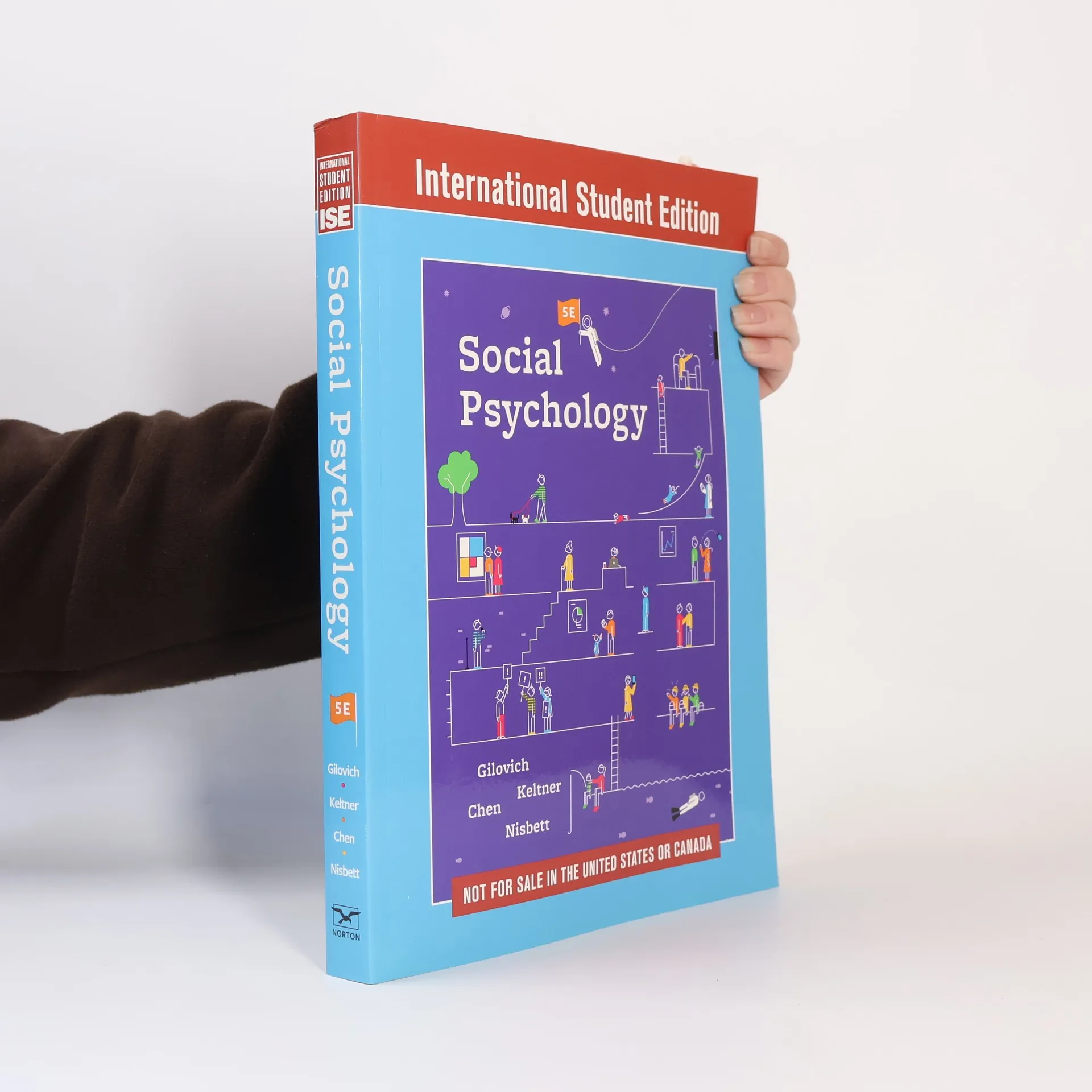
An award-winning author team challenges students to think critically about the concepts, controversies, and applications of social psychology using abundant tools, both in text and online. (NEW) infographics examine important topics like social class, social media effects, and research methodology. InQuizitive online assessment reinforces fundamental concepts, and PowerPoints, test questions, and (NEW) Concept Videos, will help you create the best course materials in the shortest amount of time.
The geography of thought : how Asians and Westerners think differently
- 288 stránek
- 11 hodin čtení
'The most influential thinker, in my life, has been the psychologist Richard Nisbett. He basically gave me my view of the world.' -Malcolm Gladwell "One of the world's leading thinkers" Daily Telegraph When Richard Nisbett showed an animated underwater scene to his American students, they zeroed in on a big fish swimming among smaller fish. Japanese subjects, on the other hand, made observations about the background environment...and the different "seeings" are a clue to profound underlying cognitive differences between Westerners and East Asians. As Professor Nisbett shows in The Geography of Thought people actually think - and even see - the world differently, because of differing ecologies, social structures, philosophies, and educational systems that date back to ancient Greece and China, and that have survived into the modern world. As a result, East Asian thought is "holistic" - drawn to the perceptual field as a whole, and to relations among objects and events within that field. By comparison to Western modes of reasoning, East Asian thought relies far less on categories, or on formal logic; it is fundamentally dialectic, seeking a "middle way" between opposing thoughts. By contrast, Westerners focus on salient objects or people, use attributes to assign them to categories, and apply rules of formal logic to understand their behaviour.