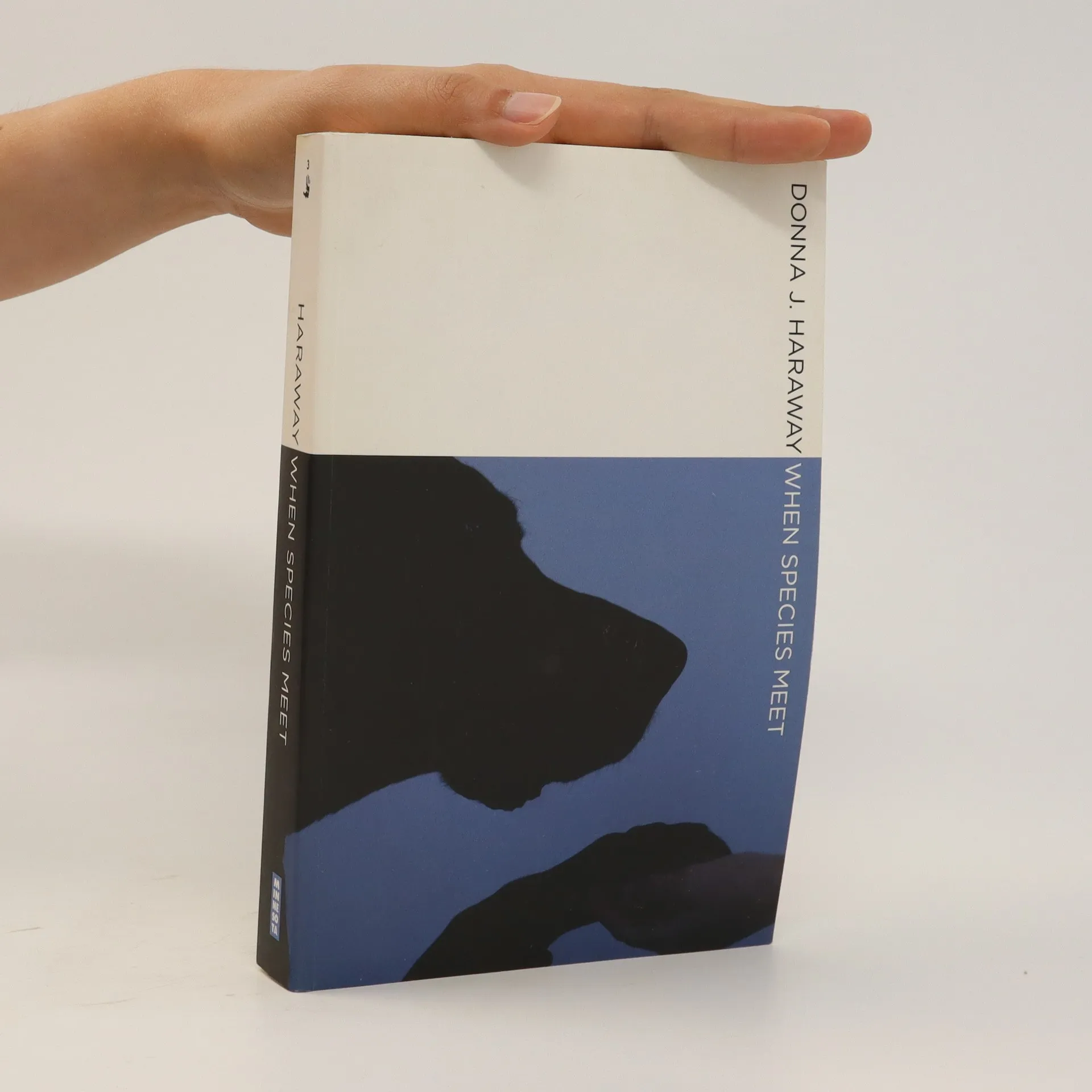
Zůstat u nesnází
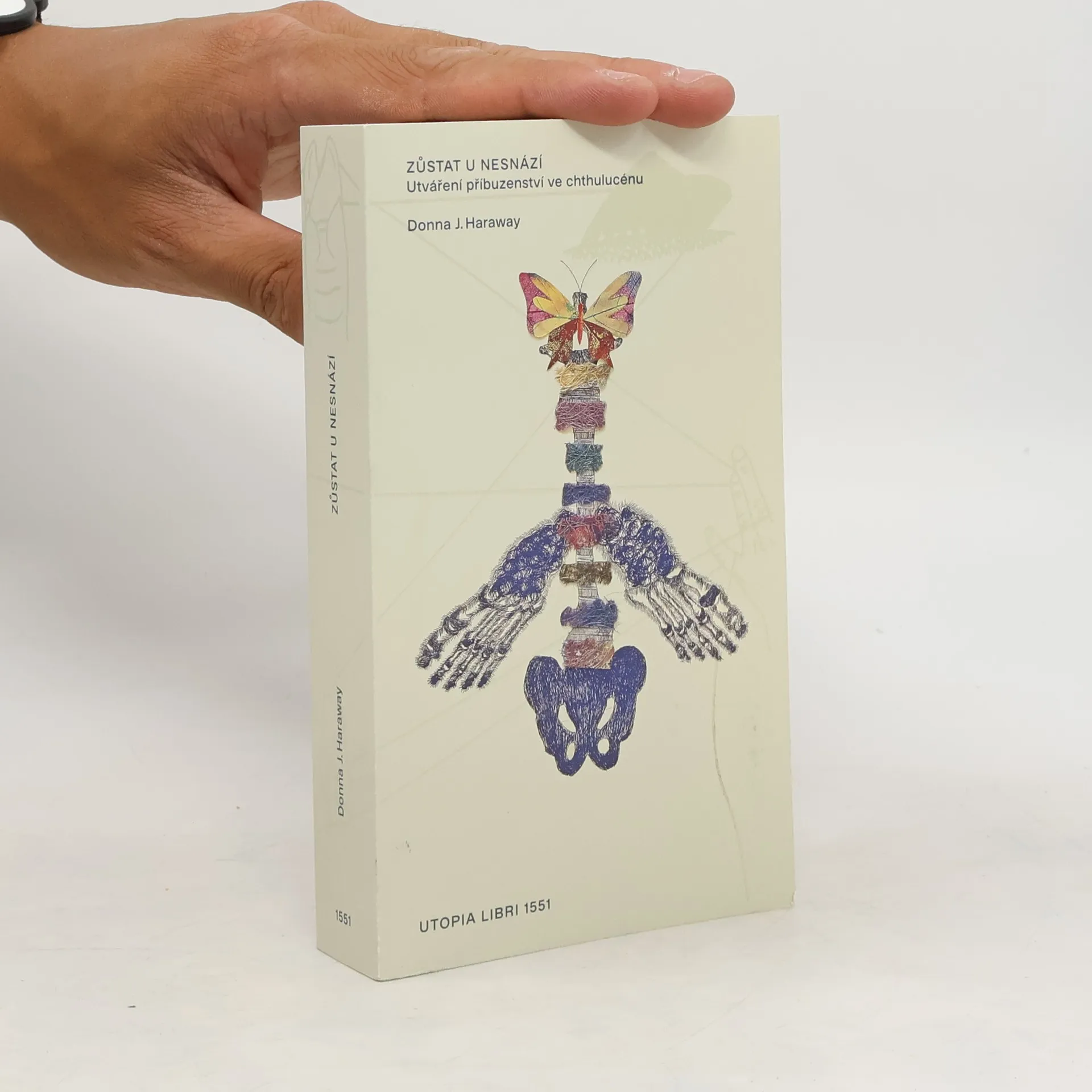
utváření příbuzenství ve chthulucénu


Donna J. Haraway je autorkou několika knih, která zkoumá vztahy mezi lidmi, technologiemi a přírodou. Její práce se často zaměřuje na to, jak můžeme lépe pochopit a propojit se s okolním světem. Prostřednictvím svých textů podněcuje čtenáře k přemýšlení o budoucnosti a našem místě v ní.



utváření příbuzenství ve chthulucénu
First published in 1998, this collection brings together key articles by prominent feminist thinkers, providing a sophisticated exploration of theoretical topics central to feminist social thought. It highlights significant concerns in contemporary feminist scholarship and the advancements made by feminist philosophers. The editor's introduction offers alternative pathways through the text, enabling instructors to tailor the reader to their specific courses and student interests. Each article includes a brief introduction that contextualizes it, emphasizing the main issues and conclusions, which aids students in navigating challenging theoretical concepts. Organized around seven topics—constructions of gender; theorizing diversity; figurations of women; subjectivity, agency, and feminist critique; social identity, solidarity, and political engagement; care and its critics; and women, equality, and justice—this collection represents a broad spectrum of feminist thinking. Students will engage with critical questions, including how gender norms are instilled and perpetuated, the relationships between gender and other social positions like race and class, the resources available for recognizing and resisting subordination, the goals of feminist politics, and the reconciliation of social and legal equality with difference.
Electrifying and provocative, Donna Haraway's "Cyborg Manifesto," published thirty years ago, remains highly relevant today as it challenges complex divisions of human and machine, gender, class, race, ethnicity, sexuality, and location. The "Companion Species Manifesto" further interrogates the human-nonhuman divide, making it essential in our era of environmental crisis and polarization. Together, these manifestos reveal the continuity of Haraway's thought, engaging readers in a conversation with her long-term friend Cary Wolfe. Through a dialogue on the history and significance of the manifestos, they explore themes such as biopolitics, feminism, Marxism, human-nonhuman relationships, making kin, literary tropes, material semiotics, and secular Catholicism. The discussion culminates in insights into Haraway's "Chthulucene Manifesto," which contrasts the bleak narratives of the Anthropocene and Capitalocene. Committed to fostering diverse and robust earthly flourishing, this work aims to reignite essential conversations about biologies, technologies, histories, and potential futures, both within and beyond academic circles.
Offering a comprehensive selection of Donna Haraway's writings, this volume showcases her insightful observations on nature, science, and society. It serves as an excellent introduction to her thought-provoking ideas, reflecting her unique perspective and contributions to contemporary discourse.
Acclaimed theorist and social scientist Donna Jeanne Haraway uses the work of pioneering developmental biologists Ross G. Harrison, Joseph Needham, and Paul Weiss as a springboard for a discussion about a shift in developmental biology from a vitalism-mechanism framework to organicism. The book deftly interweaves Thomas Kuhn's concept of paradigm change into this wide-ranging analysis, emphasizing the role of model, analogy, and metaphor in the paradigm and arguing that any truly useful theoretical system in biology must have a central metaphor.
Haraway's discussions of how scientists have perceived the sexual nature of female primates opens a new chapter in feminist theory, raising unsettling questions about models of the family and of heterosexuality in primate research.
Explores the world of contemporary technoscience through the role of stories, figures, dreams, theories, advertising and politics.
Donna Haraway analyses accounts, narratives, and stories of the creation of nature, living organisms, and cyborgs (cybernetic components); showing how deeply cultural assumptions penetrate into allegedly value-neutral medical research.
Donna J. Haraway refigures our current epoch, moving away from the Anthropocene toward the Chthulucene: an epoch in which we stay with the trouble of living and dying on a damaged earth while living with and understanding the nonhuman in complex ways conducive to building more livable futures.
The author of four seminal works on science and culture, Donna Haraway here speaks for the first time in a direct and non-academic voice. How Like a Leaf will be a welcome inside view of the author's thought.
This deeply personal yet intellectually groundbreaking work develops the idea of companion species and deftly explores philosophical, cultural, and biological aspects of animal-human encounters.
The Companion Species Manifesto is about the implosion of nature and culture in the joint lives of dogs and people, who are bonded in "significant otherness." In all their historical complexity, Donna Haraway tells us, dogs matter. They are not just surrogates for theory, she says; they are not here just to think with. Neither are they just an alibi for other themes; dogs are fleshly material-semiotic presences in the body of technoscience. They are here to live with. Partners in the crime of human evolution, they are in the garden from the get-go, wily as Coyote. This pamphlet is Haraway's answer to her own Cyborg Manifesto , where the slogan for living on the edge of global war has to be not just "cyborgs for earthly survival" but also, in a more doggish idiom, "shut up and train."
Donna Haraway concibe la fórmula matemática para un mundo posible, Terrapolis, y la relaciona con una práctica popular entre los Navajos: la formación de figuras con cuerdas, que representan constelaciones y mitos de la creación.
The Reader focuses on the practices of modern and contemporary science and technology located in different national and institutional settings, with some attention to non- Western contexts. By mapping some of the open questions and points of tension likely to occupy the field for years to come, the essays in the Reader cast fresh light on what "science" means at the end of the twentieth century.
Im Zeitalter der Gen- und Computertechnologien werden die Grenzen zwischen Mensch, Tier und Maschine zersetzt. Wir verwandeln uns allmählich, fast unmerklich in Cyborgs, in Mensch-Maschine-Monster mit Schnittstellen zu allen möglichen technischen Geräten und Systemen. Genau diese Schnittstellen, ihre Gefahren, aber auch ihre Chancen für Wissenschaft, Ethik und Politik stehen im Mittelpunkt der Texte von Donna Haraway, der richtungsweisenden modernen feministischen Wissenschaftlerin. Denn Handlungsfähigkeit in den technisch-politischen Großsystemen erfordert komplexere Beziehungen zur Technowissenschaft als einfache Pro- oder Contra-Positionen. Besonders bemerkenswert an Haraways Arbeiten ist die Zusammenbindung von Human- und Naturwissenschaften, von Forschungsdrang, Erkenntnislust und politischem Verantwortungsgefühl, von Entsetzen und Humor.
Mit diesem zuerst 1995 erschienenen Band wurden zentrale Aufsätze Donna J. Haraways, die eine der bedeutendsten und innovativsten feministischen Naturwissenschaftlerinnen in den USA ist, erstmals einem deutschsprachigen Publikum zugänglich gemacht. In ihren Texten teilt die Autorin nicht die Sehnsucht vieler Feministinnen nach der Rückkehr zur reinen, unversehrten Natur, sondern sieht in deren Auflösung auch eine Chance zur Änderung bestehender Herrschaftsbeziehungen.
»Wenn auch beide in einem rituellen Tanz verbunden sind, wäre ich lieber ein Cyborg als eine Göttin« - Donna Haraway, 1995. Die Kritiken am »Manifest für eine akzelerationistische Politik« (Williams/Srnicek) sind vielfältig, doch die Behauptung, es sei ein Ausdruck machistischen Technonihilismus, ist besonders irreführend. Diese Debatten ignorieren das Potenzial des Akzelerationismus für die gegenwärtige Genderpolitik und seine Verbindung zu technofeministischem Denken. Dea ex machina bringt verdrängte Genealogien zurück, die das akzelerationistische Projekt im Kontext von 50 Jahren feministischer Gender- und Techniktheorie beleuchten. Das Herzstück des Buches ist ein Manifest des Kollektivs Laboria Cuboniks, ergänzt durch bedeutende technofeministische Stimmen. Zu den Beiträgen gehören Rosi Braidotti über Cyberfeminismus, das Manifest des Kollektivs, Shulamith Firestone zur Verbindung von Feminismus und Ökologie, Donna Haraway über Femaleman©_meets_OncomouseTM, Nina Power zu Frauen und Maschinen in der Noise-Musik, Paul B. Preciado mit einem Auszug aus »Testo Junkie«, Alexandra Pirici und Raluca Voinea mit einem Manifest für das Gynozän sowie Lisa Nakamura über Rassismus und Sexismus im Gaming.