

Knihobot

U. G. Krishnamurti

    U.G. Krishnamurti byl indický myslitel, který popíral existenci osvícení a všech myšlenkových systémů odkazujících na konečnou pravdu. Zdůrazňoval nemožnost a zbytečnost jakékoli lidské změny, protože tělo a jeho činy jsou již dokonalé. Odmítal individuální mysl a místo toho hovořil o „světové mysli“, kterou lidský mozek jako anténa přijímá myšlenky. Tvrdil, že lidská zkušenost je výsledkem tohoto procesu myšlení, zatímco přirozený stav těla, kdy čakry znovu ožívají a šišinka přebírá kontrolu, je oproštěn od myšlenek.

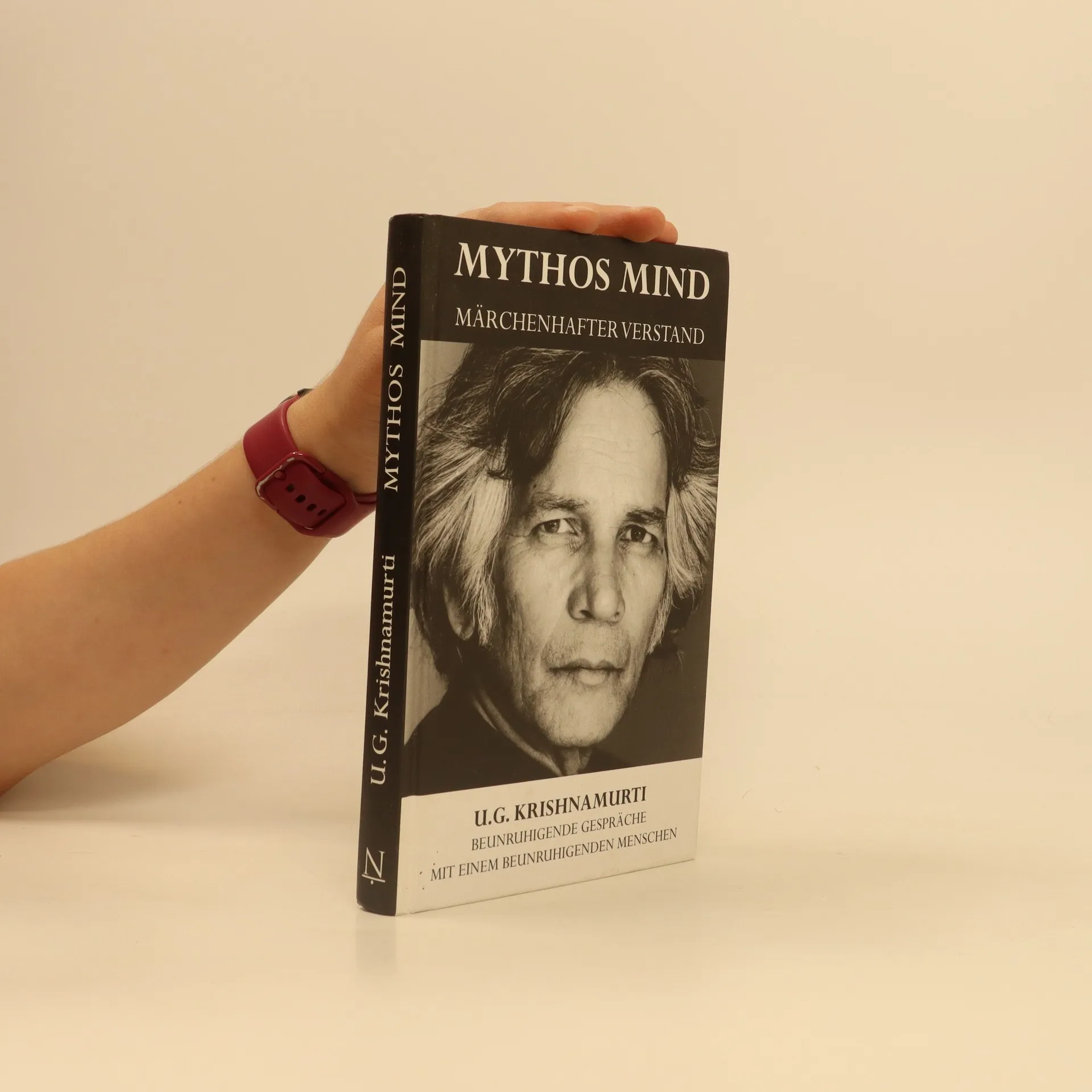
    Mythos Mind : Märchenhafter Verstand
    No Way Out
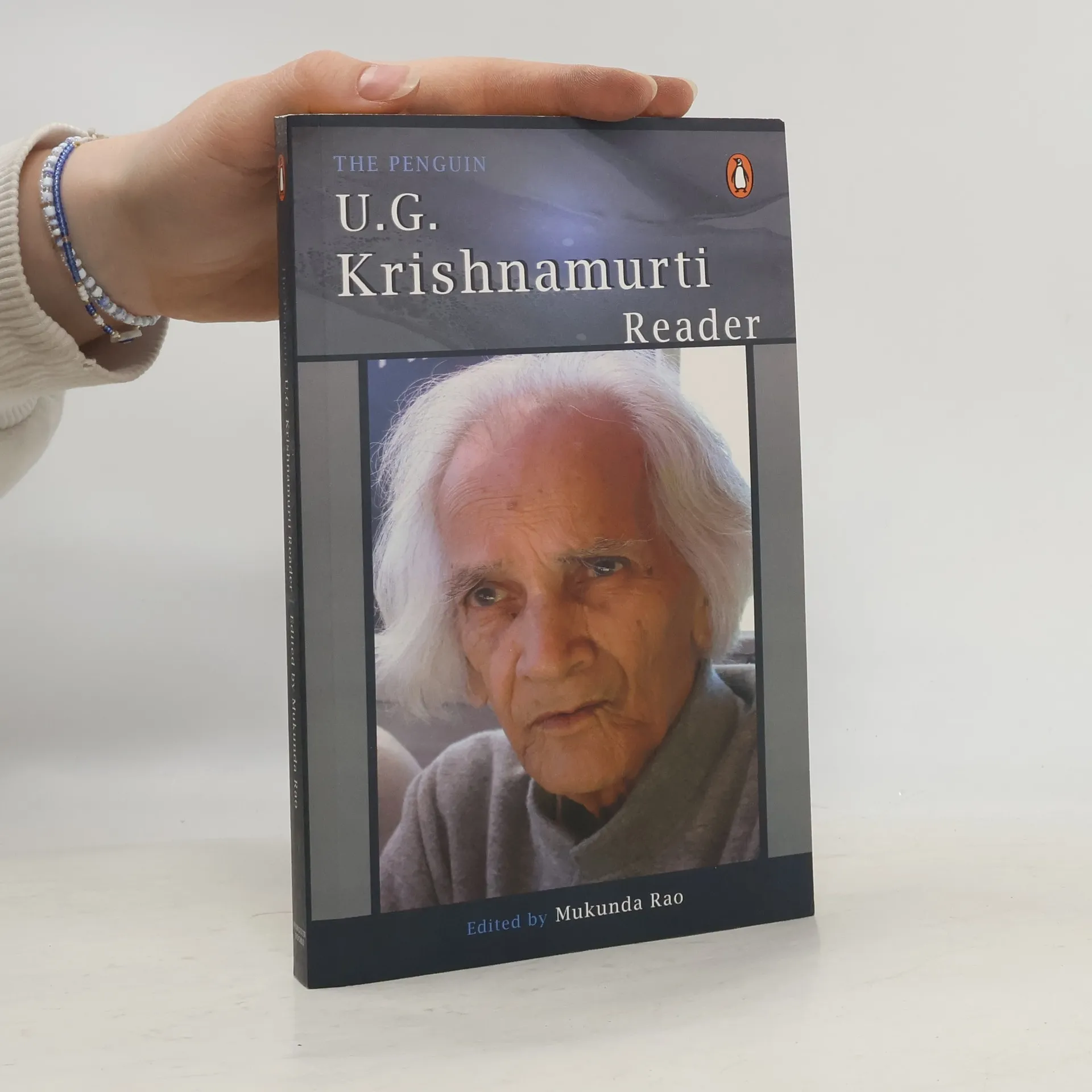
    The Mystique of Enlightenment: The Unrational Ideas of a Man Called U.G.
    • An underground spiritual classic distributed widely for the first time in the U.S., this is the story of one of the most unusual figures in contemporary spirituality, U.G. Krishnamurti, in his own words. The Mystique of Enlightenment is a scathing critique of contemporary spirituality. In a world in which spiritual techniques, teachers, concepts, and organizations are legion, U. G. stands nearly alone in his rejection of it all: "I am only interested in describing this state, in clearing away the occultation and mystification in which those people in the 'holy business' have shrouded the whole thing. Maybe I can convince you not to waste a lot of time and energy looking for a state that does not exist except in your imagination... The natural state is acausal: it just happens." The author does not equate the natural state with enlightenment, which he describes as an illusion created by our culture. He states emphatically that one can do nothing to attain the natural state. In fact, any movement towards it separates one from it. U. G. Krishnamurti is an original voice in which much of contemporary spirituality is understood in a new way. For those interested in the full spectrum of modern spiritual thought, this is a "must read." In the well-known history of J. Krishnamurti, few names have been so strongly associated with his message as U. G. Krishnamurti, who shared a close but contentious relationship with him over many years. U.G. was raised to take on the mantle of guru, much like J. Krishnamurti. When the two men eventually met, each had rejected the guru role, and for years they conversed regularly, struggling to uncover the nature of truth, before a falling out led each in a different direction. It is fairly common in reading modern spiritual books to find references to U. G. Krishnamurti's influence on both teachers and their students. His books have been translated into nearly every European language, as well as Chinese and Japanese. Widely regarded in India and Europe, The Mystique of Enlightenment is considered by U.G.'s closest associates to be the best summary of his ideas. The book consists of transcripts of informal talks with those who come to ask him questions. In one of these talks, he relates his life story, including the events leading up to and comprising what he calls his "calamity," or his entry into the natural state. Since his own experience of coming into the natural state at age 49, he has spent his time traveling throughout the world, staying with friends or in rented apartments for a few months at a time. He gives no public talks, but meets with people who come to see him. What he offers is not hope or encouragement, but stark reality: "Of one thing I am certain. I cannot help you solve your basic dilemma or save you from self-deception, and if I can't help you, no one can." His message is simple: he has no message. Nevertheless, his words can inspire you to face your own assumptions and motivations and discover for yourself what is true.

      The Mystique of Enlightenment: The Unrational Ideas of a Man Called U.G.
    • No Way Out

      • 122 stránek
      • 5 hodin čtení

      I asked a friend, an editor of a magazine, to do a cover story on U.G. His prompt response was, “U.G. is not a cover story material, he is only for the upper-class intellectuals…has no mass appeal...” “Very few people can understand him and his philosophy,” he went on to add. On coming out of his office, I pondered over the startling revelation. After all, just because I understood or appreciated something, does not mean that everyone else does too. I started going through the various material available on / about U.G. and discovered that the fault did not lie with U.G. or his statements (which I knew already) but with people like us who want to present him to the world. Just like when we present a rose to someone, we break off all its thorns, we should present the essence of U.G.'s philosophy in its purity, minus the mind -shattering, devastating, blasphemous…thorns. I am trying to do this exercise and hope to reach the masses! Sunita Pant Bansal NOIDA, India 2002

      No Way Out
    • U. G. ist eine Art Antichrist, die Reinkarnation Nietzsches auf dem spirituellen Parkett. Es gibt nur die Vergangenheit in Tätigkeit und diese Bewegung erschafft die Illusion von Gegenwart und Zukunft. Sie mögen das, was ich hier sage, logisch oder unlogisch finden, und Sie mögen es akzeptieren oder ablehnen. Aber es wird in jedem Fall die Vergangenheit sein, die das tut, denn nur sie ist in Ihnen wirksam. Die Vergangenheit hat diese Ziele projiziert – Gott, Erleuchtung, Seelenfrieden, was auch immer – und sie in die Zukunft verlegt, außer Reichweite. Alles, wofür Sie stehen, woran Sie glauben, was Sie erfahren und anstreben, ist das Ergebnis des Denkens. Und das Denken ist deshalb destruktiv, weil es nichts weiter als ein Schutzmechanismus ist, der darauf programmiert ist, mit allen Mitteln seine eigenen Interessen zu schützen. Die Kultur hat den Organismus daran gehindert, in seiner ganzen Einzigartigkeit zu erblühen. Sie hat etwas Falsches vor ihn hingestellt – den idealen Menschen. Das Ganze ist aus dem entzweienden Bewusstsein der Menschheit geboren. Es hat uns nichts als Gewalt gebracht.

      Mythos Mind : Märchenhafter Verstand