

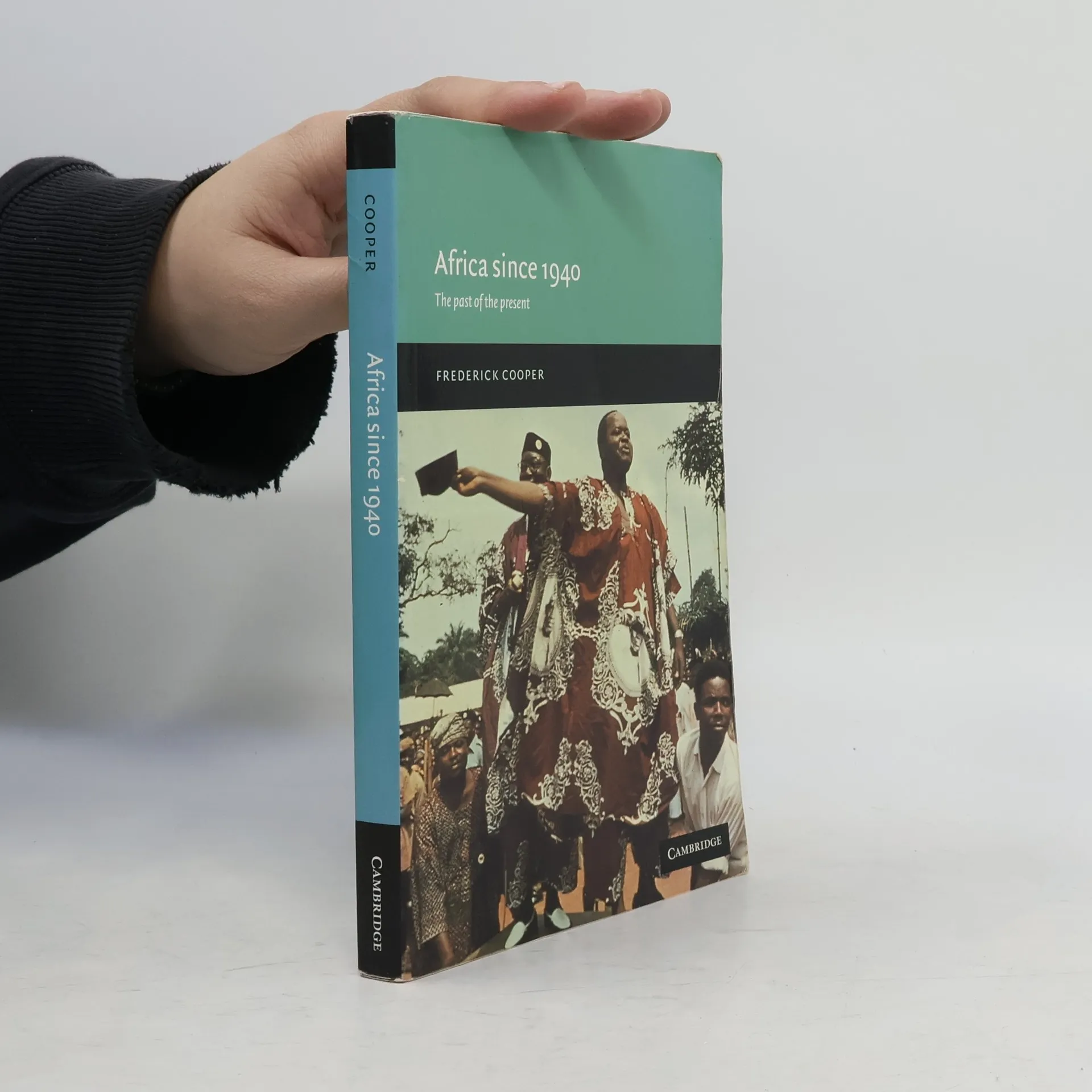
This textbook bridges colonial and post-colonial history to explain the effects of political independence on the populace.
Frederick Cooper Knihy
Frederick Cooper je americký historik, jehož práce se soustředí na kolonialismus, dekolonizaci a africké dějiny. Zabývá se širšími otázkami kolonialismu a jeho konceptuální přínosy, jako je například koncept „státu vrátného“, významně přispívají k našemu pochopení historie. Jeho analýzy nabízejí hluboký vhled do složitých procesů, které formovaly koloniální a postkoloniální svět.

Machtbeziehungen in kolonialen Kontexten: Initiativen von oben, von unten und dazwischen
Understanding Power Relations in a Colonial Context: Top-Down, Bottom-Up, In-Between
The history of decolonization is usually written backward, as if the end-point (a world of juridically equivalent nation-states) was known from the start. But the routes out of colonial empire appear more varied. Some Africans sought equal rights within empire, others to federate among themselves; some sought independence. In London or Paris, officials realized they had to reform colonial empires, but not necessarily give them up. The idea of “development” became a way to assert that empires could be made both more productive and more legitimate. Frederick Cooper explores how these alternative possibilities narrowed between 1945 and approximately 1960.
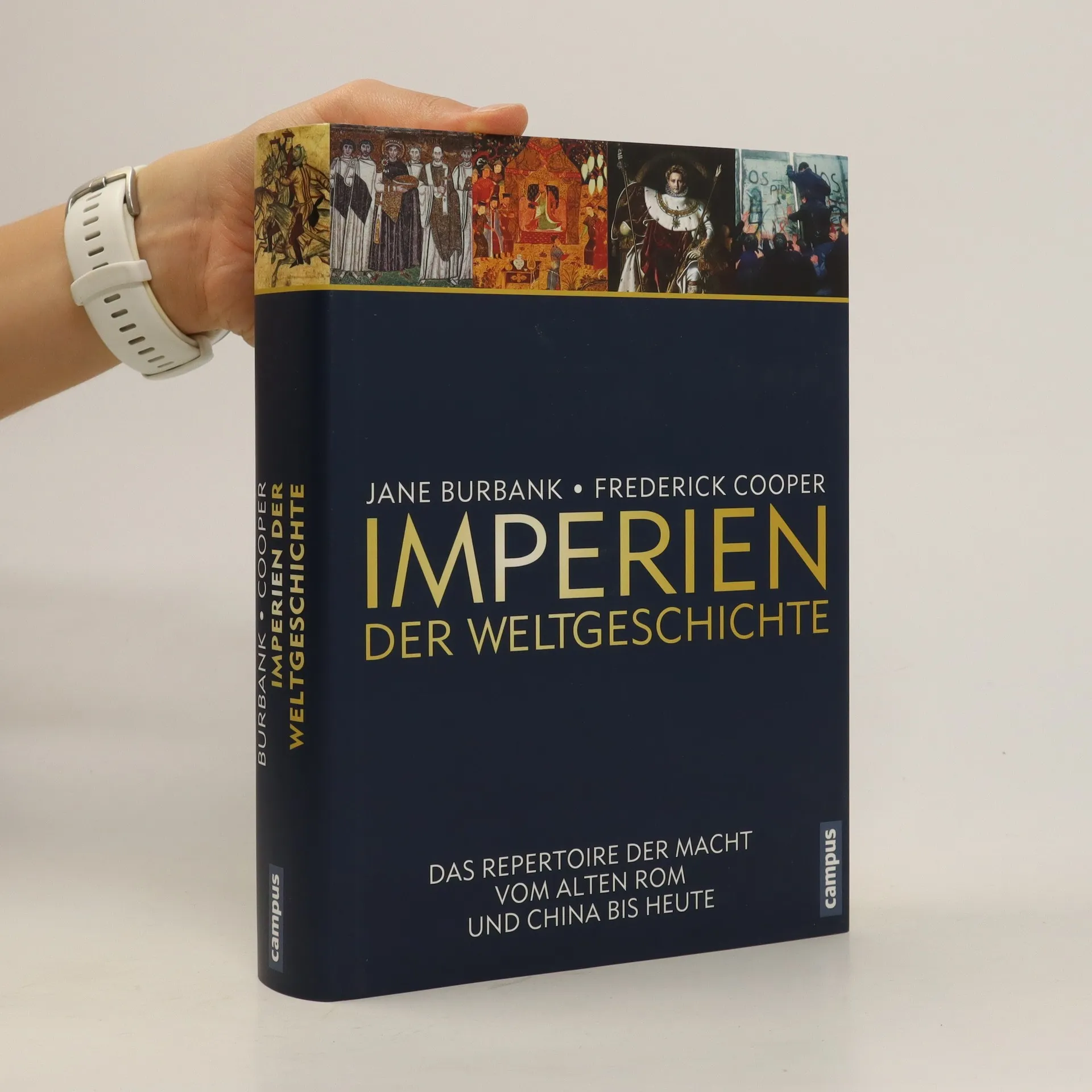
Für die Herrscher von Imperien galt es stets, die verschiedensten Bevölkerungsgruppen zu integrieren und trotz dieser Vielfalt ihre Macht zu bewahren. Das Repertoire an Machtstrategien, das sie dabei anwendeten, schildern Jane Burbank und Frederick Cooper in einer zwei Jahrtausende umspannenden Reise durch die Geschichte der großen Weltreiche. So konnten Imperien Hierarchien und soziale wie ethnische Unterschiede aufrechterhalten, neue begründen oder sie durch Integration aufheben. Dieser Umgang mit Vielfalt, die jeweilige Politik der Differenz, war – wie Burbank und Cooper zeigen – der Schlüssel für Aufstieg und Niedergang aller Imperien. Mit dieser Erkenntnis ermöglichen sie ein neues Verständnis der großen Reiche in der Weltgeschichte. Und erzählen dabei auf unterhaltsame Weise vom Schicksal zahlreicher Völker und Dynastien: vom antiken China und Rom über das Osmanische, das spanische und das Reich Karls des Großen bis hin zu Russland, Großbritannien und den USA.