
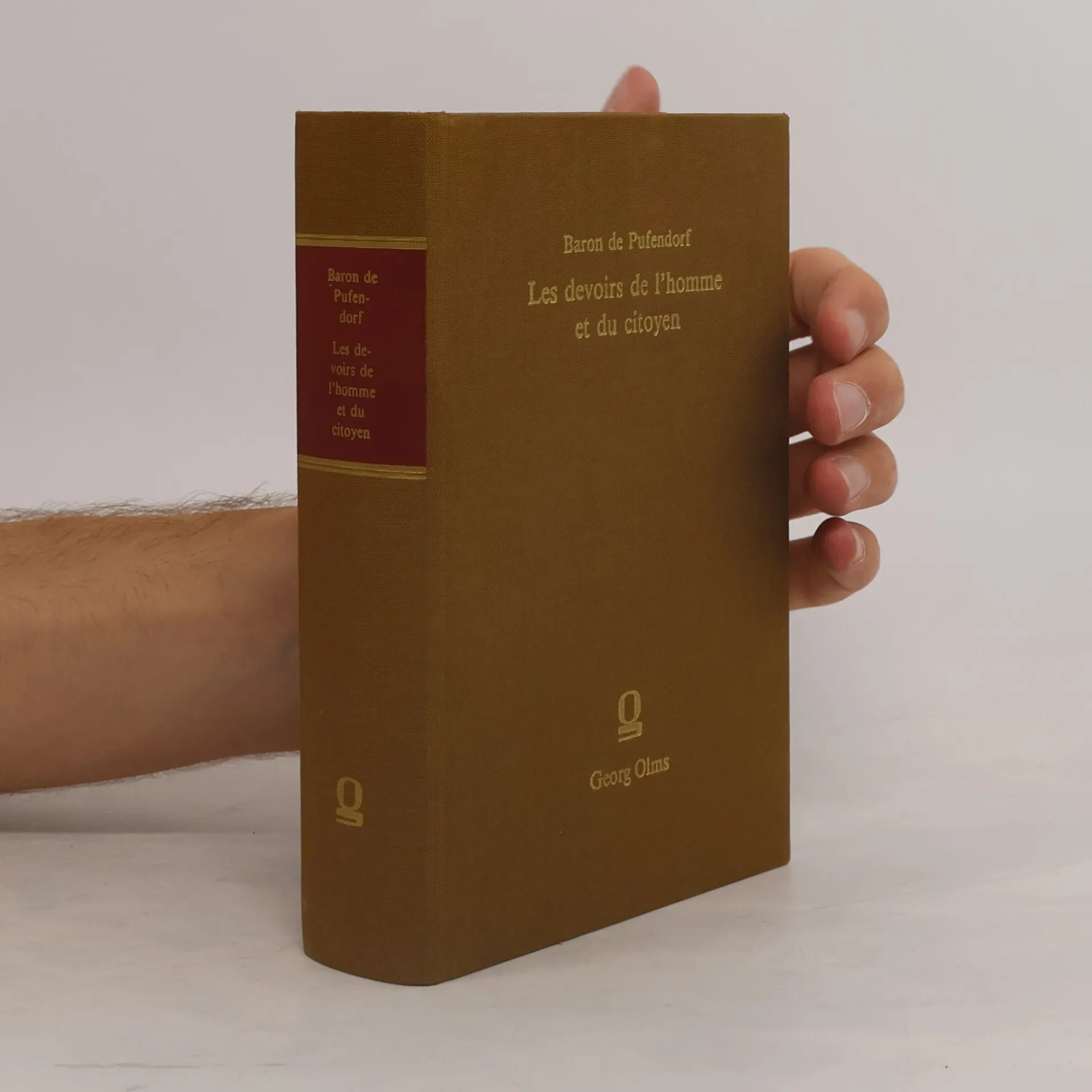

Samuel Pufendorf byl německý právník a politický filozof, jehož práce se zaměřila na revizi a komentář přirozenoprávních teorií Thomase Hobbesa a Huga Grotia. Jeho myšlení ovlivnilo rozvoj moderního přirozeného práva a politické filozofie. Jeho analýzy právních a morálních principů formovaly intelektuální diskurz své doby. Pufendorfův odkaz spočívá v jeho důrazu na rozum a přirozený zákon jako základ pro společenské uspořádání.
"The Present State of Germany, one of Samuel Pufendorf's earliest and most important works, was first published in 1667 under the pseudonym Severinus de Monzambano. Its blunt, colorful, and unapologetic challenge to mainstream German constitutional law made it enormously controversial as soon as it appeared, and its author was both vilified and exalted in the acrimonious debate that followed. It became one of the most reprinted books of the late seventeenth century.
Samuel Pufendorf was a key figure in the early German Enlightenment, significantly impacting voluntarist natural law theory across Europe and the English-speaking world, particularly in Scotland and America. His work, An Introduction to the History of the Principal Kingdoms and States of Europe (1682), became one of his most renowned and frequently reprinted texts, although its influence has faded over time. Pufendorf's histories illustrate his natural law theory by detailing the development and interactions of states as collective social agents focused on securing their own interests, including self-preservation. This perspective allowed states to serve as vehicles for philosophical demonstration. By emphasizing empirical details and legitimating a politics of interest, his histories resonated with the emerging nation-states of early modern Europe, which sought validation for their actions and policies. Pufendorf's accounts were based on each nation's historians, presenting their positions from both current and historical viewpoints. This appealing approach to political history is reflected in the extensive publishing history of the work. This book is relevant for those interested in the history of international law and the evolution of historiography in the seventeenth and eighteenth centuries, offering a carefully edited and annotated English version of one of Pufendorf's most influential works.
Exploring the themes of toleration and the separation of politics and religion, this work emerges in response to the 1685 revocation of the Edict of Nantes. Pufendorf, a key figure in modern natural law, argues against the sovereign's authority to dictate the religion of subjects, emphasizing that state and religion serve distinct purposes. The book is enriched with an introduction, selected bibliography, notes, and an index, providing a comprehensive understanding of its historical context and philosophical implications.
Focusing on natural law, Samuel Pufendorf's work presents a conventional foundation that emphasizes humanity's inherent need to foster sociability. By rejecting the metaphysical theories of scholasticism, he argues that the principles of natural law arise from social interactions and the need for cooperation among individuals. This approach offers a practical perspective on moral obligations and human relationships, positioning sociability as central to understanding ethical behavior.
This was Pufendorf's first work, published in 1660. Its appearance effectively inaugurated the modern natural-law movement in the German-speaking world. The work also established Pufendorf as a key figure and laid the foundations for his major works, which were to sweep across Europe and North America. Pufendorf rejected the concept of natural rights as liberties and the suggestion that political government is justified by its protection of such rights, arguing instead for a principled limit to the state's role in human life.