

Původně dvacetistránková báseň (1705) byla rozšířena o dvacet Poznámek, z nichž mnohé dosahují desítek stránek, (1714) a konečně doplněna dvěma eseji (1723).
Bernard Mandeville Pořadí knih (chronologicky)
15. listopad 1670 – 21. leden 1733
Bernard Mandeville byl filozof, politický ekonom a satirik. Ve svých dílech proslul jako kritik lidské povahy a společenských zvyklostí. Prostřednictvím ironie a alegorie odhaloval pokrytectví a sobeckost skrývající se pod povrchem zdánlivé ctnosti. Jeho práce vybízí k zamyšlení nad složitými vztahy mezi individuálními touhami a společenským blahobytem.




An Enquiry into An Origin of Honour; And the Usefulness of Christianity in War
in large print
- 216 stránek
- 8 hodin čtení
The publishing house Megali focuses on making historical works more accessible by producing them in large print, catering specifically to individuals with impaired vision. This initiative aims to enhance the reading experience for those who may struggle with standard text sizes, ensuring that important historical texts remain available to a wider audience.
Bernard Mandeville: Die Bienenfabel
oder Der Einzelnen Laster, des Ganzen Gewinn
- 346 stránek
- 13 hodin čtení
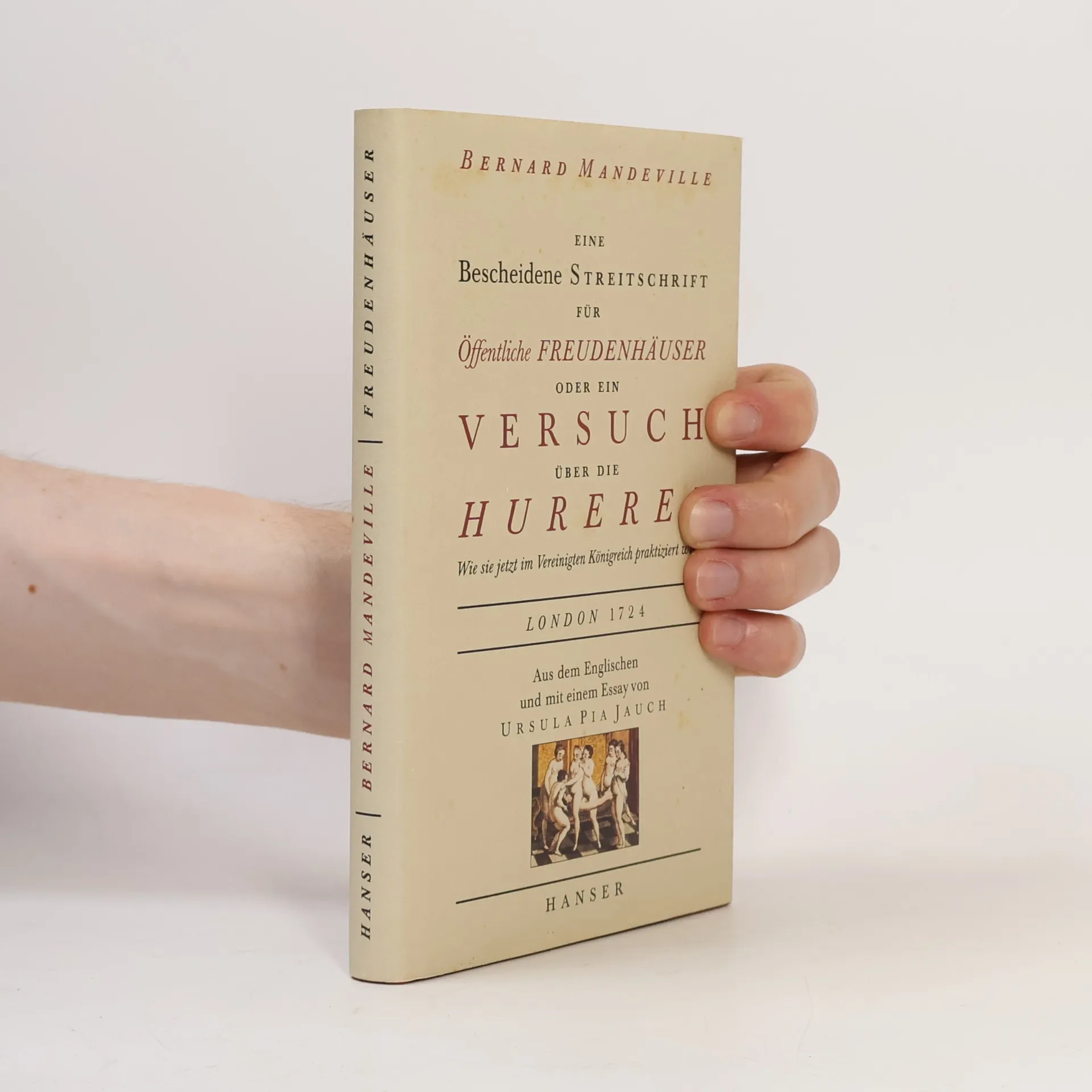
1724 erschien in London eine Streitschrift für öffentliche Freudenhäuser, die sofort europaweiten Erfolg hatte. Verbreitet wurde sie im Untergrund und nur wenige wussten, dass ihr Autor kein anderer war als Bernard Mandeville, einer der bestgehassten Vertreter der europäischen Aufklärung. Mit Witz und psychologischem Scharfsinn berichtet er über die verschlungenen Beziehungen der Geschlechter und über die öffentlichen und privaten Wege der Lüste. Jetzt endlich auf Deutsch.
F. B. Kaye Edition - 2: The Fable of the Bees
Or Private Vices, Publick Benefits
- 481 stránek
- 17 hodin čtení
Mandeville is the wittiest and shrewdest philosopher ever to make a significant impact upon economics. He anticipated Oscar Wilde in choosing his enemies with great care, and within his own century they included David Hume, Adam Smith, and Francis Hutcheson. He could afford even such enemies because his friends and admirers have been legion. — George J. Stigler, University of Chicago It used to be that everyone read the "notorious" Bernard Mandeville (1670–1733). He was a great satirist and came to have a profound impact on economics, ethics, and social philosophy. The Fable begins with a poem and continues with a number of essays and dialogues. It is all tied together by the startling and original idea that "private vices" (self-interest) lead to "publick benefits" (the development and operation of society). From that simple beginning, Mandeville saw that orderly social structures (such as law, language, the market, and even the growth of knowledge) were a spontaneous growth developing out of individual human actions.
The Fable of the Bees begins with a poem and continues with a number of essays and dialogues. It is all tied together by the startling and original idea that “private vices” (self-interest) lead to “publick benefits” (the development and operation of society). From that simple beginning, Mandeville saw that orderly social structures (such as law, language, the market, and even the growth of knowledge) were a spontaneous growth developing out of individual human actions
F. B. Kaye Edition - 1: The Fable of the Bees
Or Private Vices, Publick Benefits
- 558 stránek
- 20 hodin čtení
Mandeville is the wittiest and shrewdest philosopher ever to make a significant impact upon economics. He anticipated Oscar Wilde in choosing his enemies with great care, and within his own century they included David Hume, Adam Smith, and Francis Hutcheson. He could afford even such enemies because his friends and admirers have been legion. — George J. Stigler, University of Chicago It used to be that everyone read the "notorious" Bernard Mandeville (1670–1733). He was a great satirist and came to have a profound impact on economics, ethics, and social philosophy. The Fable begins with a poem and continues with a number of essays and dialogues. It is all tied together by the startling and original idea that "private vices" (self-interest) lead to "publick benefits" (the development and operation of society). From that simple beginning, Mandeville saw that orderly social structures (such as law, language, the market, and even the growth of knowledge) were a spontaneous growth developing out of individual human actions.