

Knihobot

Raymond Geuss

    10. prosinec 1946
    A Philosopher Looks at Work
    Philosophy and Real Politics
    The Idea of a Critical Theory
    Not Thinking like a Liberal
    Who Needs a World View?
    Changing the Subject
    • Changing the Subject

      • 368 stránek
      • 13 hodin čtení
      4,2(72)Ohodnotit

      “A history of philosophy in twelve thinkers…The whole performance combines polyglot philological rigor with supple intellectual sympathy, and it is all presented…in a spirit of fun…This bracing and approachable book [shows] that there is life in philosophy yet.”― Times Literary Supplement“Exceptionally engaging…Geuss has a remarkable knack for putting even familiar thinkers in a new light.”― Notre Dame Philosophical Reviews“Geuss is something like the consummate teacher, his analyses navigable and crystal, his guidance on point.”―Doug Phillips, Key ReporterRaymond Geuss explores the ideas of twelve philosophers who broke dramatically with prevailing wisdom, from Socrates and Plato in the ancient world to Nietzsche, Wittgenstein, and Adorno. The result is a striking account of some of the most innovative thinkers in Western history and an indirect manifesto for how to pursue philosophy today. Geuss cautions that philosophers’ attempts to break from convention do not necessarily make the world a better place. Montaigne’s ideas may have been benign, but the fate of those of Hobbes, Hegel, and Nietzsche has been more varied. Yet in the act of provoking people to think differently, philosophers remind us that we are not fated to live within the systems of thought we inherit.

      Changing the Subject
    • Who Needs a World View?

      • 208 stránek
      • 8 hodin čtení
      4,1(28)Ohodnotit

      Philosophers-professionals and the armchair variety-are given to defending comprehensive world views. Raymond Geuss, one of the most celebrated thinkers of our time, dispenses with this ambition for intellectual unity. Ranging across the history of art and ideas, Geuss argues for flexibility, doubt, and the accommodation of unresolved complexity.

      Who Needs a World View?
    • Raymond Geuss is a critic of liberalism, a politics so pervasive in the West that it goes unnoticed. His attention sharpened by his own unorthodox intellectual journey, Geuss locates what we fail to see in the status quo: its shallowness and futility. Rejecting both authoritarian horror and liberal complacency, Geuss looks to genuinely new ideas.

      Not Thinking like a Liberal
    • The purpose of this series is to help make contemporary European philosophy intelligible to a wider audience in the English-speaking world, and to suggest its interest and importance in particular to those trained in analytical philosophy.

      The Idea of a Critical Theory
    • Many contemporary political thinkers are gripped by the belief that their task is to develop an ideal theory of rights or justice for guiding and judging political actions. This book argues that philosophers should first try to understand why real political actors behave as they actually do.

      Philosophy and Real Politics
    • Is work as we know it disappearing? And if so why should we care? These questions are explored by Raymond Geuss in this compact but sweeping survey which integrates conceptual analysis, historical reflection, autobiography and social commentary. Geuss explores our concept of work and its origins in industrial production, the incentives and compulsions which societies use to get us to work, and the powerful hold which the work ethic has over so many of us. He also looks at dissatisfaction with work - which is as old as work itself - and at various radical proposals for doing away with it, and at the seemingly irreversible growth of unemployment as a result of mechanisation. His book will interest anyone who wishes to understand the place of work in our world. This new series offers short and personal perspectives by expert thinkers on topics that we all encounter in our everyday lives.

      A Philosopher Looks at Work
    • The world is never going to make complete sense to us, yet we find that conclusion almost impossible to accept. Can we live, and feel at home, in a world composed at best of incompatible fragments of meaning? This is the theme that runs through this collection of essays by Raymond Geuss. Drawing on a characteristically wide range of insights from moral and political philosophy, history, and aesthetics, he addresses topics such as knowledge (of self, the world, and others), language, the visual and the auditory, authority, hope, and the success and failure of life projects. He argues that, to get by in our bewildering world, we must embrace the virtue of ‘double vision’: that is, immersing ourselves in and learning the ways of the culture surrounding us, even as we feel alienated from it. Together the essays explore some of the consequences of abandoning the idea of a unitary view of the world, while at the same time trying to avoid quietism. Seeing Double is a compelling collection of work by one of the world’s most versatile and creative philosophers.

      Seeing Double
    • Ende der 1980er Jahre schloss nördlich von Philadelphia das Stahlwerk seine Tore, in dem Raymond Geuss’ Vater lange Zeit gearbeitet hatte. Sein Onkel, ein Landwirt in Indiana, brauchte bald einen zweiten Job, um seinen Lebensunterhalt bestreiten zu können. Auch anhand seiner Familiengeschichte zeigt der Philosoph in seinem neuen Buch, dass Arbeit, wie wir sie in westlichen Gesellschaften kannten, verschwindet. Automatisierung und Outsourcing haben einen tiefgreifenden gesellschaftlichen Wandel in Gang gesetzt, und Geuss führt seine Leserinnen und Leser durch diese Umbrüche bis zur die Gegenwart dominierenden Amazonifizierung. Was ist Arbeit? Wie ist sie organisiert? Und wie wird Arbeit in Zukunft aussehen? In seinem hellsichtigen Essay verbindet Raymond Geuss philosophische Überlegungen mit ökonomischen und historischen Reflexionen. Auch mit der Arbeitsethik und dem Unbehagen an der Arbeit befasst er sich, das so alt ist wie die Arbeit selbst. Wir sollten uns, so Geuss, von den Pathologien unendlichen Wachstums befreien. Das bedeutet auch, Arbeit endlich nicht mehr als Konzept stetig steigender menschlicher Produktivkraft und Anstrengung zu begreifen.

      Über die Arbeit
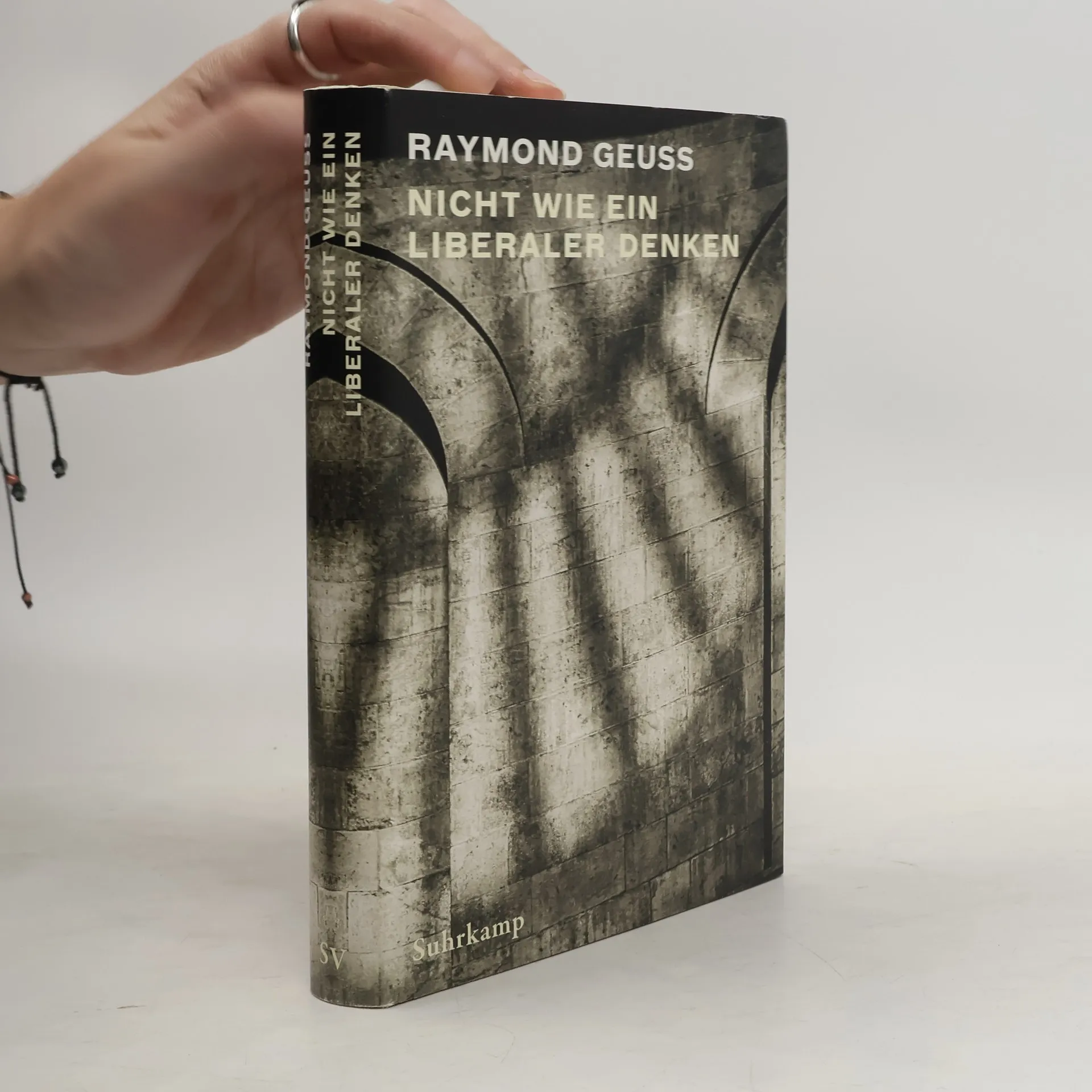
    • »Schlussendlich müssen wir entscheiden, welche Art von Menschen wir sein möchten, als Individuen ebenso wie als Kollektiv. Die Philosophie kann dabei eine Rolle spielen, aber wir sollten darüber hinaus auf Ressourcen zurückgreifen, die breiter sind als diejenigen, die die Philosophie zur Verfügung stellen kann.« Für viele im »Westen« ist der Liberalismus zur quasi natürlichen Gegebenheit geworden. Dennoch existieren in jeder Gesellschaft abseits des kulturellen Mainstreams alternative Perspektiven. Der Philosoph Raymond Geuss beschreibt in seinem Buch, wie er in seiner Jugend mit einer ethisch-politischen Sichtweise konfrontiert wurde, die sein Denken nachhaltig beeinflusste. 1959, als Sohn eines tiefgläubigen Stahlarbeiters, kommt er auf ein Internat in Philadelphia. Umgeben von Eisenhowers Amerika versuchen ungarische Priester, ihn gegen den repressiven Kommunismus sowie den geistlosen liberalen Kapitalismus zu immunisieren. Später, während des Vietnamkriegs und der Ereignisse von »1968«, studiert Geuss in New York und trifft auf bedeutende akademische Lehrer wie Sidney Morgenbesser. In Westdeutschland liest er zum ersten Mal Adorno. »Nicht wie ein Liberaler denken« bietet mit analytischer Klarheit Einblicke in die intellektuellen Strömungen, die Geuss‘ kritische Haltung zu Liberalismus und Autoritarismus geprägt haben. Es ist eine faszinierende persönliche Ideengeschichte und eine fesselnde Erkundung der Möglichkeiten und G

      Nicht wie ein Liberaler denken