
Tento autor se zaměřuje na komplexní témata, která zkoumají hloubku lidské zkušenosti. Jeho styl psaní je známý svou bohatou obrazností a pečlivě propracovanými větami, které čtenáře vtáhnou do jeho literárních světů. Prostřednictvím svého díla se snaží odhalit skryté pravdy a nabídnout nové pohledy na svět kolem nás. Jeho práce vybízí k zamyšlení a zanechává v čtenářích trvalý dojem.
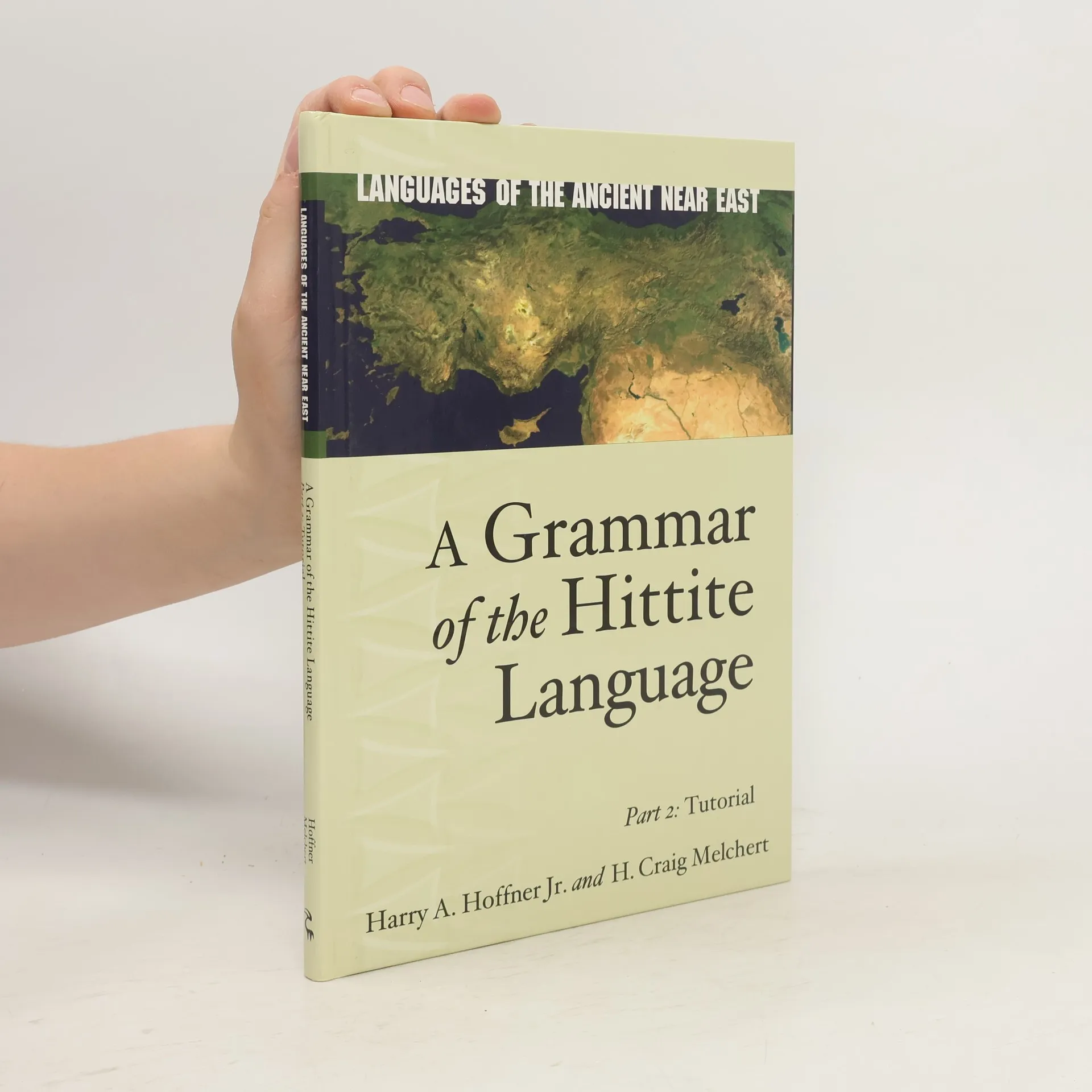
The second volume of Hoffner and Melchert’s Grammar , this tutorial consists of a series of graded lessons with illustrative sentences for the student to translate. The tutorial is keyed to the reference grammar and provides extensive notes. To get maximum use out of the Tutorial, we recommend purchasing the Grammar, which also contains a CD-ROM of both texts with hyperlinks.
Hoffner is a co-director of the University of Chicago's Hittite Dictionary. He presents the first English translations of 23 myths based on the original tablets, taking into account recent textual discoveries and published studies of the texts. The first edition was published in 1990; the second includes new introductions to each myth and a newly published Hurrian myth. He also provides a glossary of names and technical terms and a guide to pronunciation. Annotation copyrighted by Book News, Inc., Portland, OR
The Hittite language is the earliest preserved member of the Indo-European family of languages. It was written on clay tablets in central Asia Minor over a five hundred year span (ca. 1650-1180 B.C.) which witnessed the rise, the floruit, and the decline of many political powers in the Near East. It is studied today for a wide variety of reasons. Historical linguists seek information in Hittite texts to elucidate the relationships between the various member languages of the Indo-European family, as well as the probable structure of their common parent, Proto-Indo-European. Historians find in Hittite annals, treaties, royal edicts, and political correspondence information of great value in reconstructing the sequence of events on the international scene of mid-second-millennium Western Asia. Anthropologists, mythographers, and students of comparative religion mine the riches of Hittite religious texts: myth, magic rituals to cure ailments, festivals to worship the gods of the empire. Students of the history of law discover ancient precedents for legal procedures which have survived to this day. All of these interested researchers share a dependence upon the written texts. None can penetrate further than our limited understanding of this language allows. [From the Preface, CHD L N, p. ix].