2nd Part in groundbreaking three-part history of Seleukid Empire. Narrates the
heyday of the Seleukid empire, then the largest state in the world, and
beginning of their decline. Antiochus the Great was one of the most powerful
rulers in the ancient world and this title Covers all Antiochus' many
campaigns and battles.
An important but neglected aspect of classical warfare. Covers technological,
strategic and tactical developments from Alexander to the battle of Actium.
The narrative explores the tumultuous reign of Ptolemy VIII following the death of his brother, Ptolemy VI. It delves into a chaotic era marked by family conflicts, rebellions, and power struggles, including the murder of Ptolemy VII and the scheming of Ptolemy VIII's two wives. Kleopatra III emerges as a central figure, ultimately becoming the effective successor after Ptolemy VIII's death, highlighting the intricate dynamics of power and ambition within the royal family.
The Senate, the Emperors and Power, from Commodus to Gallienus (AD 180-260)
224 stránek
8 hodin čtení
Exploring the Roman Empire during the tumultuous reigns of Commodus to Gallienus, this work offers a fresh perspective on a pivotal era marked by political instability and transformation. It delves into the complexities of leadership, societal changes, and the challenges faced by the empire, providing insights into the cultural and historical context that shaped this period. Through detailed analysis, the book sheds light on the dynamics of power and the impact of individual rulers on the trajectory of Roman history.
First full-length biography of Sextus Iulius Frontinus. John Grainger traces
his career and favourably re-evaluates his importance, in particular in
Britain, (at the expense of the better-known Agricola) and in Germany.
The only book available in English devoted to this subject. Narrates momentous
yet neglected events: in 279 the Celtic Galatians invaded, defeated and
beheaded the Macedonian king, Ptolemy Keraunos 'the Lightning Bolt') and
overran much of Greece.
Ptolemaic Egypt was last of the Macedonian Successor states to be swallowed up
by the expansion of Roman power. Cleopatra, last of the Ptolemies, was a Roman
ally but backed the wrong side in the Roman civil war due to her famous love
affair with Marc Antony. She and Antony were defeated at the... číst celé
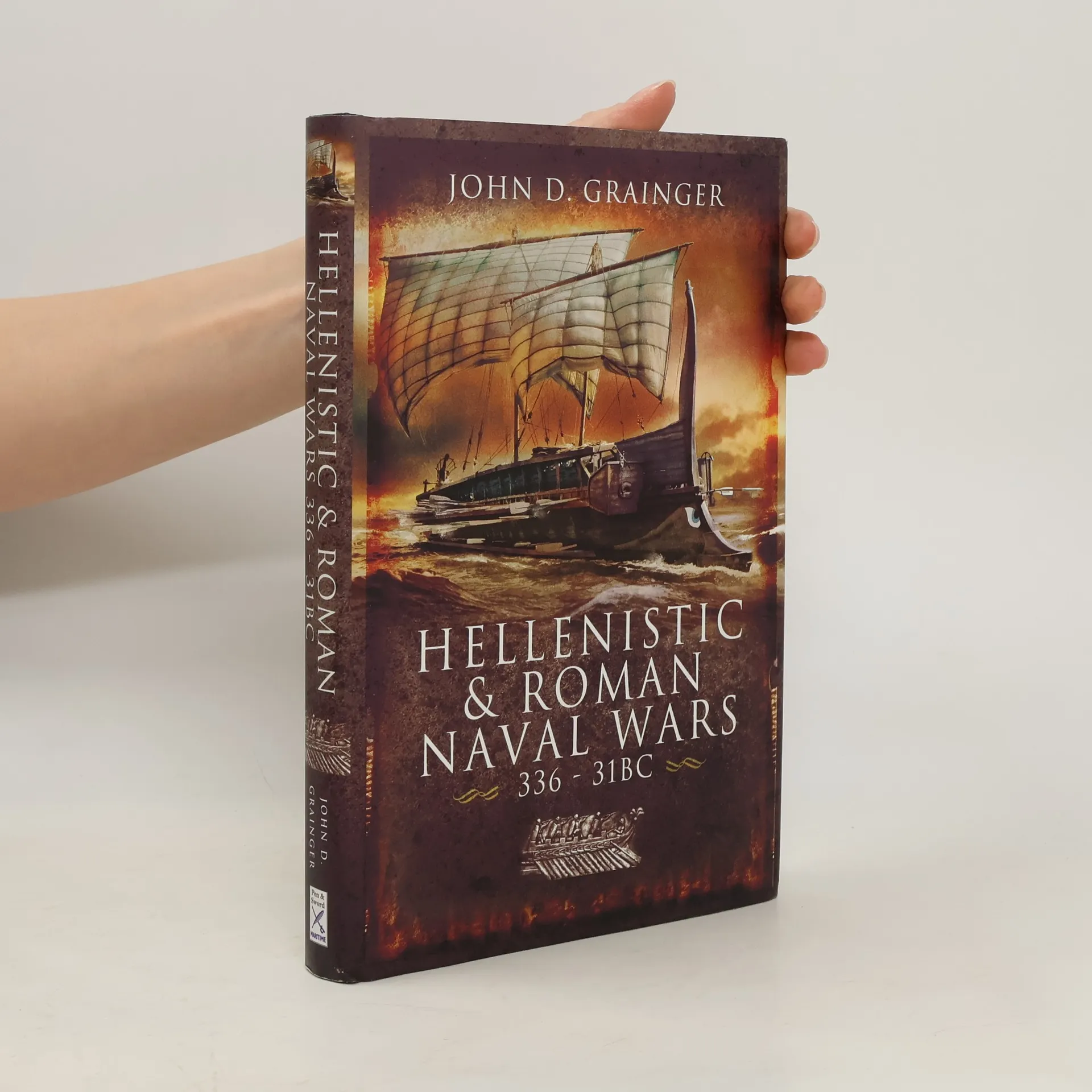
An important but neglected aspect of classical warfare that covers technological, strategic and tactical developments from Alexander to the battle of Actium.The period covered in this book is well known for its epic battles and grand campaigns of territorial conquest, but Hellenistic monarchies, Carthaginians, and the rapacious Roman Republic were scarcely less active at sea. Huge resources were poured into maintaining fleets not only as symbols of prestige but as means of projecting real military power across the Mediterranean arena.Taking the period between Alexander the Great's conquests and the Battle of Actium, John Grainger analyzes the developments in naval technology and tactics, the uses and limitations of sea power and the differing strategies of the various powers. He shows, for example, how the Rhodians and the Romans eschewed the ever-larger monster galleys favored by most Hellenistic monarchs in favor of smaller vessels. This is a fascinating study of a neglected aspect of ancient warfare.

This book offers an in-depth exploration of the British navy's operations across the Indian and Pacific Oceans, tracing its activities from historical beginnings to contemporary times. It highlights significant naval engagements, strategic developments, and the impact of maritime power on global events, providing readers with a thorough understanding of naval history in these crucial regions.
The Royal Navy in Turkey and Southern Russia after the Great War
256 stránek
9 hodin čtení
The narrative explores the tumultuous period following the Great War, highlighting the British Navy's involvement in the Near East amid the aftermath of the Russian Revolution. British forces faced challenges from resurgent Turkish troops and Bolshevik activities in Central Asia, leading to military expeditions aimed at securing oil fields in Azerbaijan. The occupation of Constantinople became increasingly precarious, culminating in a tense standoff at Chanak. This resulted in a truce, British withdrawals, and political upheaval in Britain, marking a significant turning point in the region's history.
Syria served as a significant yet overlooked province of the Roman Empire, contributing greatly to its economy and military. Despite being overshadowed by more prominent regions like Italy and Greece, it played a crucial role in the empire's strength, especially through the recruitment of auxiliary regiments. The book explores Syria's complex history, highlighting its economic prowess and the impact of its religious diversity on the broader imperial narrative.
The book explores the British navy's activities in the Caribbean, starting with the voyages of sixteenth-century adventurers like John Hawkins and Francis Drake. It delves into the conflicts of the seventeenth and eighteenth centuries against the Dutch, Spanish, and French, highlighting Britain's naval dominance during this period. Additionally, it examines the gradual decline of Britain's influence in the region, providing a comprehensive historical overview of naval power and colonial struggles in the Caribbean.