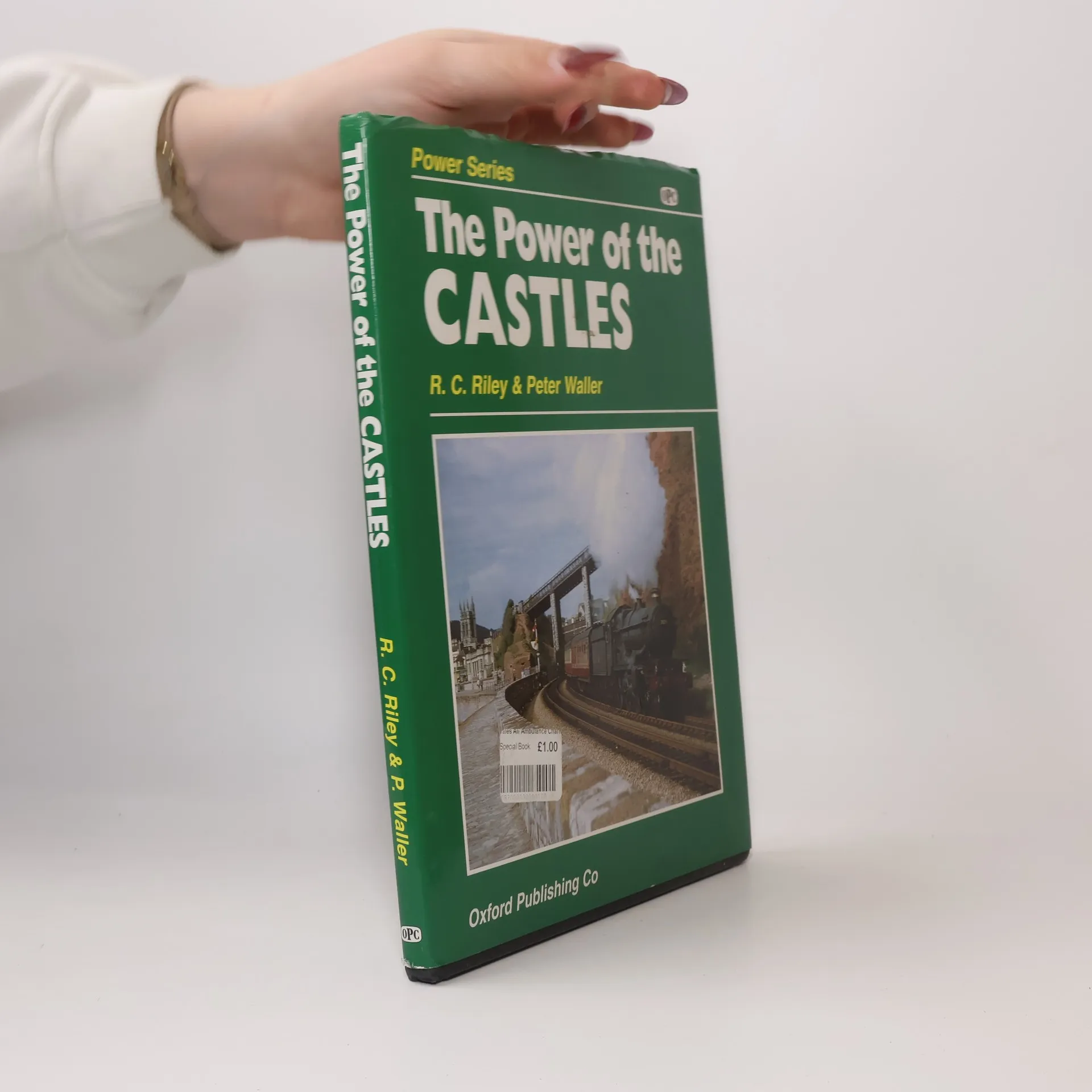
Power Series: The Power of the Castles
- 112 stránek
- 4 hodiny čtení



This is one of four volumes to cover the history of electrictramcar operation in London. Stretching once as far eastas Dartford, much of the network south-east of the river inherited from the London County Council survivedWorld War II and remained operational until the processof conversion Operation Tramaway commenced in1950.
Edinburgh played host to the country's most significant cable tramway although, by the early 1920s, electric trams had taken over. The system continued to grow until the late 1930s and new trams were built even after World War 2. However, over less than a decade, all were swept away as the final trams operated in 1956.
The book offers a visual exploration of Hong Kong's ever-evolving landscape, showcasing previously unpublished images that capture a bygone era. It presents scenes that were once commonplace but are now lost to time, providing readers with a nostalgic glimpse into the city's recent history. Through this pictorial tribute, the narrative emphasizes the dramatic changes Hong Kong has undergone, highlighting the contrast between its past and present.
Aberdeen – the granite city – was to play host to two electric the corporation’s services within the city, which survived until 1958, and the short-lived services operated by the Aberdeen Suburban Tramways Co. Acquiring modern trams in the late 1940s, Aberdeen was perceived as one of the safest of British tramways in the post-war years but even here the diesel bus was to take-over. • The Lost Tramways of Scotland series documents the tram networks which were at the heart of many of Britain’s growing towns and cities from the mid-19th century to the mid-20th century. • Transport expert Peter Waller, author of numerous works on the regional tram systems of the UK, guides the reader along the route of the network and discusses its key features stop by stop. • As well as rigorously detailed transport history, these volumes provide an intimate glimpse into life as it was lived during this period, and the recognisable streets which have been maintained or transformed through the decades. • An informative, accessible and portable resource for the tram enthusiast as well as the general reader, and a superb souvenir or gift for visitors past and present. • Photo illustrated throughout, including many archive images which are appearing in print for the first time.
Good Photographic Coverage, new Factual Information, Informative Captions, useful to Modellers
Lost Tramways of England: Leeds West is the first of two volumes in the series covering the history of trams in the city from their origins in the late 19th century through to the final routes in November 1959. This volume examines in detail the early history of the tramways as well as concentrating on the tramways that served to the western side of the city.
Although better known as a pioneer of trolleybus operation, Bradford played host to Britain’s longest surviving trolleybus network (61 years) – the corporation operated a sizeable fleet of 4ft 0in gauge trams through to May 1950. As such, Bradford could lay claim to being the last 4ft 0in tram operator in Britain and – in the restoration of No 104 – the first to see a derelict tramcar restored to use. • The Lost Tramways of England series documents the tram networks which were at the heart of many of Britain’s growing towns and cities from the mid-19th century to the mid-20th century. • Transport expert Peter Waller, author of numerous works on the regional tram systems of the UK, guides the reader along the route of the network and discusses its key features stop by stop. • As well as rigorously detailed transport history, these volumes provide an intimate glimpse into life as it was lived during this period, and the recognisable streets which have been maintained or transformed through the decades. • An informative, accessible and portable resource for the tram enthusiast as well as the general reader, and a superb souvenir or gift for visitors past and present. • Photo illustrated throughout, including many archive images which are appearing in print for the first time.
This is one of four volumes to cover the history of electric tramcar operation in London; concentrating on the routes to the northeast, the system in this area was largely the result of development by a number of local authorities and was converted largely to trolleybus operation in the years leading to 1940. Amongst locations featured are Barking, llford, East Ham and West Ham.
Lost Tramways of England: Leeds East is the second of two volumes in the series covering the history of trams in the city, from their origins in the late 19th century through to the conversion of the final routes in November 1959. This volume examines in detail the later history of the system from the outbreak of war in September 1939 through the developments of the 1940s to the period of conversion from the early 1950s, as well as concentrating on routes that served the eastern side of the city, such as those to Temple Newsam, Middleton, Gipton and Hunslet.
Well Reserched Text, Good Photographic Coverage, Informative Long Captions, Useful to Modellers
The first of two volumes covering the history of tramcar operation in Glasgow. The book narrates the story of the city's impressive network from its origins as a horse tramway in the 1870s, through the early years of electrification and expansion during the first decades of the 20th century through to World War II. The book also focuses on locations in the southern half of the city, including South of the Clyde, Paisley, Mosspark and Burnside.
Hong Kong is one of the world's most exciting cities and its story is one of constant change. From a sleepy fishing community, Hong Kong has grown into one of the world's most significant financial and trading centres. Hong Kong Island itself has witnessed massive rebuilding over the years, with much of the colonial-era architecture swept away and replaced by skyscrapers. Moreover the first high-rise buildings from the late 1950s are now themselves under threat, as the constant requirement for more accommodation - for people and for businesses - continues. The Kowloon peninsula and the New Territories have also experienced development, whilst the construction of the new airport saw the destruction of an entire island to create the material for the its foundations. This pressure for land has seen reclamation far extend the coastline of Hong Kong Island. Over the years photographers have recorded the changing face of Hong Kong - its street scenes, buildings and people. This new book - drawing upon images from a wide range of sources, most of which are previously unpublished - provides a pictorial tribute to a lost world. Once-familiar but now long-gone scenes offer a tantalising glimpse back at a time that in chronological terms may be relatively recent, but which now seems to be in the distant past.
Arguably the last of the 'traditional' tramways to operate in Britain, Dundee's fleet of some 56 trams were to survive through until the mid-1950s when - despite considerable opposition - this popular form of transport was replaced by bus. The final Dundee trams operated in October 1956. - The Lost Tramways of Scotland series documents the tram networks which were at the heart of many of Britain's growing towns and cities from the mid-19th century to the mid-20th century. - Transport expert Peter Waller, author of numerous works on the regional tram systems of the UK, guides the reader along the route of the network and discusses its key features stop by stop. - As well as rigorously detailed transport history, these volumes provide an intimate glimpse into life as it was lived during this period, and the recognisable streets which have been maintained or transformed through the decades. - An informative, accessible and portable resource for the tram enthusiast as well as the general reader, and a superb souvenir or gift for visitors past and present. - Photo illustrated throughout, including many archive images which are appearing in print for the first time.
Good Photographic Coverage, newly researched material, useful to modellers, Informative aptions
A photo-album with some 220 colour images taken by widely-travelled railway enthusiasts of steam engines on the European railway networks during the final decade of steam. At the end of the 1950s steam was for most European countries still the primary source of power on the railways; diesel and electric traction was becoming increasingly dominant particularly in Belgium, the Netherlands and Switzerland by 1960 but in other countries, such as Austria, Germany both East and West Spain and Portugal, it was still possible to see many of the most impressive steam engines hard at work on both passenger and freight traffic. By the end of the 1960s, however, a combination of line closures and the more widespread use of more modern traction had seen many of these iconic locomotives taken out of service. In some countries such as Sweden withdrawn locomotives were often retained as a strategic reserve in case of emergency but in other countries, most notably Britain and France, vast numbers of relatively modern steam locos made their final journey to the scrap yard. This volume incorporates some 220 colour images taken by widely-travelled railway enthusiasts of steam in operation between 1960 and 1969 from all corners of Europe and portrays many of the classic designs hard at work on the main line including both standard and narrow gauge operations.
By the late 1920s the existing trams operated by both the Metropolitan Electric Tramways and the London United Tramways were increasingly aged.
The second of two volumes covering the history of tramcar operation in Glasgow. The book narrates the story of the city's network from the immediate post-war years, through the 1950s to the early 1960s when the final services were operated. This volume focuses on locations in the northern half of the city.
The Southern Railway s Withered Arm the lines in Devon and Cornwall that were developed in the 19th century by the London & South Western Railway served some of the most popular holiday destinations in the country. Places like Bude, Ilfracombe and Padstow were all accessible by direct train services from London Waterloo, most notably the famous Atlantic Coast Express . The bulk of the ex-Southern network survived into the 1950s and beyond. During the 1960s, most of the lines disappeared culminating in the closure of the lines to Ilfracombe and Okehampton in 1970 and 1972 respectively. Today, passenger services are restricted generally to the Barnstaple and Gunnislake branches but there are hopes that other lines may be restored. This latest in Unique Books series of albums featuring the railways of Britain in the years after the end of World War 2 features the once extensive network of ex-Southern lines in north Devon and Cornwall. Drawing upon the collections of many photographers, the book explores the many and varied stations and services that were such a feature of these fascinating and much mourned routes.
This was the area that witnessed the London United Tramway's early trolleybus routes as well as operations of Croydon Corporation. Although many of the routes were to be converted before the outbreak of war in September 1939, a number were to survive right through until the final conversion of the system between 1950 and 1952.
Good comprehensive coverage with new historical information.
The first volume in the 'Lost Tramways of Ireland' series features the history of the Belfast system, including its origins as a horse tramway in the 1870s, its conversion to electric traction in the early 20th century, its role in two World Wars, the conversion of the network to bus and trolleybus operation from the late 1940s and the system's eventual demise in 1954. Amongst the locations featured are Glengormley, Greencastle and Bloomfield as well as York Road and Queen's Quay railway stations.
This is one of four volumes to cover the history of electric tramcar operation in London; it concentrates on those routes to the north and north-west of the River Thames – an area largely dominated by the Metropolitan Electric Tramways. The bulk of this are saw its tramways largely converted to trolleybus operation during the 1930s.
Covers the history of the line both before and after preservation.
Providing a largely illustrated account to the history of the railway development of the area, the book includes a fascinating selection of illustrations that focus on the evolution of the network in the almost eighty years since the end of the Second World War.
Good Illustrations, Informative Text, Useful to Modellers, Interesting Long Captions
One of two volumes in the ' Lost Tramways' series featuring the tramways of Manchester and its environs, this volume explores in detail the routes to the north of the city centre. Also covered are the history of the city's tramways in the post-World War II era and those of neighbouring Salford Corporation. Separated by the River Irwell, relations between the two operators was not always harmonious but both were to survive into the late 1940s. The Lost Tramways series documents the tram networks which were at the heart of many of Britain's growing towns and cities from the mid-19th century to the mid-20th century. An informative, accessible and portable resource for the tram enthusiast as well as the general reader, and a superb souvenir or gift for visitors past and present.
The far south-west of England possessed four 3ft 6in gauge electric tramways serving Camborne and Redruth, Plymouth, Torquay and Exeter. Each of these had a different character. The Camborne & Redruth saw significant freight traffic, which persisted after passenger services ceased. Plymouth was served by three different operators at one stage before the corporation took over. Torquay made use of the unusual Dolter stud system whilst in Exeter the trams had to make their way through the narrow mediaeval streets. The Lost Tramways series documents the tram networks which were at the heart of many of Britain's growing towns and cities from the mid-19th century to the mid-20th century. An informative, accessible and portable resource for the tram enthusiast as well as the general reader, and a superb souvenir or gift for visitors past and present. The Lost Tramways series documents the tram networks which were at the heart of many of Britain's growing towns and cities from the mid-19th century to the mid-20th century. An informative, accessible and portable resource for the tram enthusiast as well as the general reader, and a superb souvenir or gift for visitors past and present.
Manchester was at the centre of a network of tramway systems that served the city and the neighbouring towns. This is one of two volumes in the series to cover the tramways of Manchester and focuses on the routes to the south of the city centre and the history of the Manchester system in the build-up to World War II. The tramways underwent considerable investment in the 1920s but a change of manager led to the start of the conversion to bus and trolleybus operation as war approached. The Lost Tramways series documents the tram networks which were at the heart of many of Britain's growing towns and cities from the mid-19th century to the mid-20th century. An informative, accessible and portable resource for the tram enthusiast as well as the general reader, and a superb souvenir or gift for visitors past and present.
At the peak of Britain's first-generation tramways, it was possible to travel by tram all the way from Pier Head at Liverpool to the Pennines in Rochdale by tram. Amongst the chain of tramways that formed these links were the services that operated in Bolton, St Helens, Wigan and the company lines controlled by South Lancashire Tramways. Each of these systems had a fascinating history but all were to suffer greatly as a result of lack of maintenance during and after World War I and from bus competition, with the result that only one - Bolton - survived into the post-World War II era. Locations featured include: Farnworth, Dunscar, Tonge, Horwich, Halliwell, Montserrat, Bury, Huyton, Prescot, Worsley and Leigh. The Lost Tramways series documents the tram networks which were at the heart of many of Britain's growing towns and cities from the mid-19th century to the mid-20th century. An informative, accessible and portable resource for the tram enthusiast as well as the general reader, and a superb souvenir or gift for visitors past and present.
Aside from Glasgow, which has featured in two volumes of the Lost Tramways series, there were a number of other tramways that served the west of Scotland. These included those that served the towns of Ayr and Kilmarnock, the north and south banks of the Clyde - reaching places like Dumbarton, Balloch, Greenock and Gourock - Rothesay on Bute and the industrial heartland of Lanarkshire to the south-east of Glasgow itself. All prospered for a period but changing fashions and the rise of the bus industry saw all disappear by the start of World War II.
Good Illustrations, Informative Text, Useful to Modellers, Interesting Long Captions
Dominated by the lines inherited by the Southern Railway from the London, Brighton & South Coast Railway combined with those of the South East & Chatham and Kent & East Sussex railways, there was an intricate network of railway lines that served the area of Sussex to the east of the London to Brighton main line. In the immediate post-war years and the first decade of British Railways, and this network was to remain largely intact. By the end of the 1950s, the first closures were threatened and, by the time of the Beeching report of 1963, the first lines in the area had controversially closed. Although the major destinations – Newhaven, Eastbourne and Hastings – remain open, many of the secondary routes have now closed. Fortunately preservation – in the guise of the Bluebell, Kent & East Sussex, Lavender and Spa Valley railways – has seen some of these lost lines survive to remind visitors of the county’s railway heritage. Featuring some 60 rare or unseen images, Railways of 1948-1968 portrays the railways of the region in a period of change.
In the second volume in the Lost Tramways series to feature Ireland, the history of the trams that served Dublin and its environs are recalled. Although dominated by the system of Dublin itself, there were no fewer than three other tramways that served the area - the Dublin & Blessington, the Dublin & Lucan and the GNR(I)-owned Hill of Howth - that all had a fascinating history, with the Hill of Howth ultimately becoming the last first generation tramway to operate on the island of Ireland. Locations featured include: Farnworth, Dunscar, Tonge, Horwich, Halliwell, Montserrat, Bury, Huyton, Prescot, Worsley and Leigh. The Lost Tramways series documents the tram networks which were at the heart of many of Britain's growing towns and cities from the mid-19th century to the mid-20th century. An informative, accessible and portable resource for the tram enthusiast as well as the general reader, and a superb souvenir or gift for visitors past and present.
This volume - one of four that examines the history of all trolleybus operators in the British Isles - focuses on Lancashire, Northern England, Scotland and Northern Ireland.
Comprehensive coverage of all of the systems that operated in Northern England, Scotland and Ireland.
In den 60er-Jahren dampfte es noch fast überall auf den Schienensträngen in Europa und zwar dies- und jenseits des Eisernen Vorhangs. Zahlreiche Dampflokfreunde, besonders von den britischen Inseln, bereisten den Kontinent und hielten das Ende der Epoche in einmaligen Farbaufnahmen fest. Peter Waller, Kenner der europäischen Dampflokgeschichte, hat selbst häufig von der Insel aus den Kontinent bereist. In diesem Bildband bietet er bisher unveröffentlichtes Bildmaterial aus einem britischen Bildarchiv, das die fotografischen Nachlässe vieler Freunde des Schienenverkehrs archiviert, digitalisiert und auf diese Weise der Nachwelt erhält.