



Knihobot

Helmut Walser Smith

    10. prosinec 1962
    Deutschland
    Fluchtpunkt 1941
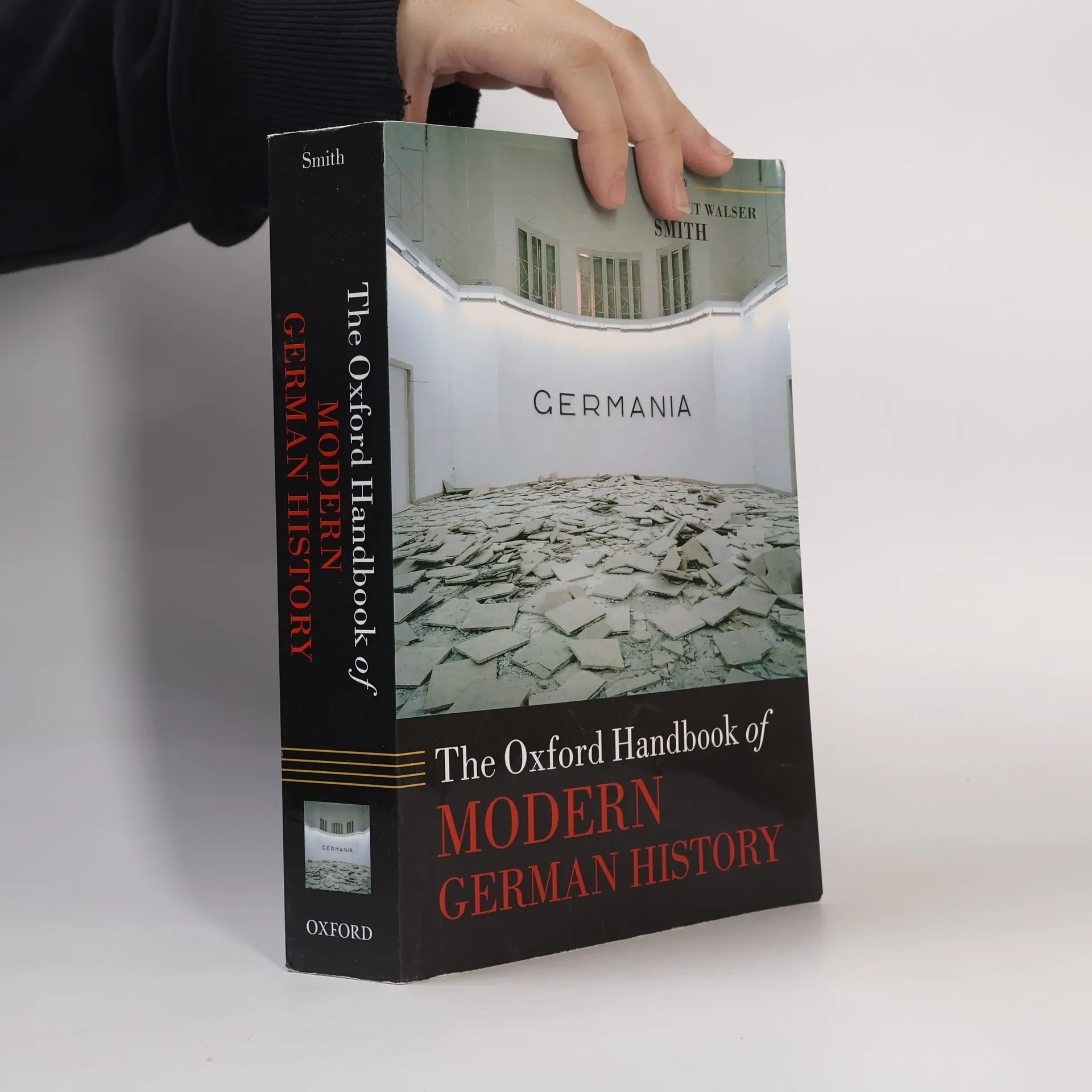
    The Oxford Handbook of Modern German History
    Germany: A Nation in Its Time
    Protestants, Catholics, and Jews in Germany, 1800-1914
    Germany
    • Germany

      • 608 stránek
      • 22 hodin čtení

      The first major history of Germany in a generation, a work that presents a five-hundred-year narrative that challenges our traditional perceptions of Germany's conflicted past.

      Germany
      4,4
    • In the course of the nineteenth century, the boundaries that divided Protestants, Catholics and Jews in Germany were redrawn, challenged, rendered porous and built anew. This book addresses this redrawing. It considers the relations of three religious groups-Protestants, Catholics, and Jews-and asks how, by dint of their interaction, they affected one another.Previously, historians have written about these communities as if they lived in isolation. Yet these groups coexisted in common space, and interacted in complex ways. This is the first book that brings these separate stories together and lays the foundation for a new kind of religious history that foregrounds both cooperation and conflict across the religious divides. The authors analyze the influences that shaped religious coexistence and they place the valences of co-operation and conflict in deep social and cultural contexts. The result is a significantly altered understanding of the emergence of modern religious communities as well as new insights into the origins of the German tragedy, which involved the breakdown of religious coexistence.

      Protestants, Catholics, and Jews in Germany, 1800-1914
      4,0
    • Germany: A Nation in Its Time

      • 608 stránek
      • 22 hodin čtení

      For nearly a century, historians have portrayed Germany as a fiercely nationalistic and aggressive nation. Helmut Walser Smith challenges this view in a groundbreaking five-hundred-year history that extends beyond World War II, revealing a more complex narrative. His dramatic account begins in the 1500s, highlighting the pacific temperament of early mapmakers and travelers who first described Germany, long before the ideology of nationalism took hold. Smith explores the ongoing tension between national identity and nationalism, illustrating how radical nationalism ultimately led to genocide. He poses critical questions about Germany's identity: Is it a nation of violence or a model of tolerance? Can the land of Goethe and Schiller also be the site of unprecedented mass murder? Smith's narrative captures the national euphoria at the onset of World War I and the ensuing despair from defeat, which fueled both modernist movements and the rise of the Nazi Party. His chapter on the Holocaust examines the tragedy not only in Western Europe but also in rural Poland and Eastern Europe, expanding the understanding of culpability beyond Hitler's inner circle to local communities. Additionally, the book highlights the vital yet often overlooked contributions of women throughout Germany's history, showcasing artists, revolutionaries, and the violence war inflicted upon them. Richly illustrated with original maps, this sweeping account re

      Germany: A Nation in Its Time
      4,0
    • This is the first comprehensive, multi-author survey of German history that features cutting-edge syntheses of major topics by an international team of leading scholars. Emphasizing demographic, economic, and political history, this Handbook places German history in a denser transnational context than any other general history of Germany. It underscores the centrality of war to the unfolding of German history, and shows how it dramatically affected the development of German nationalism and the structure of German politics. It also reaches out to scholars and students beyond the field of history with detailed and cutting-edge chapters on religious history and on literary history, as well as to contemporary observers, with reflections on Germany and the European Union, and on 'multi-cultural Germany'. Covering the period from around 1760 to the present, this Handbook represents a remarkable achievement of synthesis based on current scholarship. It constitutes the starting point for anyone trying to understand the complexities of German history as well as the state of scholarly reflection on Germany's dramatic, often destructive, integration into the community of modern nations. As it brings this story to the present, it also places the current post-unification Federal Republic of Germany into a multifaceted historical context. It will be an indispensable resource for scholars, students, and anyone interested in modern Germany.

      The Oxford Handbook of Modern German History
    • 1941: Das meint den Beginn der Shoah mit der Inbetriebnahme der ersten Vernichtungslager und mit Pogromen, Massenerschießungen und Massenmorden, durchgeführt von SS-Einsatzgruppen und Wehrmachtstruppen in Polen und der UdSSR. Wenn man die deutsche Geschichte mit diesem einen statt anderer möglicher Fluchtpunkte betrachtet, dann stellt sich die Kernfrage wieder und neu: Welche Kontinuitäten der deutschen Geschichte führten zum Holocaust, welche Gründe und Vorgeschichten hat der Sturz in die Barbarei, wie konnte es geschehen, dass Deutsche zu Massenmördern wurden und eine Mehrheit von Deutschen zum Teil wissentlich, zum Teil halbbewusst duldend Komplizen dieses Völkermords waren? Vor über zehn Jahren hat der amerikanische Politologe Daniel J. Goldhagen diese Hauptfrage der Zeitgeschichte mit seiner These vom spezifisch deutschen eliminatorischen Antisemitismus beantwortet, und er stieß damit sowohl eine heftige öffentliche Diskussion an als auch auf fachliche Kritik. Aus fundiert historischer Perspektive versucht Helmut Walser Smith zu erklären, wie es in Deutschland zum Verlust der Menschlichkeit kommen konnte und welche Ideologien mit langen Traditionen – Nationalismus, Antisemitismus, Rassismus – diesen Zusammenbruch, der 1941 geschehen war, ermöglichten.

      Fluchtpunkt 1941
      5,0
    • Deutschland

      Geschichte einer Nation

      Um 1500 werden in den Karten der frühen Kartographen und Berichten von Abenteurern und Reisenden erstmals die Spuren einer Nation erkennbar, die Jahrhunderte später Goethe und Schiller hervorbringen wird, aber auch den größten Massenmord der Weltgeschichte zu verantworten hat. Ist dieses "Deutschland" eine Nation mit einer festen Identität und einem angestammten "Volk", oder ist es weit eher ein historischer Raum, in dem sich konkurrierende Vorstellungen davon, was Deutschland ist oder werden soll, permanent ablösen?Helmut Walser Smith geht in seinem elegant geschriebenen Werk der "longue durée" der deutschen Geschichte nach und hält die Idee der Nation und die Ideologie des Nationalismus so hellsichtig auseinander, wie es wohl nur einem Beobachter von außen möglich ist. Imaginationen von Deutschland und deutsche Wirklichkeiten stoßen in seinem geradezu anti-essentialistischen Buch hart aufeinander und entladen sich im 20. Jahrhundert in nationalistischen Exzessen, die Walser Smith ebenso eindringlich wie schonungslos schildert. Bis hin zur Bundestagsrede von Navid Kermani und den aktuellen Versuchen der AfD, sich der deutschen Geschichte zu bemächtigen, reicht diese kluge Meditation über Deutschland und das Erbe seiner Vergangenheit.

      Deutschland
      4,3
    • Im März 1900 wird in der ländlichen Kleinstadt Konitz am östlichen Ende des Deutschen Reiches der Torso des 18jährigen Ernst Winter unter dem Eis entdeckt. Weitere Körperteile des brutal ermordeten Jungen werden in den darauffolgenden Tagen gefunden. Bald konzentrieren sich die Verdächtigungen auf den jüdischen Schlachter, und Ritualmordsvorwürfe werden laut. Die Stadt explodiert in antisemitischer Wut, so daß die Lokalbehörden das Militär zu Hilfe rufen, um die öffentliche Ordnung wiederherzustellen.§Die Unruhen in Konitz, der schwerste Ausbruch antisemitischer Gewalt im wilhelminischen Deutschland, ermöglichen heute einen einzigartigen Blick auf lokale Muster des Antisemitismus.§Helmut Walser Smith macht anhand von Dokumenten deutlich, wie ein Ensemble unterschiedlichster Vorurteile - über Juden, soziale Klassen, Sexualität und das Denken von Verbrechern - die Ermittlungen beeinträchtigte und blind machte für die Identität des wirklichen Mörders.

      Die Geschichte des Schlachters
      4,2