

Parametry
- 165 stránek
- 6 hodin čtení
Více o knize
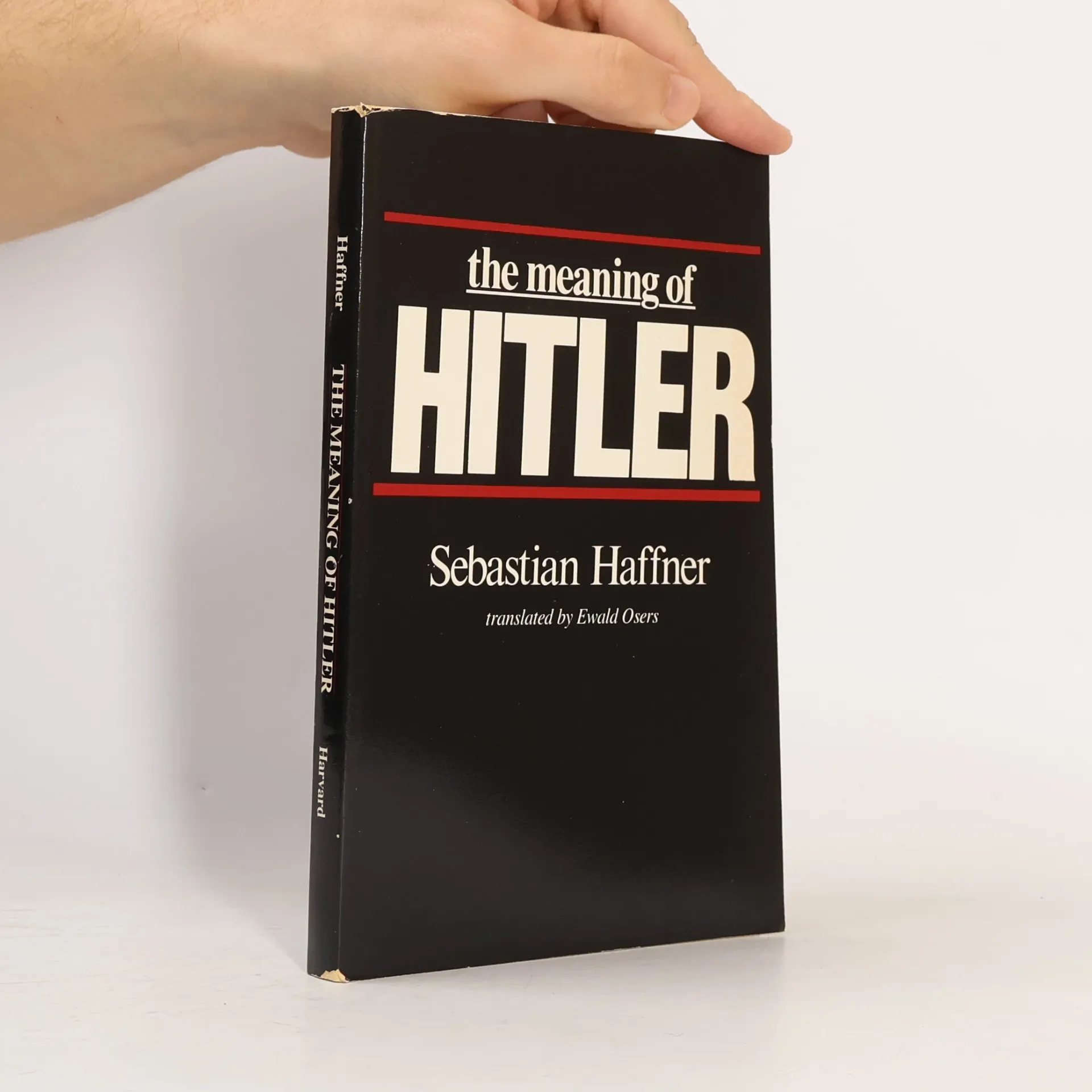
This is a remarkable historical and psychological examination of the enigma of Adolf Hitler--who he was, how he wielded power, and why he was destined to fail.Beginning with Hitler's early life, Sebastian Haffner probes the historical, political, and emotional forces that molded his character. In examining the inhumanity of a man for whom politics became a substitute for life, he discusses Hitler's bizarre relationships with women, his arrested psychological development, his ideological misconceptions, his growing obsession with racial extermination, and the murderous rages of his distorted mind. Finally, Haffner confronts the most disturbing question of all: Could another Hitler rise to power in modern Germany?




Nákup knihy
The Meaning of Hitler, Sebastian Haffner, Ewald Osers
- Jazyk

- Rok vydání
- 1983
- Vazba
- (měkká)
Tady nám chybí tvá recenze.
- Titul
- The Meaning of Hitler
- Jazyk
- anglicky
- Autoři
- Sebastian Haffner, Ewald Osers
- Vydavatel
- Harvard University Press
- Rok vydání
- 1983
- Vazba
- měkká
- Počet stran
- 165
- ISBN10
- 0674557751
- ISBN13
- 9780674557758
- Série
- Kategorie
- Štítky
- Historické téma, Německo, Války, Druhá světová válka, Dárky pro dědu, Nacismus, Adolf Hitler, Diktátoři
- První vydání
- 1978
- Původní název
- Anmerkungen zu Hitler
- Hodnocení
- 4,4 z 5
- Anotace
- This is a remarkable historical and psychological examination of the enigma of Adolf Hitler--who he was, how he wielded power, and why he was destined to fail.Beginning with Hitler's early life, Sebastian Haffner probes the historical, political, and emotional forces that molded his character. In examining the inhumanity of a man for whom politics became a substitute for life, he discusses Hitler's bizarre relationships with women, his arrested psychological development, his ideological misconceptions, his growing obsession with racial extermination, and the murderous rages of his distorted mind. Finally, Haffner confronts the most disturbing question of all: Could another Hitler rise to power in modern Germany?