



Více o knize
No philosopher has held a higher opinion of art than Hegel, yet nor was any so profoundly pessimistic about its prospects - despite living in the German golden age of Goethe, Mozart and Schiller. For if the artists of classical Greece could find the perfect fusion of content and form, modernity faced complicating - and ultimately disabling - questions. Christianity, with its code of unworldliness, had compromised the immediacy of man's relationship with reality, and ironic detachment had alienated him from his deepest feelings. Hegel's Introductory Lectures on Aesthetics were delivered in Berlin in the 1820s and stand today as a passionately argued work that challenged the ability of art to respond to the modern world.




Nákup knihy
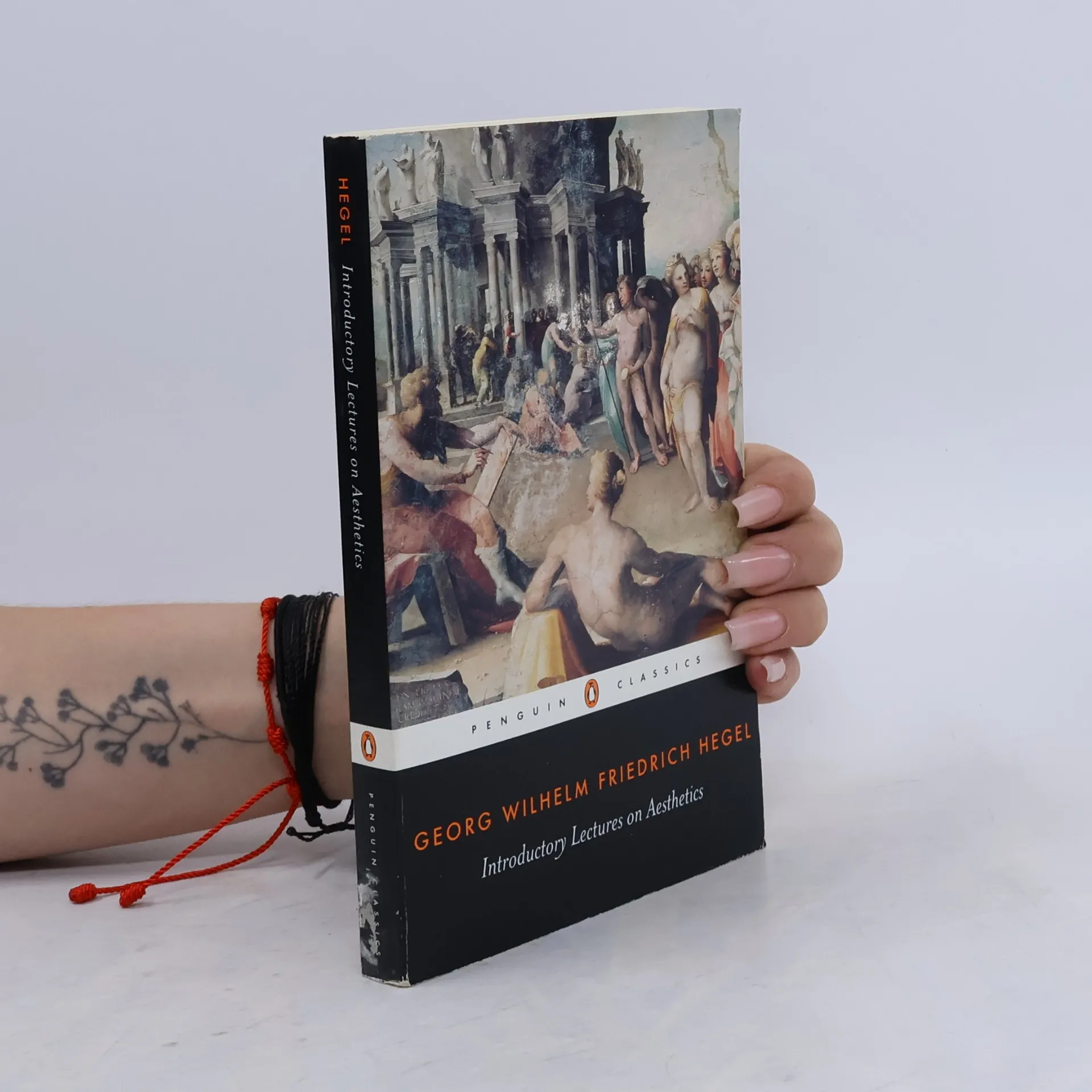
Introductory lectures on aesthetics, Georg Wilhelm Friedrich Hegel
- Jazyk

- Rok vydání
- 1993
- product-detail.submit-box.info.binding
- (měkká)
Doručení
Platební metody
Tady nám chybí tvá recenze.
- Jazyk
- anglicky
- Vydavatel
- Penguin Books
- Rok vydání
- 1993
- Vazba
- měkká
- ISBN10
- 014043335X
- ISBN13
- 9780140433357
- Štítky
- Naučná literatura, Umění & Kultura, Společenské vědy, Politologie & Politika, Filosofická tématika, Právní tématika, Umění, Německá literatura, Politika, Německo, Škola, Dárky pro dědu, 19. století, Kulturní dějiny, Vědecké teorie, Teorie práva, Rodinné právo, Filozofie dějin, Filozofie práva
- Původní název
- Grundlinien der Philosophie des Rechts,
- Hodnocení
- 3,9 z 5
- Anotace
- No philosopher has held a higher opinion of art than Hegel, yet nor was any so profoundly pessimistic about its prospects - despite living in the German golden age of Goethe, Mozart and Schiller. For if the artists of classical Greece could find the perfect fusion of content and form, modernity faced complicating - and ultimately disabling - questions. Christianity, with its code of unworldliness, had compromised the immediacy of man's relationship with reality, and ironic detachment had alienated him from his deepest feelings. Hegel's Introductory Lectures on Aesthetics were delivered in Berlin in the 1820s and stand today as a passionately argued work that challenged the ability of art to respond to the modern world.