

Více o knize
Why is the potential for conflict so significant among intimate partners? This volume synthesizes research from psychology, sociology, communications, and family studies to explore conflict in close relationships. It discusses both theory and practice, explaining the frequent conflicts among friends, romantic partners, distressed couples, and divorcing spouses, while providing professionals with a framework to help mitigate strife. Conflict is framed as a process inherent in mutually dependent relationships, where partners' strategies can transform potential disagreements into serious obstacles, threatening the relationship's survival. Three research paradigms are introduced to analyze the conflict process: the systems-interactionists' approach, which characterizes destructive and constructive communication patterns; the rules-interventionist approach, focusing on mediation for divorcing couples; and the cognitive-exchange approach, which examines antecedent conditions influencing partners' reactions during conflict. The book emphasizes accessible terminology and measurements across disciplines, making it a valuable resource for researchers and clinicians. It highlights how conflict is managed differently in problem-solving situations, mediation, and relationship development, contrasting communication behaviors and strategies in distressed couples versus those in formal mediation. This comprehensive, user-friendly format is
Nákup knihy
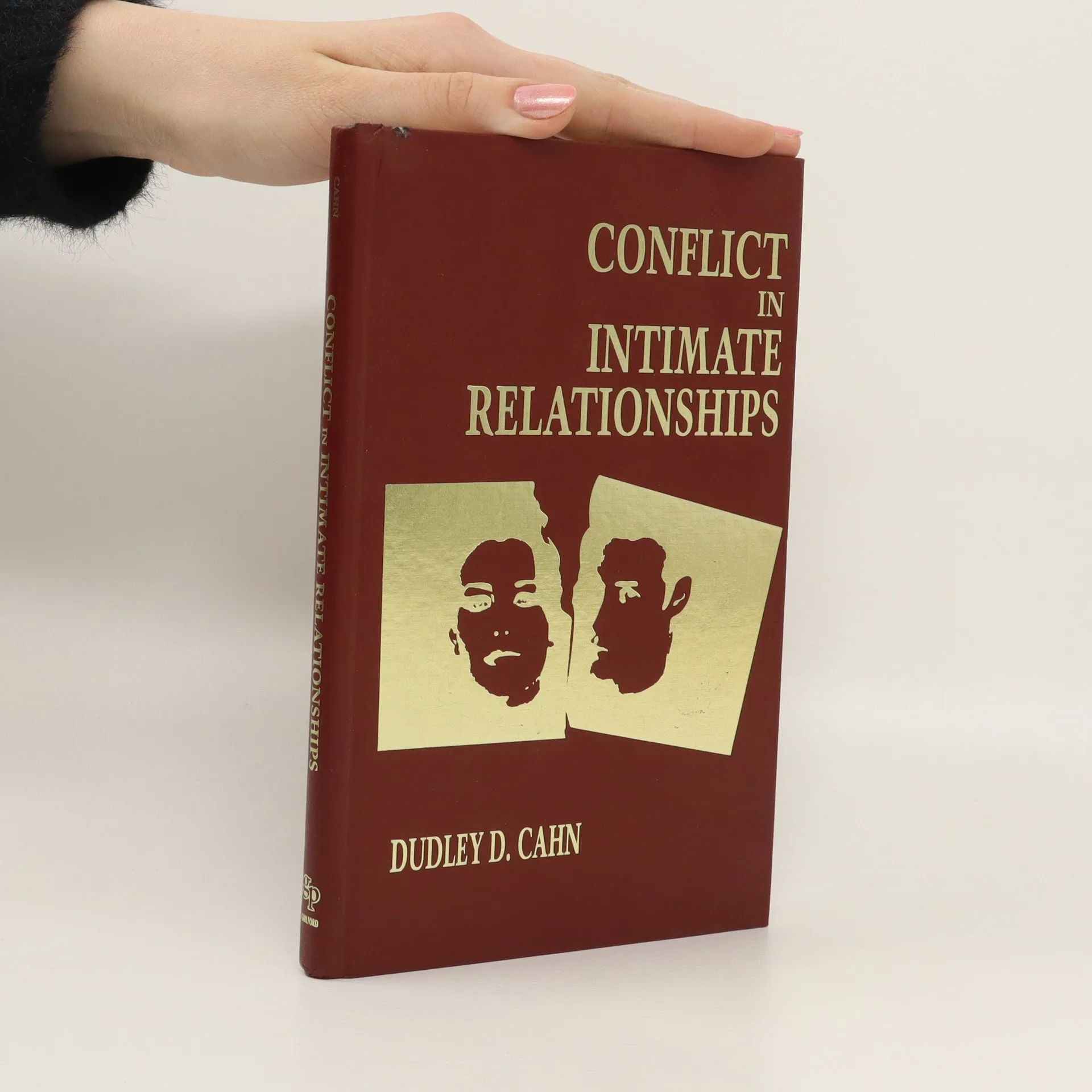
Conflict in intimate relationships, Dudley D. Cahn
- Jazyk

- Rok vydání
- 1992
- Vazba
- (pevná)
Nikdo zatím neohodnotil.
- Titul
- Conflict in intimate relationships
- Jazyk
- anglicky
- Autoři
- Dudley D. Cahn
- Vydavatel
- Guilford Press
- Rok vydání
- 1992
- Vazba
- pevná
- Počet stran
- 148
- ISBN10
- 0898629756
- ISBN13
- 9780898629750
- Série
- Štítky
- Anotace
- Why is the potential for conflict so significant among intimate partners? This volume synthesizes research from psychology, sociology, communications, and family studies to explore conflict in close relationships. It discusses both theory and practice, explaining the frequent conflicts among friends, romantic partners, distressed couples, and divorcing spouses, while providing professionals with a framework to help mitigate strife. Conflict is framed as a process inherent in mutually dependent relationships, where partners' strategies can transform potential disagreements into serious obstacles, threatening the relationship's survival. Three research paradigms are introduced to analyze the conflict process: the systems-interactionists' approach, which characterizes destructive and constructive communication patterns; the rules-interventionist approach, focusing on mediation for divorcing couples; and the cognitive-exchange approach, which examines antecedent conditions influencing partners' reactions during conflict. The book emphasizes accessible terminology and measurements across disciplines, making it a valuable resource for researchers and clinicians. It highlights how conflict is managed differently in problem-solving situations, mediation, and relationship development, contrasting communication behaviors and strategies in distressed couples versus those in formal mediation. This comprehensive, user-friendly format is