


Více o knize
In the foreword, Mises elucidates market phenomena as the results of countless individual actions, choices, and preferences aimed at fulfilling various wants while avoiding undesired outcomes. It is these individual choices, shaped by subjective value judgments, that dictate market dynamics—supply, demand, prices, production patterns, and profits or losses. While governments may attempt to set prices, it is ultimately individuals through competitive bidding who establish them. Mises reframes economics as a study of human actions rather than mere material goods, presenting praxeology as a logical science that reveals regularities in market interrelationships. He defends this methodology against critiques from Marxists, socialists, and positivists. Mises attributes the technological advancements and wealth increases of the past two centuries to liberal policies rooted in free-market principles, which allow individuals to pursue their goals freely. He argues against government attempts to regulate and equalize circumstances, stating that human inequality fosters social cooperation and civilization. Ludwig von Mises, a prominent figure in the Austrian School of Economics, contributed significantly to economic thought throughout the twentieth century. Bettina Bien Greaves, a student of Mises and a longtime scholar, has extensively written on free market economics and has translated and compiled works related to Mises and the Austri




Nákup knihy
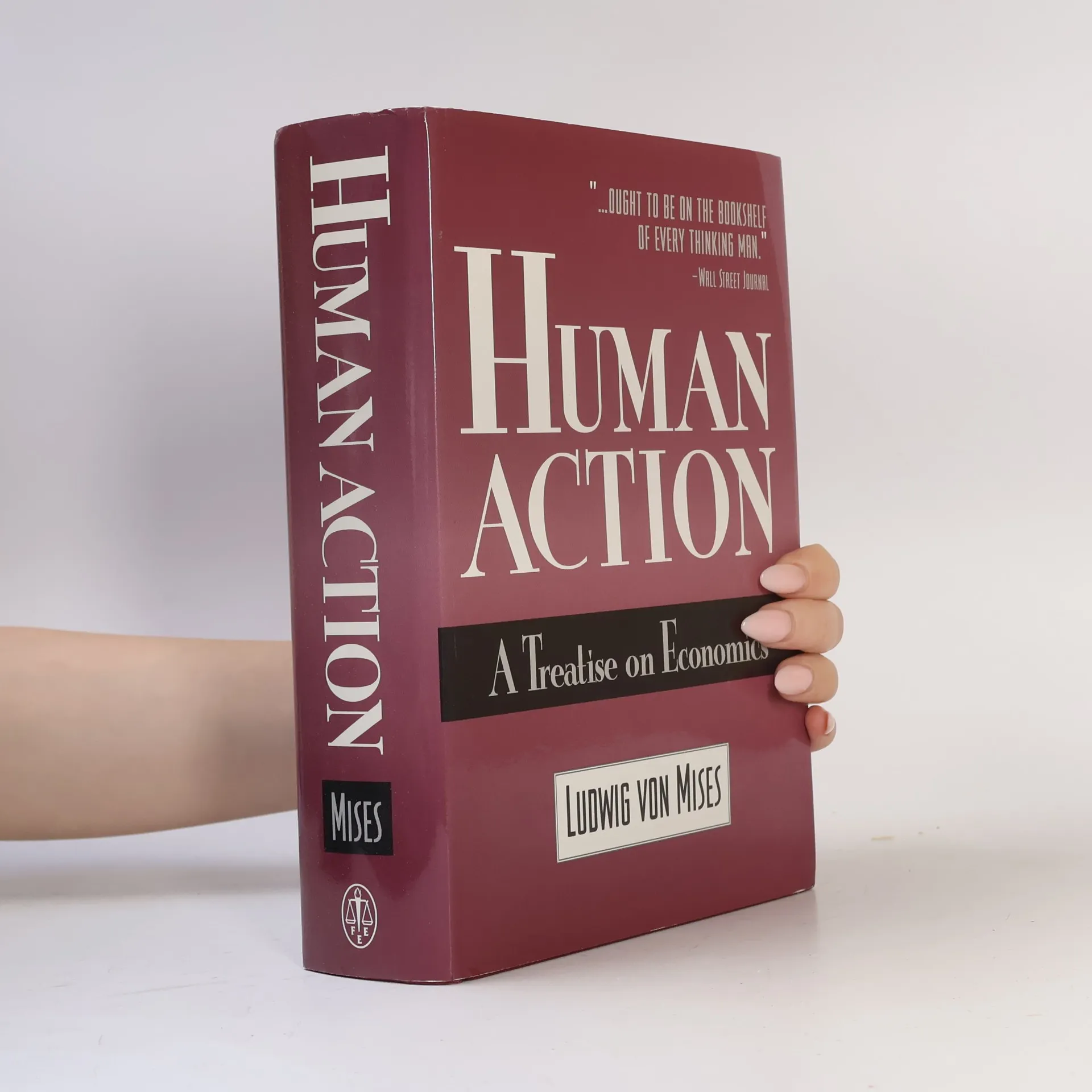
Human Action, Ludwig von Mises
- Jazyk

- Rok vydání
- 1996
- Vazba
- (pevná)
Doručení
Platební metody
Tady nám chybí tvá recenze.
- Titul
- Human Action
- Podtitul
- A Treatise on Economics
- Jazyk
- anglicky
- Autoři
- Ludwig von Mises
- Vydavatel
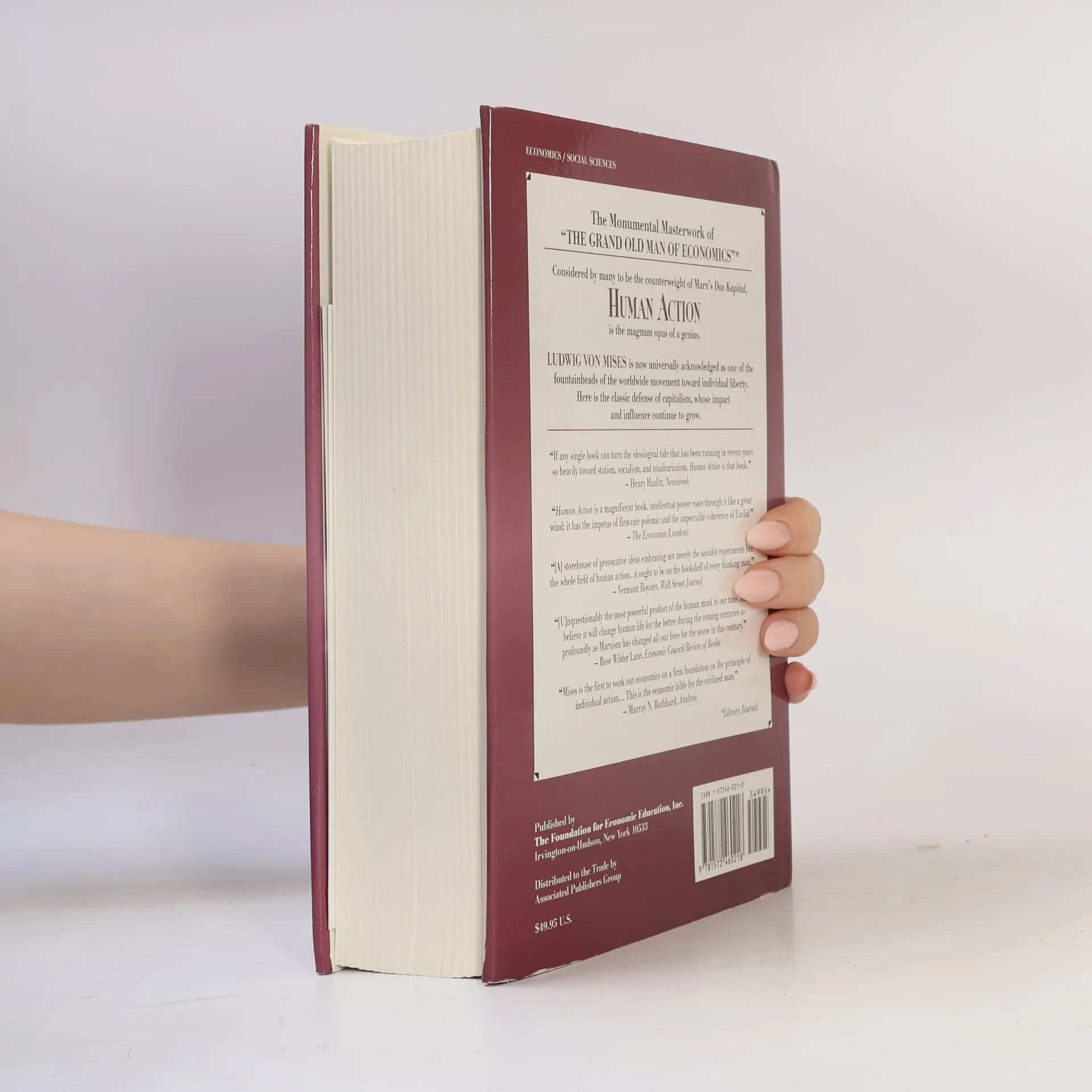
- Foundation for Economic Education
- Rok vydání
- 1996
- Vazba
- pevná
- Počet stran
- 906
- ISBN10
- 1572460210
- ISBN13
- 9781572460218
- Série
- Štítky
- Byznys, Filosofická tématika, Politika, Dárky pro dědu, Finance, Liberalismus, Rakouská ekonomická škola
- První vydání
- 1949
- Původní název
- Human Action
- Hodnocení
- 4,3 z 5
- Anotace
- In the foreword, Mises elucidates market phenomena as the results of countless individual actions, choices, and preferences aimed at fulfilling various wants while avoiding undesired outcomes. It is these individual choices, shaped by subjective value judgments, that dictate market dynamics—supply, demand, prices, production patterns, and profits or losses. While governments may attempt to set prices, it is ultimately individuals through competitive bidding who establish them. Mises reframes economics as a study of human actions rather than mere material goods, presenting praxeology as a logical science that reveals regularities in market interrelationships. He defends this methodology against critiques from Marxists, socialists, and positivists. Mises attributes the technological advancements and wealth increases of the past two centuries to liberal policies rooted in free-market principles, which allow individuals to pursue their goals freely. He argues against government attempts to regulate and equalize circumstances, stating that human inequality fosters social cooperation and civilization. Ludwig von Mises, a prominent figure in the Austrian School of Economics, contributed significantly to economic thought throughout the twentieth century. Bettina Bien Greaves, a student of Mises and a longtime scholar, has extensively written on free market economics and has translated and compiled works related to Mises and the Austri