

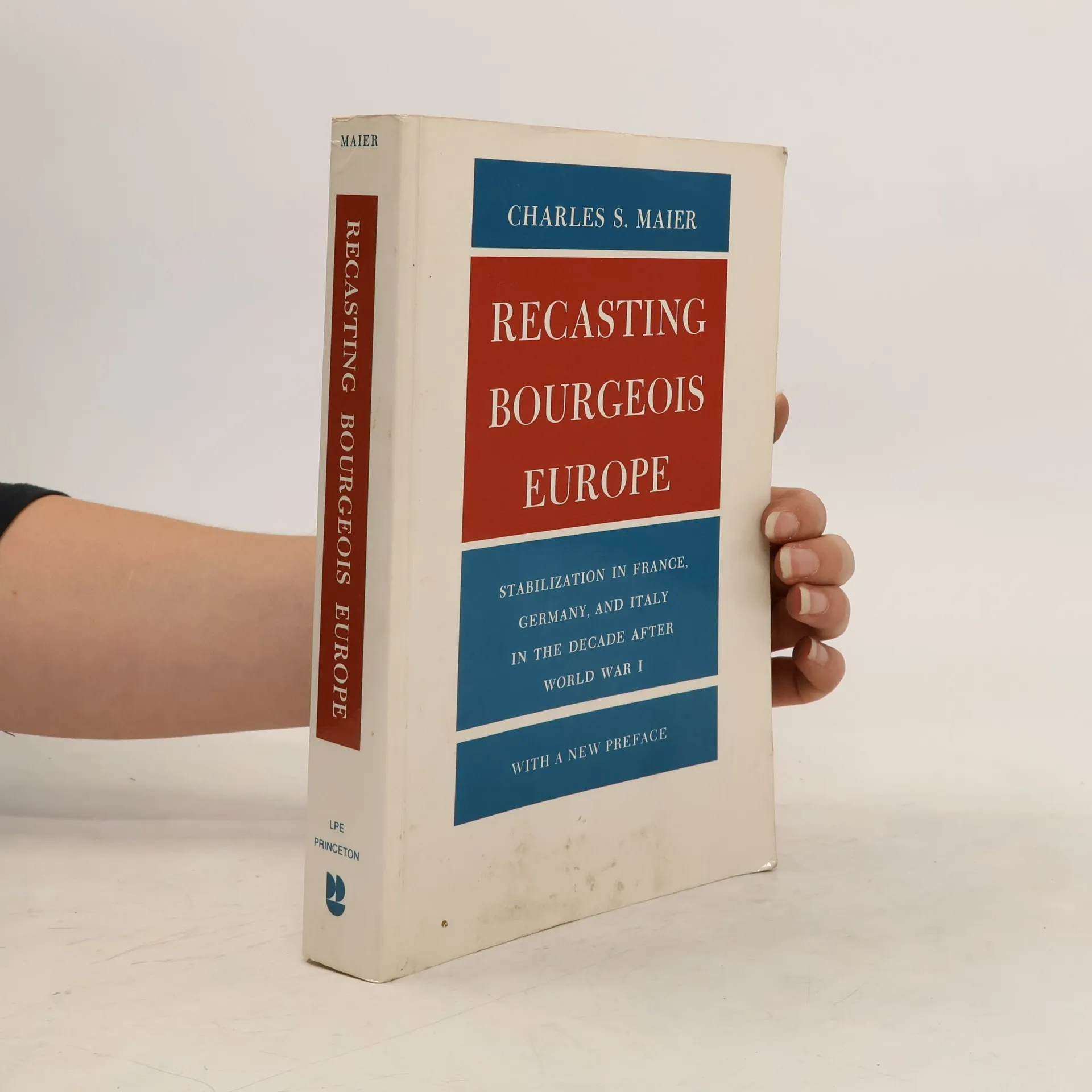

Recasting Bourgeois Europe
Stabilization in France, Germany and Italy in the Decade After World War I
Autoři
Hodnocení knihy
Více o knize
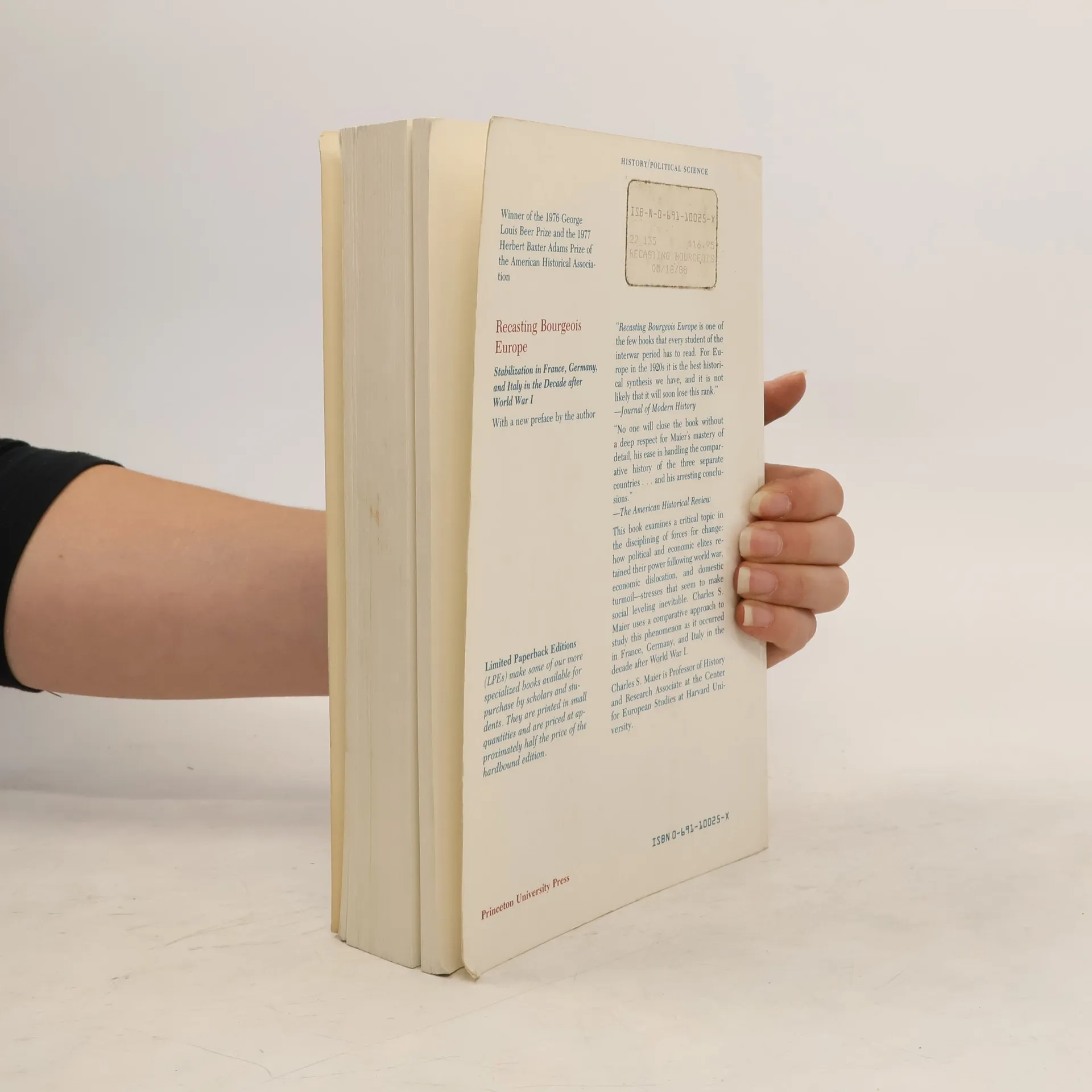
The book examines a critical topic in the disciplining of forces for change: how political and economic elites retained their power following world war, economic dislocation, and domestic turmoil—stresses that seem to make social leveling inevitable. Charles S. Maier uses a comparative approach to study this phenomenon as it occurred in France, Germany, and Italy in the decade after World War I.The author concentrates on those disputes through which the basic distribution of power wee contested or exposed: conflicts over nationalization, taxes. and inflation; relations between capital and labor; reparation quarrels, tariff negotiations; and parliamentary elections. He finds that although existing elites were compelled to share their power with new leaders, much of the traditional European class structure was preserved and the capitalist system remained intact through a major evolution away from classical parliamentarianism toward patterns of interest group representation.The conclusion of the book suggests that this system of stability, despite its interruption by the Depression, Nazism, and World War II, anticipated political solutions achieved after 1945.
Nákup knihy
Recasting Bourgeois Europe, Charles S. Maier
- Jazyk

- Rok vydání
- 1975
- Vazba
- (měkká)
Doručení
Platební metody
Tady nám chybí tvá recenze.
- Titul
- Recasting Bourgeois Europe
- Podtitul
- Stabilization in France, Germany and Italy in the Decade After World War I
- Jazyk
- anglicky
- Autoři
- Charles S. Maier
- Vydavatel
- Princeton University Press
- Rok vydání
- 1975
- Vazba
- měkká
- ISBN10
- 069110025X
- ISBN13
- 9780691100258
- Série
- Kategorie
- Štítky
- Historické téma, Byznys
- Hodnocení
- 3,75 z 5
- Anotace
- The book examines a critical topic in the disciplining of forces for change: how political and economic elites retained their power following world war, economic dislocation, and domestic turmoil—stresses that seem to make social leveling inevitable. Charles S. Maier uses a comparative approach to study this phenomenon as it occurred in France, Germany, and Italy in the decade after World War I.The author concentrates on those disputes through which the basic distribution of power wee contested or exposed: conflicts over nationalization, taxes. and inflation; relations between capital and labor; reparation quarrels, tariff negotiations; and parliamentary elections. He finds that although existing elites were compelled to share their power with new leaders, much of the traditional European class structure was preserved and the capitalist system remained intact through a major evolution away from classical parliamentarianism toward patterns of interest group representation.The conclusion of the book suggests that this system of stability, despite its interruption by the Depression, Nazism, and World War II, anticipated political solutions achieved after 1945.