

Kupuješ přesně tu knihu, která je na fotce
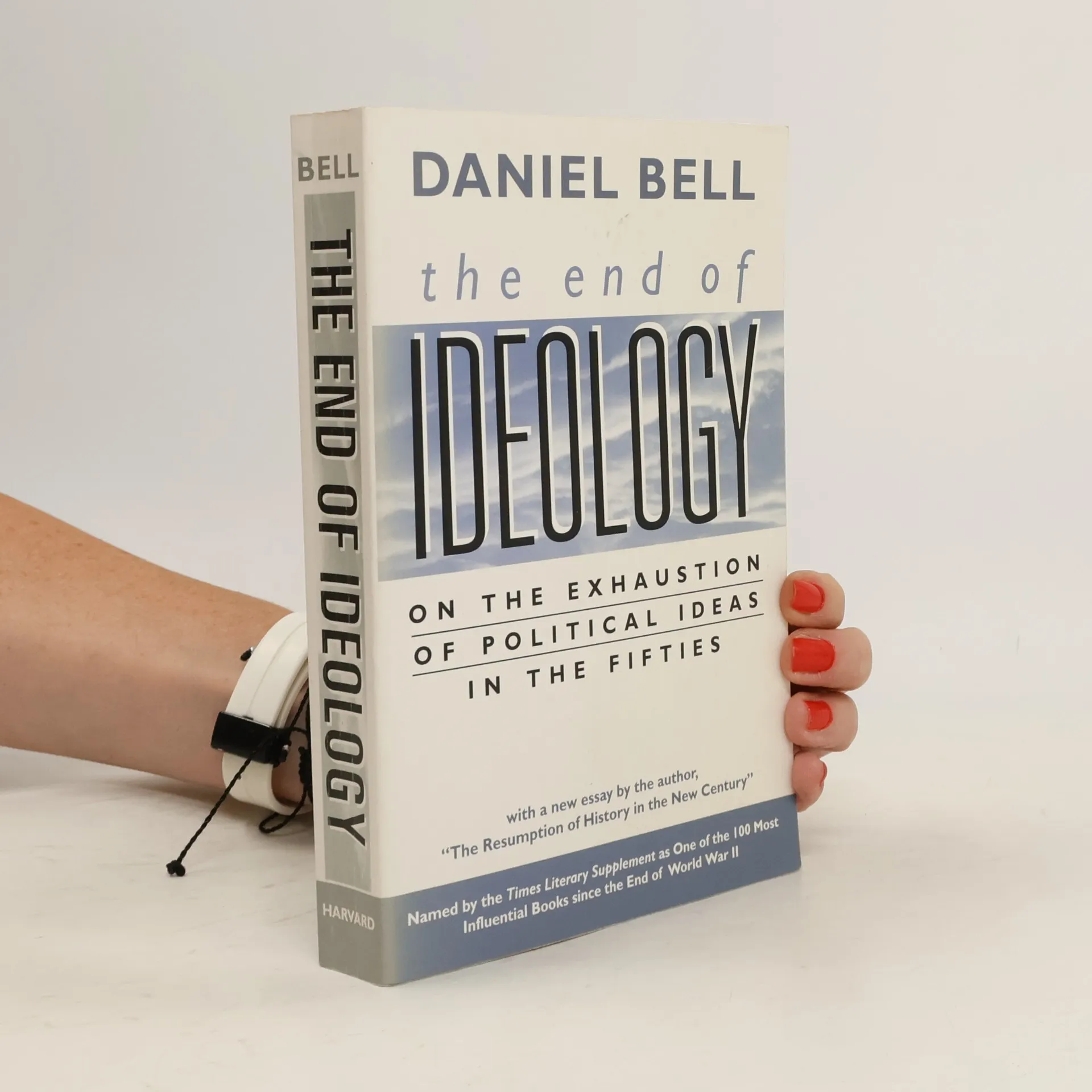

The End of Ideology
On the exhaustion of political ideas in the fifties, with "The Resumption of History in the New Century"
Autoři
Hodnocení knihy
Více o knize
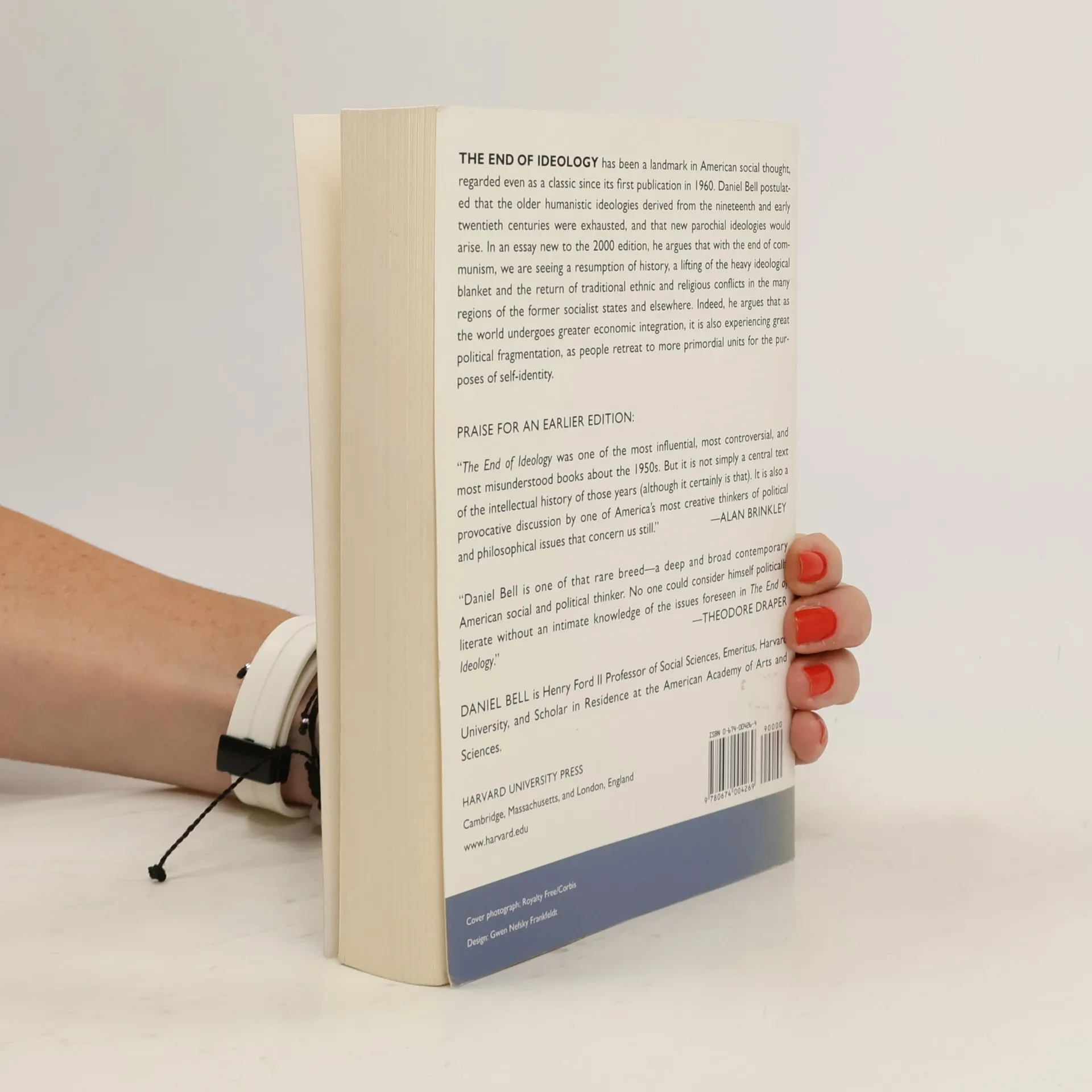
This work first argued that the older humanistic ideologies from the 19th and early 20th centuries were exhausted, and that new parochial ideologies would arise. This 2000 edition argues that there is a resumption of history with the end of communism and the return of traditional conflicts. schovat popis


Nákup knihy
The End of Ideology, Daniel Bell
- Jazyk

- Rok vydání
- 2000
- Vazba
- (měkká),
- Stav knihy
- Dobrá
- Cena
- 469 Kč
Tady nám chybí tvá recenze.
- Titul
- The End of Ideology
- Podtitul
- On the exhaustion of political ideas in the fifties, with "The Resumption of History in the New Century"
- Jazyk
- anglicky
- Autoři
- Daniel Bell
- Vydavatel
- Harvard University Press
- Rok vydání
- 2000
- Vazba
- měkká
- Počet stran
- 540
- ISBN10
- 0674004264
- ISBN13
- 9780674004269
- Série
- Štítky
- Historické téma, Filosofická tématika, Politické teorie, Vědecké teorie, Demokracie, Ideologie
- Hodnocení
- 3,6 z 5
- Anotace
- This work first argued that the older humanistic ideologies from the 19th and early 20th centuries were exhausted, and that new parochial ideologies would arise. This 2000 edition argues that there is a resumption of history with the end of communism and the return of traditional conflicts. schovat popis