

Parametry
- 108 stránek
- 4 hodiny čtení
Více o knize
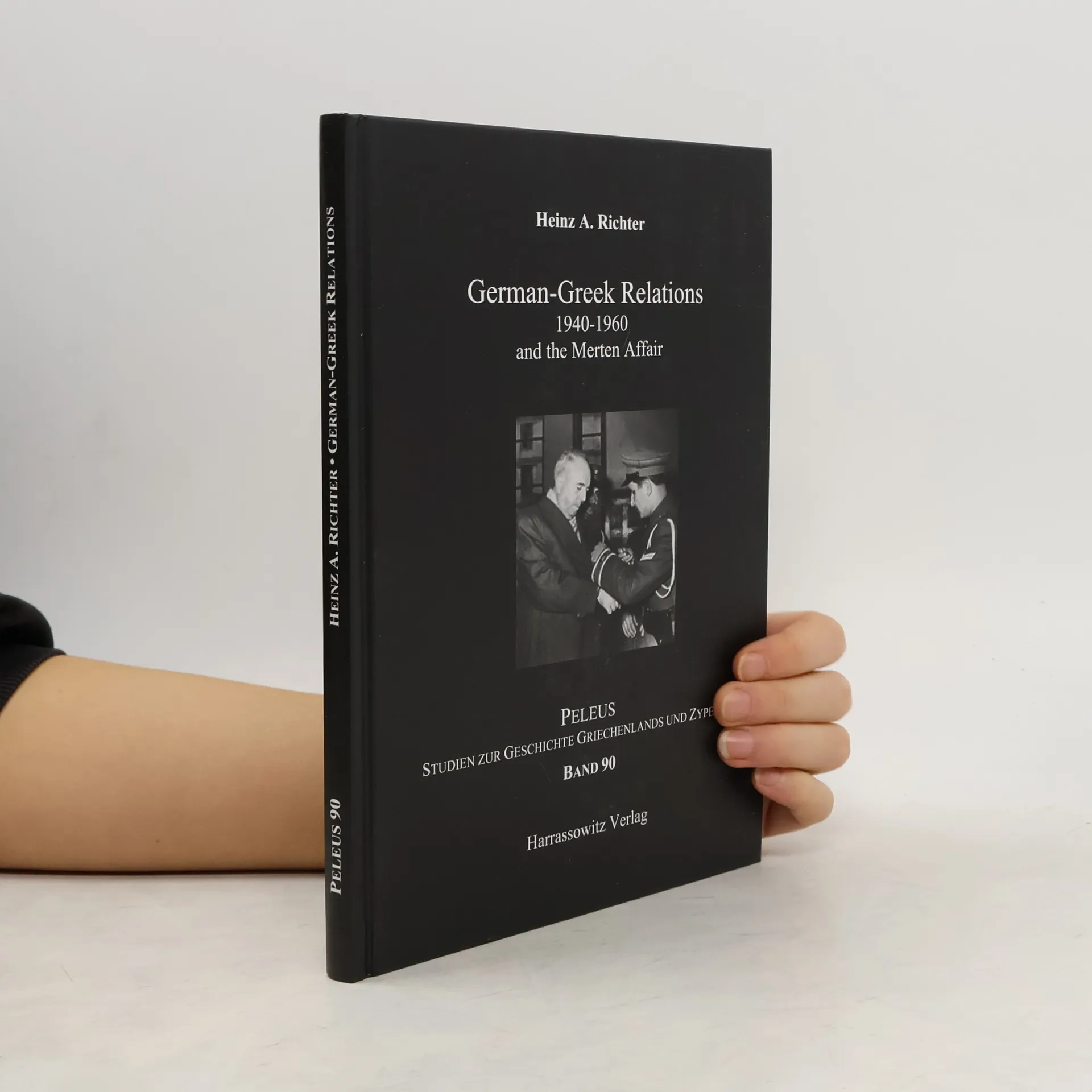
This study by Heinz A. Richter examines German-Greek relations from 1940 to 1960, centering on Max Merten, a military official during the German occupation of Greece. Merten's arrest in 1957 and subsequent release in 1959, despite a twenty-five-year prison sentence, has sparked much speculation. The analysis begins with the German occupation and the organizational structures of the army in Greece, focusing on Merten's role within the “Kriegsverwaltungsrat.” In 1943, he faced the deportation of Salonika's Jews ordered by the SS. The study details his actions, demonstrating that he aided many Jews, even as he was compelled to sign the deportation orders. Post-war, Greece grappled with a long-standing budget deficit, traditionally covered by protective powers, first Britain and later the US under the Truman Doctrine. However, the Eisenhower Doctrine halted these payments, prompting Greece to seek alternative income sources. Athens demanded reparations from Germany, despite the London Debt Agreement postponing such payments until after reunification. This reparations issue was intertwined with the prosecution of war criminals in Germany. When negotiations failed, Athens seized the opportunity to arrest Merten during his visit. He was sentenced to 25 years in prison, but after Germany paid a sum, he was released. The Merten affair became a topic of German domestic policy, involving Adenauer’s Secretary of State Hans Globke and gai
Nákup knihy
Peleus - 90: German-Greek Relations 1940-1960 And The Merten Affair, Heinz A. Richter
- Jazyk

- Rok vydání
- 2019
- Vazba
- (pevná)
Nikdo zatím neohodnotil.
- Titul
- Peleus - 90: German-Greek Relations 1940-1960 And The Merten Affair
- Jazyk
- anglicky
- Autoři
- Heinz A. Richter
- Vydavatel
- Harrassowitz
- Rok vydání
- 2019
- Vazba
- pevná
- Počet stran
- 108
- ISBN10
- 3447111771
- ISBN13
- 9783447111775
- Série
- Kategorie
- Štítky
- Historické téma, Politika, Německo, Druhá světová válka, Evropa, Historie Evropy, Řecko, Mezinárodní vztahy, Židovská literatura, Západní Evropa, Germanistika
- Anotace
- This study by Heinz A. Richter examines German-Greek relations from 1940 to 1960, centering on Max Merten, a military official during the German occupation of Greece. Merten's arrest in 1957 and subsequent release in 1959, despite a twenty-five-year prison sentence, has sparked much speculation. The analysis begins with the German occupation and the organizational structures of the army in Greece, focusing on Merten's role within the “Kriegsverwaltungsrat.” In 1943, he faced the deportation of Salonika's Jews ordered by the SS. The study details his actions, demonstrating that he aided many Jews, even as he was compelled to sign the deportation orders. Post-war, Greece grappled with a long-standing budget deficit, traditionally covered by protective powers, first Britain and later the US under the Truman Doctrine. However, the Eisenhower Doctrine halted these payments, prompting Greece to seek alternative income sources. Athens demanded reparations from Germany, despite the London Debt Agreement postponing such payments until after reunification. This reparations issue was intertwined with the prosecution of war criminals in Germany. When negotiations failed, Athens seized the opportunity to arrest Merten during his visit. He was sentenced to 25 years in prison, but after Germany paid a sum, he was released. The Merten affair became a topic of German domestic policy, involving Adenauer’s Secretary of State Hans Globke and gai