



Parametry
- 268 stránek
- 10 hodin čtení
Více o knize
Industrial optimization lies on the crossroads between mathematics, computer science, engineering and management. This book presents these fields in interdependence as a conversation between theoretical aspects of mathematics and computer science and the mathematical field of optimization theory at a practical level. The 19 case studies that were conducted by the author in real enterprises in cooperation and co-authorship with some of the leading industrial enterprises, including RWE, Vattenfall, EDF, PetroChina, Vestolit, Sasol, and Hella, illustrate the results that may be reasonably expected from an optimization project in a commercial enterprise. The book is aimed at persons working in industrial facilities as managers or engineers; it is also suitable for university students and their professors as an illustration of how the academic material may be used in real life. It will not make its reader a mathematician but it will help its reader in improving his plant.
Nákup knihy
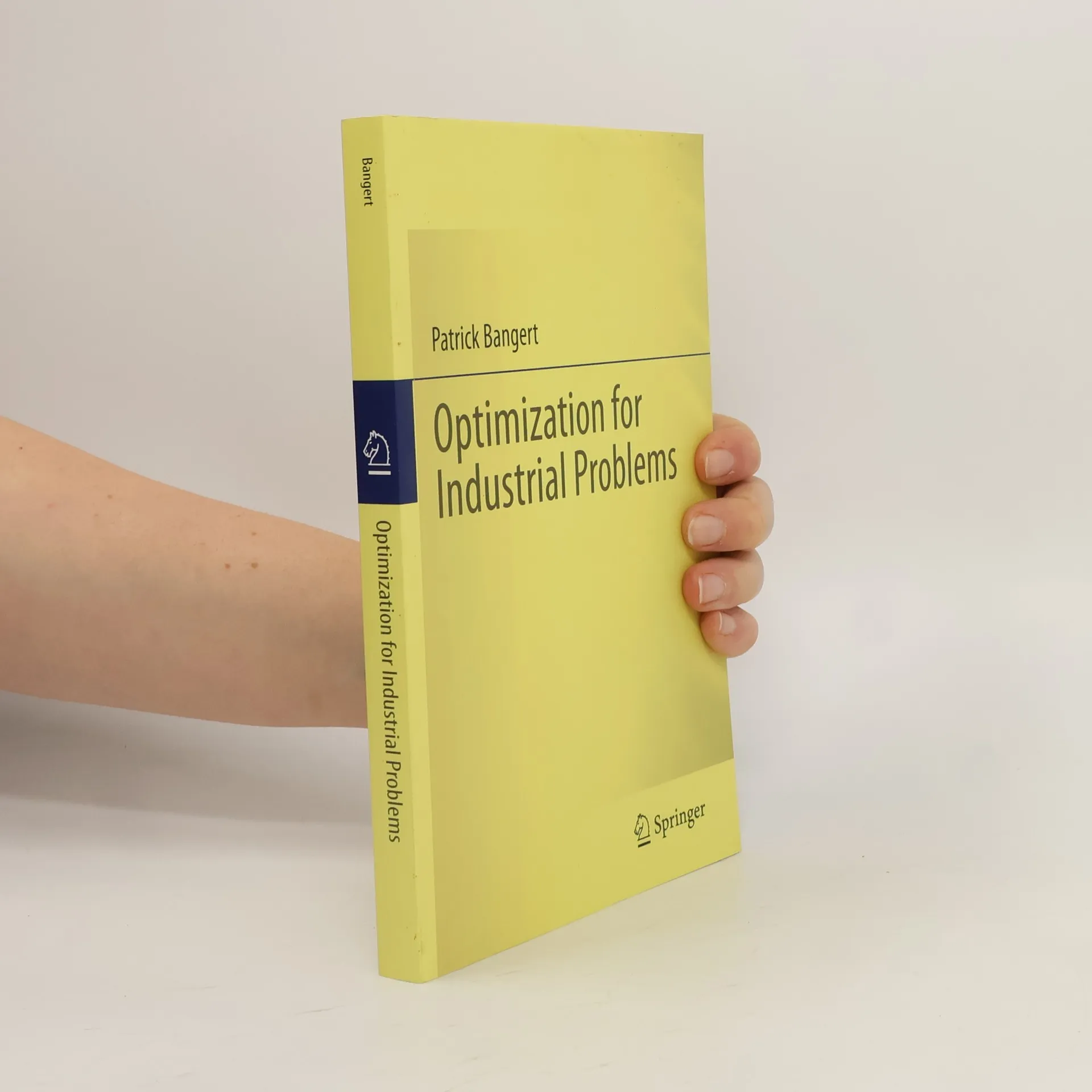
Optimization for Industrial Problems, Patrick Bangert
- Jazyk

- Rok vydání
- 2012
- Vazba
- (měkká)
Tady nám chybí tvá recenze.
- Titul
- Optimization for Industrial Problems
- Jazyk
- anglicky
- Autoři
- Patrick Bangert
- Vydavatel
- Springer
- Rok vydání
- 2012
- Vazba
- měkká
- Počet stran
- 268
- ISBN10
- 3642249736
- ISBN13
- 9783642249730
- Série
- Kategorie
- Štítky
- Byznys, Německo, Odborná literatura, Statistika, Optimalizace
- Hodnocení
- 2 z 5
- Anotace
- Industrial optimization lies on the crossroads between mathematics, computer science, engineering and management. This book presents these fields in interdependence as a conversation between theoretical aspects of mathematics and computer science and the mathematical field of optimization theory at a practical level. The 19 case studies that were conducted by the author in real enterprises in cooperation and co-authorship with some of the leading industrial enterprises, including RWE, Vattenfall, EDF, PetroChina, Vestolit, Sasol, and Hella, illustrate the results that may be reasonably expected from an optimization project in a commercial enterprise. The book is aimed at persons working in industrial facilities as managers or engineers; it is also suitable for university students and their professors as an illustration of how the academic material may be used in real life. It will not make its reader a mathematician but it will help its reader in improving his plant.