



Více o knize
G. Brandstetter and G. Neumann introduce a collection exploring the intersections of anatomy, choreography, and Romanticism. Contributions include Brandstetter’s examination of Carlo Blasis’s influence on dance and anatomy, Barkhoff’s analysis of narrative and knowledge in Mesmerism and E. T. A. Hoffmann’s works, and Borchmeyer’s discussion on the rise and fall of perspective in art. Borgards investigates the symbolism of pain in medical debates around 1800, while Hinderer delves into dream discourse in the Romantic context. Koschorke addresses Johann Christian Reil’s romantic medicine, and Matala de Mazza explores the organic community and stimulation poetics in Novalis and Mesmer’s ideas. Michaels presents a view of science as a unity of religion, philosophy, and poetry, linking it to early Romantic projects. Neumann analyzes E. T. A. Hoffmann’s "Prinzessin Brambilla" as a model of knowledge poetics. Neumeyer reflects on the criminal psyche of the era, and Pethes discusses the complexities of knowledge transfer. Other contributions explore themes of love in Jean Paul’s work, spatial phenomena in art, Leopardi’s philosophy of life, Novalis’s representation issues, and the transition between body and soul in Romantic thought, culminating with Willer’s insights on romantic etymology.
Nákup knihy
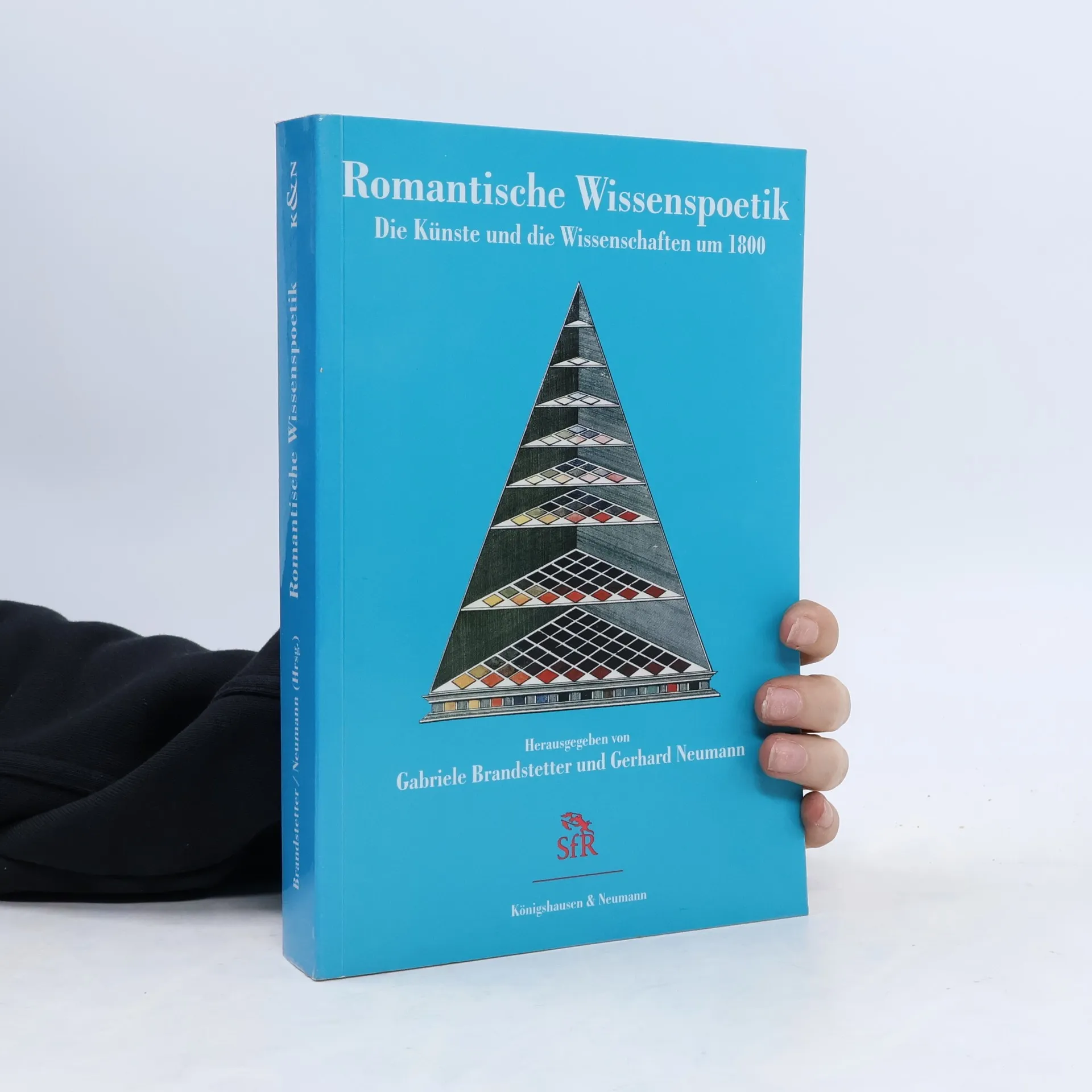
Romantische Wissenspoetik, Gabriele Brandstetter, Gerhard Neumann
- Jazyk

- Rok vydání
- 2004
- Vazba
- (měkká)
Doručení
Platební metody
Nikdo zatím neohodnotil.
- Titul
- Romantische Wissenspoetik
- Podtitul
- Die Künste und die Wissenschaften um 1800
- Jazyk
- německy
- Vydavatel
- Königshausen und Neumann
- Rok vydání
- 2004
- Vazba
- měkká
- Počet stran
- 418
- ISBN10
- 3826026322
- ISBN13
- 9783826026324
- Série
- Kategorie
- Štítky
- Anotace
- G. Brandstetter and G. Neumann introduce a collection exploring the intersections of anatomy, choreography, and Romanticism. Contributions include Brandstetter’s examination of Carlo Blasis’s influence on dance and anatomy, Barkhoff’s analysis of narrative and knowledge in Mesmerism and E. T. A. Hoffmann’s works, and Borchmeyer’s discussion on the rise and fall of perspective in art. Borgards investigates the symbolism of pain in medical debates around 1800, while Hinderer delves into dream discourse in the Romantic context. Koschorke addresses Johann Christian Reil’s romantic medicine, and Matala de Mazza explores the organic community and stimulation poetics in Novalis and Mesmer’s ideas. Michaels presents a view of science as a unity of religion, philosophy, and poetry, linking it to early Romantic projects. Neumann analyzes E. T. A. Hoffmann’s "Prinzessin Brambilla" as a model of knowledge poetics. Neumeyer reflects on the criminal psyche of the era, and Pethes discusses the complexities of knowledge transfer. Other contributions explore themes of love in Jean Paul’s work, spatial phenomena in art, Leopardi’s philosophy of life, Novalis’s representation issues, and the transition between body and soul in Romantic thought, culminating with Willer’s insights on romantic etymology.