



Více o knize
Creative work has long been regarded as a pinnacle of achievement, yet our understanding of its dynamics often relies on clichéd notions of individual genius and the whims of fashion. Pierre-Michel Menger approaches this topic with a fresh perspective, utilizing sociology, economics, and philosophy to emphasize that creative work is fundamentally shaped by uncertainty. This uncertainty is essential for both self-realization and innovation, and without strategies to navigate it, successful careers and ventures struggle to emerge. In a landscape marked by an oversupply of artists and artworks, distinguishing merit becomes challenging. Menger challenges the idea that artistic success is solely tied to connections or influential patrons, asserting that talent plays a crucial role. However, the gap between superstardom and obscurity often stems from minor differences in intrinsic ability. Early promise in competition and the tendency of elite professionals to collaborate can amplify even slight advantages, leading to disproportionate rewards. Through a temporal and causal analysis of figures like Beethoven and Rodin, Menger provides a thought-provoking examination that clarifies our understanding of a realm often perceived as irrational or dominated by power and manipulation.
Nákup knihy
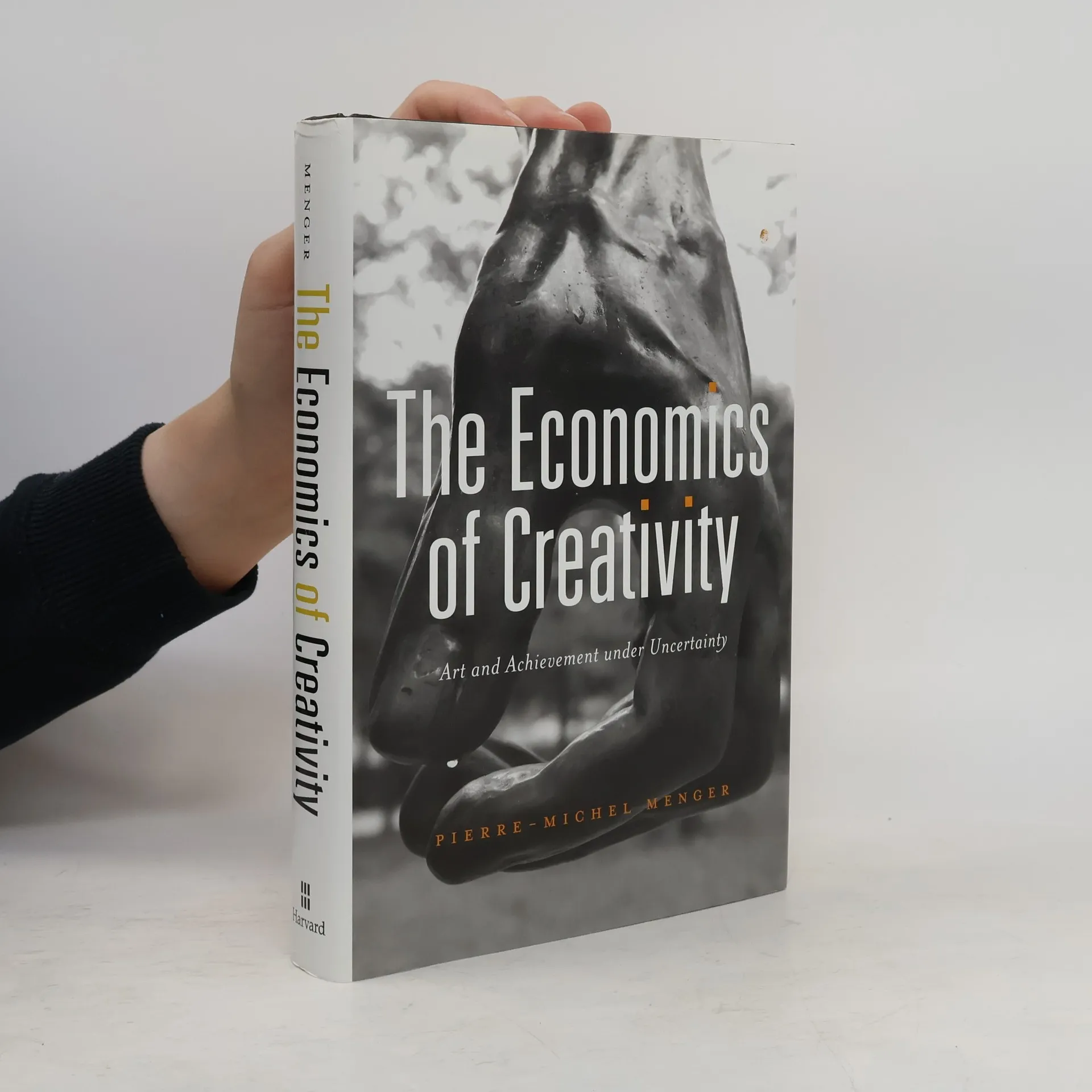
The Economics of Creativity, Pierre-Michel Menger
- Jazyk

- Rok vydání
- 2014
- Vazba
- (pevná)
Doručení
Platební metody
Nikdo zatím neohodnotil.
- Titul
- The Economics of Creativity
- Podtitul
- Art and Achievement under Uncertainty
- Jazyk
- anglicky
- Autoři
- Pierre-Michel Menger
- Vydavatel
- Harvard University Press
- Rok vydání
- 2014
- Vazba
- pevná
- Počet stran
- 416
- ISBN10
- 0674724569
- ISBN13
- 9780674724563
- Série
- Anotace
- Creative work has long been regarded as a pinnacle of achievement, yet our understanding of its dynamics often relies on clichéd notions of individual genius and the whims of fashion. Pierre-Michel Menger approaches this topic with a fresh perspective, utilizing sociology, economics, and philosophy to emphasize that creative work is fundamentally shaped by uncertainty. This uncertainty is essential for both self-realization and innovation, and without strategies to navigate it, successful careers and ventures struggle to emerge. In a landscape marked by an oversupply of artists and artworks, distinguishing merit becomes challenging. Menger challenges the idea that artistic success is solely tied to connections or influential patrons, asserting that talent plays a crucial role. However, the gap between superstardom and obscurity often stems from minor differences in intrinsic ability. Early promise in competition and the tendency of elite professionals to collaborate can amplify even slight advantages, leading to disproportionate rewards. Through a temporal and causal analysis of figures like Beethoven and Rodin, Menger provides a thought-provoking examination that clarifies our understanding of a realm often perceived as irrational or dominated by power and manipulation.