



Více o knize
Hartman's groundbreaking work introduces formal orderly thinking into value theory, identifying three fundamental types of value: intrinsic goods (people as ends), extrinsic goods (things and actions as means), and systemic goods (conceptual values). All valuable things share a common structural pattern, fulfilling ideal standards or "concepts." This approach, termed "formal axiology," posits that some values possess greater good-making properties than others, leading to hierarchies of value. The process of valuing is as crucial as the values themselves, with evaluations mirroring the formal patterns of values. Hartman situates his theory within historical value discourse while innovatively advancing toward a new value science. Endorsements highlight the significance of this work, emphasizing its potential to inspire deeper thinking about values and improve individual and societal well-being. Notable figures praise its thought-provoking nature and the breadth of its applications. Hartman, a recognized authority in value theory, presents his ideas with clarity and insight, making a compelling case for the importance of understanding what constitutes goodness. His lifelong pursuit to define "what is good" culminates in the axiom: "A thing is good when it fulfills its concept," aiming to enhance and preserve human life through organized values.
Nákup knihy
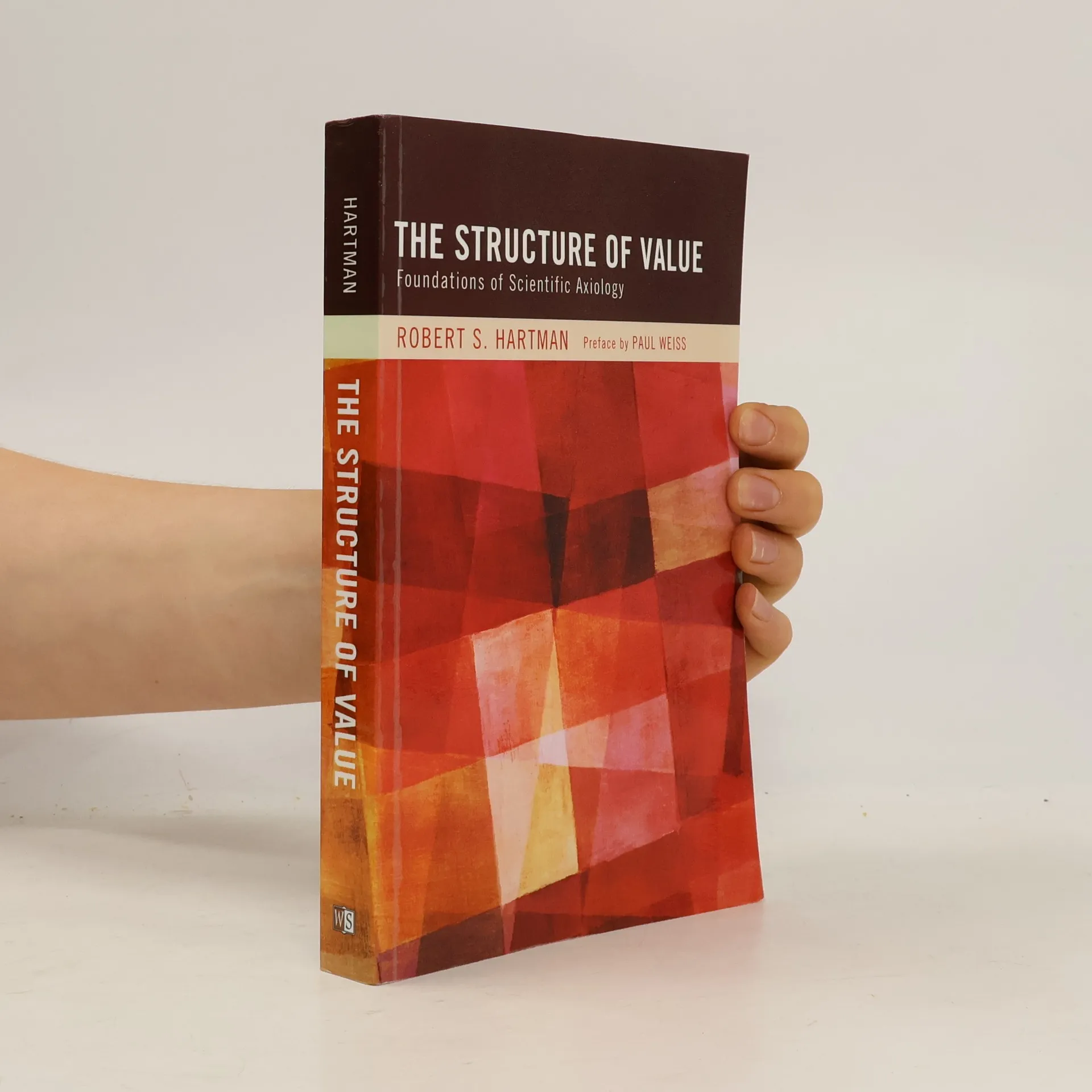
The Structure of Value, Robert S. Hartman, Paul Weiss
- Jazyk

- Rok vydání
- 2011
- Vazba
- (měkká)
Nikdo zatím neohodnotil.
- Titul
- The Structure of Value
- Podtitul
- Foundations of Scientific Axiology
- Jazyk
- anglicky
- Autoři
- Robert S. Hartman, Paul Weiss
- Vydavatel
- Wipf & Stock Pub
- Rok vydání
- 2011
- Vazba
- měkká
- Počet stran
- 404
- ISBN10
- 1610978420
- ISBN13
- 9781610978422
- Série
- Štítky
- Anotace
- Hartman's groundbreaking work introduces formal orderly thinking into value theory, identifying three fundamental types of value: intrinsic goods (people as ends), extrinsic goods (things and actions as means), and systemic goods (conceptual values). All valuable things share a common structural pattern, fulfilling ideal standards or "concepts." This approach, termed "formal axiology," posits that some values possess greater good-making properties than others, leading to hierarchies of value. The process of valuing is as crucial as the values themselves, with evaluations mirroring the formal patterns of values. Hartman situates his theory within historical value discourse while innovatively advancing toward a new value science. Endorsements highlight the significance of this work, emphasizing its potential to inspire deeper thinking about values and improve individual and societal well-being. Notable figures praise its thought-provoking nature and the breadth of its applications. Hartman, a recognized authority in value theory, presents his ideas with clarity and insight, making a compelling case for the importance of understanding what constitutes goodness. His lifelong pursuit to define "what is good" culminates in the axiom: "A thing is good when it fulfills its concept," aiming to enhance and preserve human life through organized values.