

Více o knize
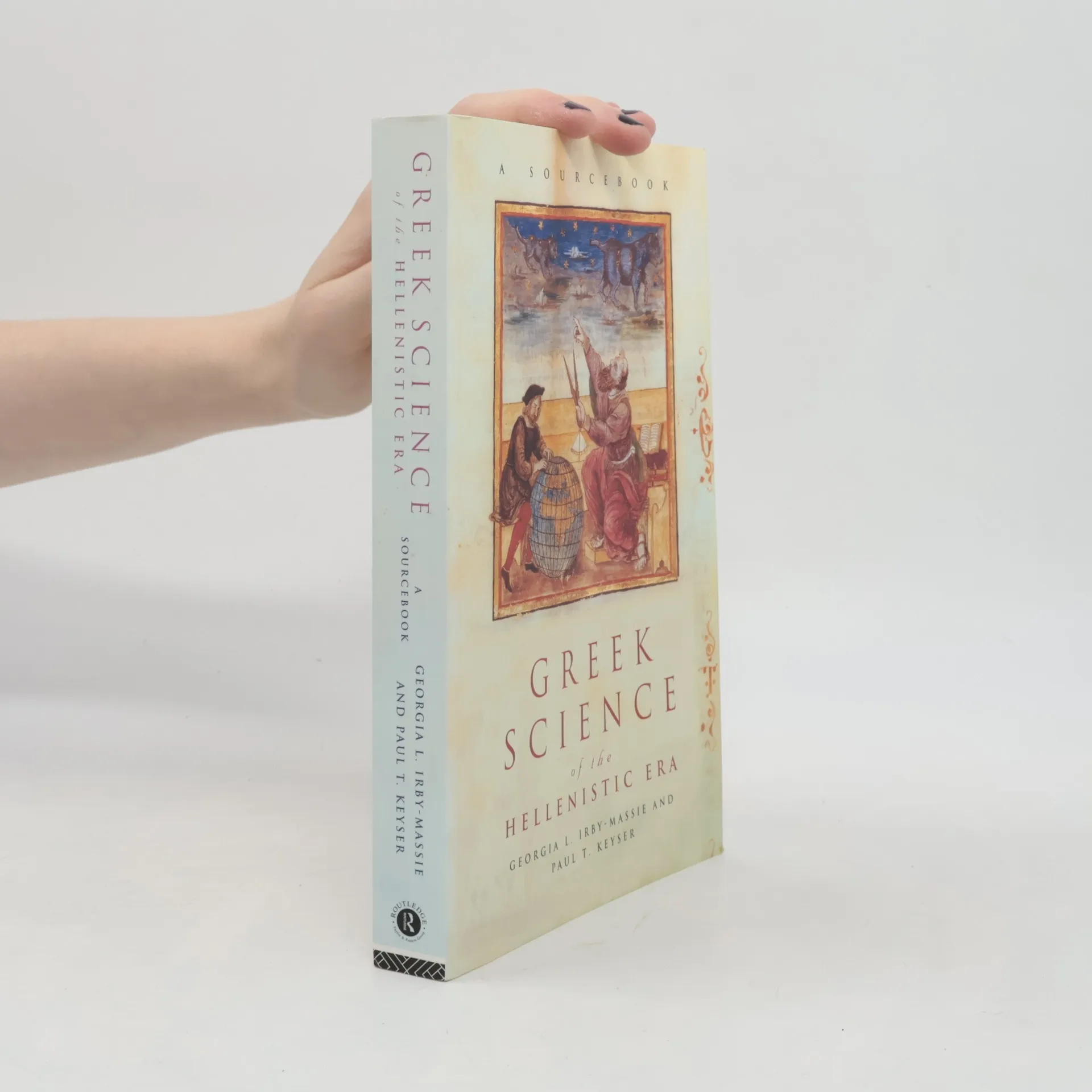
We all want to understand the world around us, and the ancient Greeks were the first to try and do so in a way we can properly call scientific. Their thought and writings laid the essential foundations for the revivals of science in medieval Baghdad and renaissance Europe. Now their work is accessible to all, with this invaluable introduction to c.100 scientific authors active from 320 BCE to 230 CE.The book begins with an outline of a new socio-political model for the development and decline of Greek science, followed by eleven chapters that cover the main * the science which the Greeks saw as fundamental - mathematics* astronomy* astrology and geography* mechanics* optics and pneumatics* the non-mathematical sciences of alchemy, biology, medicine and 'psychology'.Each chapter contains an accessible introduction on the origins and development of the topic in question, and all the authors are set in context with brief biographies.
Nákup knihy
Greek Science of the Hellenistic Era, Georgia Lynette Irby-Massie, Paul Turquand Keyser
- Jazyk

- Rok vydání
- 2002
- Vazba
- (měkká)
Doručení
Platební metody
Nikdo zatím neohodnotil.
- Titul
- Greek Science of the Hellenistic Era
- Podtitul
- A Sourcebook
- Jazyk
- anglicky
- Vydavatel
- Routledge
- Rok vydání
- 2002
- Vazba
- měkká
- Počet stran
- 432
- ISBN10
- 041523848X
- ISBN13
- 9780415238489
- Série
- Štítky
- Věda, Starověk, antika, Historie vědy
- Anotace
- We all want to understand the world around us, and the ancient Greeks were the first to try and do so in a way we can properly call scientific. Their thought and writings laid the essential foundations for the revivals of science in medieval Baghdad and renaissance Europe. Now their work is accessible to all, with this invaluable introduction to c.100 scientific authors active from 320 BCE to 230 CE.The book begins with an outline of a new socio-political model for the development and decline of Greek science, followed by eleven chapters that cover the main * the science which the Greeks saw as fundamental - mathematics* astronomy* astrology and geography* mechanics* optics and pneumatics* the non-mathematical sciences of alchemy, biology, medicine and 'psychology'.Each chapter contains an accessible introduction on the origins and development of the topic in question, and all the authors are set in context with brief biographies.