





Více o knize
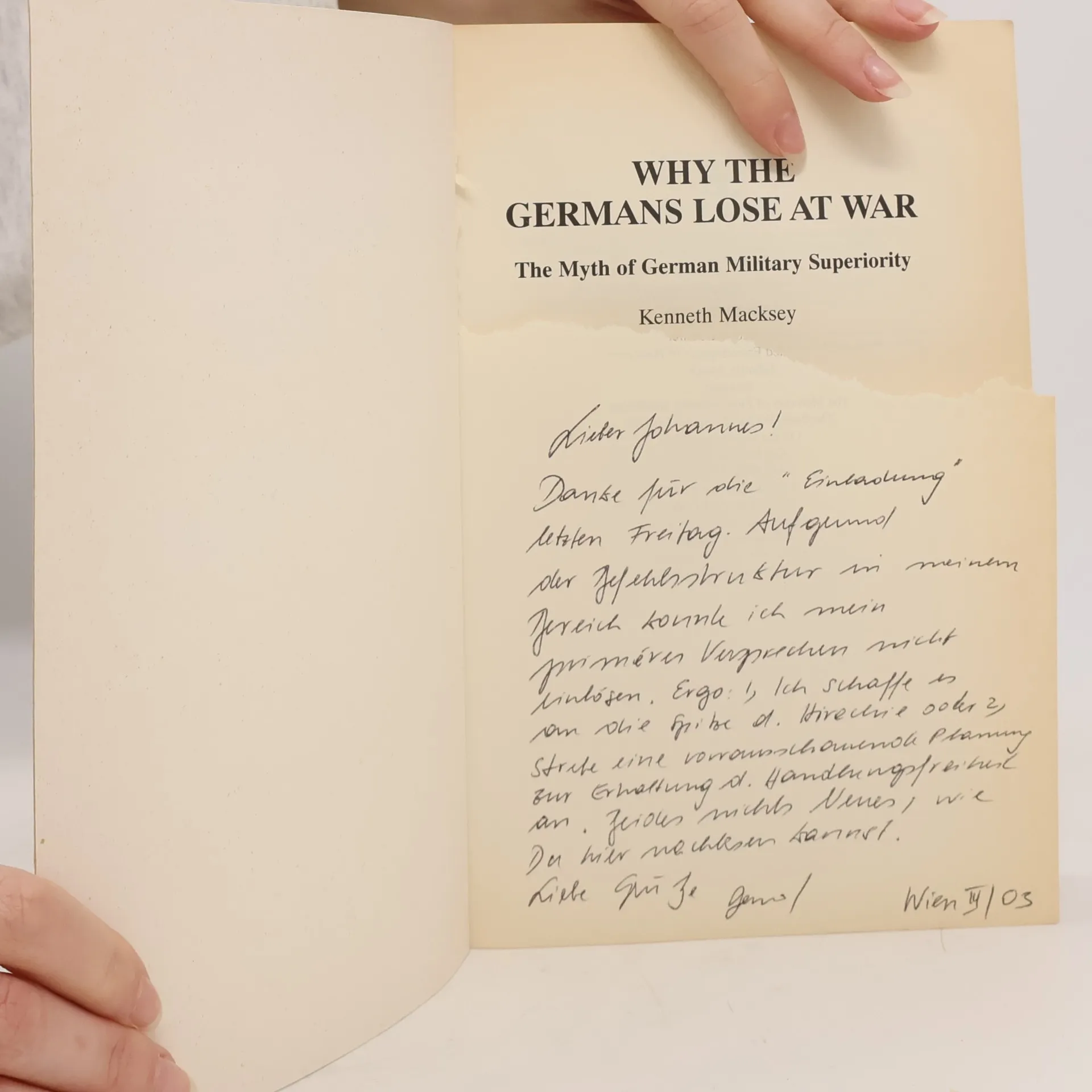
The German armed forces suffered crushing defeat in the last century. Kenneth Macksey examines the reasons behind these catastrophic military the random fortunes of war, or the inevitable result of a particular structure, leadership and history? A nation with few natural defensive boundaries, Germany traditionally had to struggle to survive, and developed an aggressive and militant outlook. Its great strengths were the brilliance of individual generals and military thinkers, the innovative development of the military forces, and the skill and tenacity of the fighting men. Set against all this was a short-term war policy, a tendency to underestimate the enemy and believe its own propaganda, and the politicisation of the military staffs. These and many other factors were to lead Germany from nineteenth-century success, and dreams of world domination, to twentieth-century defeat. Kenneth Macksey s other books include Panzer General, Campaigns and Battles, and the alternate history The German Invasion of England, July 1940.
Nákup knihy
Greenhill Military Paperbacks: Why the Germans Lose at War, Kenneth John Macksey
- Jazyk

- Rok vydání
- 1999
- product-detail.submit-box.info.binding
- (měkká),
- Stav knihy
- Poškozená
- Cena
- 44 Kč
Doručení
Platební metody
Nikdo zatím neohodnotil.
- Podtitul
- The Myth of German Military Superiority
- Jazyk
- anglicky
- Autoři
- Kenneth John Macksey
- Vydavatel
- Greenhill Books
- Rok vydání
- 1999
- Vazba
- měkká
- Počet stran
- 240
- ISBN10
- 1853673838
- ISBN13
- 9781853673832
- Série
- Štítky
- Naučná literatura, Historické téma, Historie, Technologie & Průmysl, Německo, Vojenské dějiny, Válečná próza, Druhá světová válka, 20. století, Vojenství, 19. století, Dějiny Evropy, Vůdcovství, Generálové
- Anotace
- The German armed forces suffered crushing defeat in the last century. Kenneth Macksey examines the reasons behind these catastrophic military the random fortunes of war, or the inevitable result of a particular structure, leadership and history? A nation with few natural defensive boundaries, Germany traditionally had to struggle to survive, and developed an aggressive and militant outlook. Its great strengths were the brilliance of individual generals and military thinkers, the innovative development of the military forces, and the skill and tenacity of the fighting men. Set against all this was a short-term war policy, a tendency to underestimate the enemy and believe its own propaganda, and the politicisation of the military staffs. These and many other factors were to lead Germany from nineteenth-century success, and dreams of world domination, to twentieth-century defeat. Kenneth Macksey s other books include Panzer General, Campaigns and Battles, and the alternate history The German Invasion of England, July 1940.