





Více o knize
The Earth's climate is constantly changing. Some of the changes are progressive, while others fluctuate at various time scales. The El Niño-la Niña cycle is one such fluctuation that recurs every few years and has far-reaching impacts. It generally appears at least once per decade, but this may vary with our changing climate. The exact frequency, sequence, duration and intensity of El Niño's manifestations, as well as its effects and geographic distributions, are highly variable. The El Niño-la Niña cycle is particularly challenging to study due to its many interlinked phenomena that occur in various locations around the globe. These worldwide teleconnections are precisely what makes studying El Niño-la Niña so important.Cynthia Rosenzweig and Daniel Hillel describe the current efforts to develop and apply a global-to-regional approach to climate-risk management. They explain how atmospheric and social scientists are cooperating with agricultural practitioners in various regions around the world to determine how farmers may benefit most from new climate predictions. Specifically, the emerging ability to predict the El Niño-Southern Oscillation (ENSO) cycle offers the potential to transform agricultural planning worldwide. Biophysical scientists are only now beginning to recognize the large-scale, globally distributed impacts of ENSO on the probabilities of seasonal precipitation and temperature regimes. Meanwhile, social scientists have been researching how to disseminate forecasts more effectively within rural communities. Consequently, as the quality of climatic predictions have improved, the dissemination and presentation of forecasts have become more effective as well. This book explores thegrowing understanding of the interconnectedness of climate predictions and productive agriculture for sustainable development, as well as methods and models used to study this relationship.
Nákup knihy
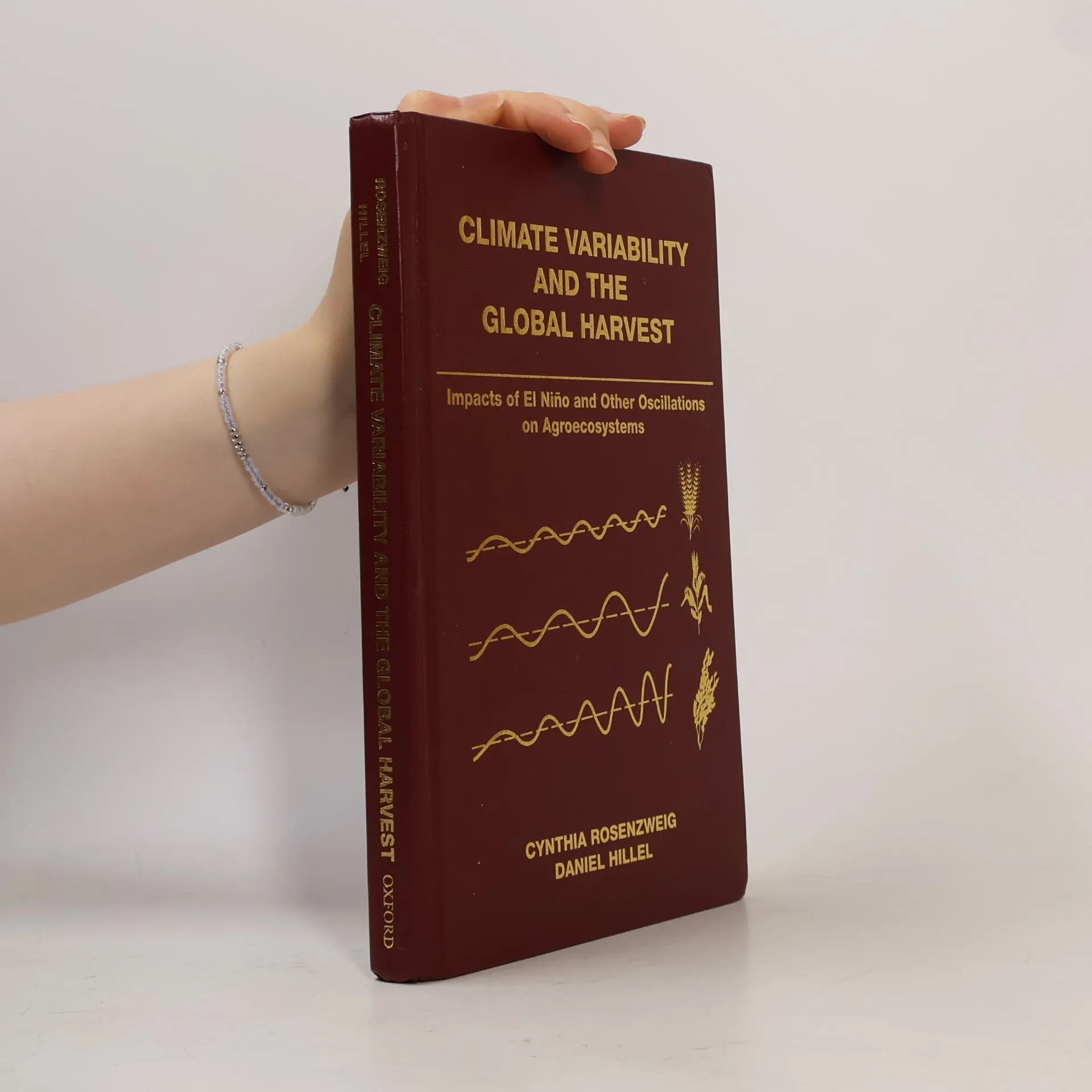
Climate Variability and the Global Harvest, Cynthia Rosenzweig, Daniel Hillel
- Jazyk

- Rok vydání
- 2008
- Vazba
- (pevná),
- Stav knihy
- Poškozená
- Cena
- 1 869 Kč
Doručení
Platební metody
Nikdo zatím neohodnotil.
- Podtitul
- Impacts of El Niño and Other Oscillations on Agro-Ecosystems
- Jazyk
- anglicky
- Autoři
- Cynthia Rosenzweig, Daniel Hillel
- Vydavatel
- Oxford University Press
- Rok vydání
- 2008
- Vazba
- pevná
- Počet stran
- 280
- ISBN10
- 0195137639
- ISBN13
- 9780195137637
- Série
- Štítky
- Věda, Ekonomie, USA, Rostliny, Technologie, Zemědělství, Ekologie, Meteorologie a klimatologie, Prognostika, Ekologie rostlin
- Anotace
- The Earth's climate is constantly changing. Some of the changes are progressive, while others fluctuate at various time scales. The El Niño-la Niña cycle is one such fluctuation that recurs every few years and has far-reaching impacts. It generally appears at least once per decade, but this may vary with our changing climate. The exact frequency, sequence, duration and intensity of El Niño's manifestations, as well as its effects and geographic distributions, are highly variable. The El Niño-la Niña cycle is particularly challenging to study due to its many interlinked phenomena that occur in various locations around the globe. These worldwide teleconnections are precisely what makes studying El Niño-la Niña so important.Cynthia Rosenzweig and Daniel Hillel describe the current efforts to develop and apply a global-to-regional approach to climate-risk management. They explain how atmospheric and social scientists are cooperating with agricultural practitioners in various regions around the world to determine how farmers may benefit most from new climate predictions. Specifically, the emerging ability to predict the El Niño-Southern Oscillation (ENSO) cycle offers the potential to transform agricultural planning worldwide. Biophysical scientists are only now beginning to recognize the large-scale, globally distributed impacts of ENSO on the probabilities of seasonal precipitation and temperature regimes. Meanwhile, social scientists have been researching how to disseminate forecasts more effectively within rural communities. Consequently, as the quality of climatic predictions have improved, the dissemination and presentation of forecasts have become more effective as well. This book explores thegrowing understanding of the interconnectedness of climate predictions and productive agriculture for sustainable development, as well as methods and models used to study this relationship.