

Lesley Sharpe assesses Schiller's development as a dramatist, poet and thinker against the background of his life.
Cambridgeské studie z německé filologie Série
Tato série zkoumá rozsáhlou škálu témat z německé literatury, kultury a myšlení. Od klasických dramat po moderní poezii a odraz společenských změn se každý svazek ponoří do hlubin německého kulturního dědictví. Čtenáři objeví podrobné analýzy a nové pohledy na klíčové autory a myšlenkové proudy. Jedná se o zásadní zdroj pro každého, kdo se zajímá o nuancovanou historii a vývoj německé intelektuální krajiny.

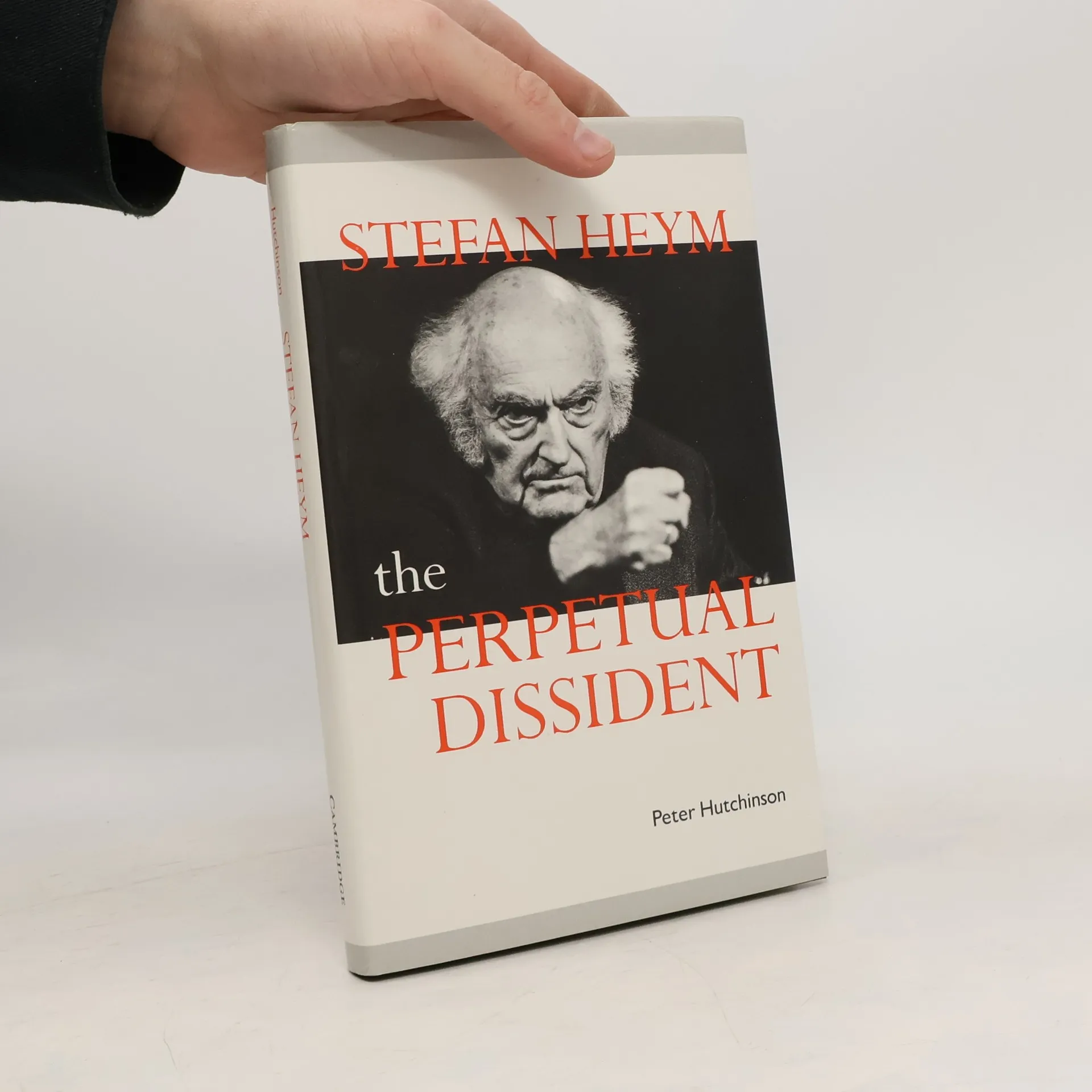
Stefan Heym's uncompromising stance made him unpopular with a succession of political regimes. The Nazis, the CIA and the East German secret police all held files on him. He was Hitler's youngest literary exile; McCarthyism was to drive him from the USA; and even in what appeared his natural home - the first socialist state on German soil - he was to become the country's leading dissident. By continuing to compose in both English and German, however, he maintained an international reputation, and has been translated into over twenty languages. This study traces Heym's career principally by reference to his novels, journalism, and political essays, from his earliest works. All his novels are analysed, the major ones in depth, and English translations of all German quotations are provided. Peter Hutchinson focuses particularly on Heym's battles against Stalinism and censorship, and the way in which his courageous defiance of a repressive regime inspired others and paved the way for the 'new' eastern literature of the eighties.
Professor Behler provides a view of the literary work and the artistic process developed in the German Romantic period.
Judith Ryan traces Rilke's development from aestheticism to modernism, paying special attention to the way his work engages with other poetry and the visual arts. Taking a skeptical view of Rilke's own myth of himself as a solitary genius, Ryan shows how deeply his writing is embedded in the culture of its day. Rilke is now the most widely-read and influential German-language poet, and this study is full of surprising discoveries about his innovative and often profoundly moving poems.
This book is the first systematic attempt in English to examine the literary consequences of German reunification. In its emphasis on problems of national identity, it is one of the first books in any language to treat contemporary Germany as a cultural and national unity. In exploring the ways in which authors of the 1990s have sought to cope with history and national identity, the book addresses questions about the role of the nation and a national literature in the context of economic and political globalization.
"The beginnings of psychology are usually dated from experimental psychology and Freudian psychoanalysis in the late nineteenth century. Yet the period from 1700 to 1840 produced some highly sophisticated psychological theorizing that became central to German intellectual and cultural life, well in advance of similar developments in the English-speaking world. Matthew Ball explores how this happened, by analyzing the expressions of psychological theory in Goethe's Faust, Kant's Critique of Pure Reason, and in the works of Lessing, Schiller, Kleist and E.T.A. Hoffmann
Reading Heinrich Heine
- 322 stránek
- 12 hodin čtení
Originally created in 2007, this is a comprehensive study of the nineteenth-century German poet Heinrich Heine. Anthony Phelan examines the complete range of Heine's work, from the early poetry and 'Pictures of Travel' to the last poems, including personal polemic and journalism. Phelan provides original and detailed readings of Heine's major poetry and throws fresh light on his virtuoso political performances that have too often been neglected by critics. Through his critical relationship with Romanticism, Heine confronted the problem of modernity in startlingly original ways that still speak to the concerns of post-modern readers. Phelan highlights the importance of Heine for the critical understanding of modern literature, and in particular the responses to Heine's work by Adorno, Kraus and Benjamin. Heine emerges as a figure of immense European significance, whose writings need to be seen as a major contribution to the articulation of modernity.
This original book investigates the role played by literature in Sigmund Freud's creation and development of psychoanalysis. Graham Frankland analyzes the whole range of Freud's own texts from a literary-critical perspective, providing a comprehensive reappraisal of his life's work. His study reveals how Freud was deeply rooted in European literary tradition, examining in detail the rhetoric and imagery of his writing, the influence of literary criticism on his approach to analyzing patients and his creation of psychoanalytical "novels," quasi-literary fictions fraught with profoundly personal subtexts.